‘Blue Velvet’ 40 Years Later: The Darkness Beneath American Suburbia
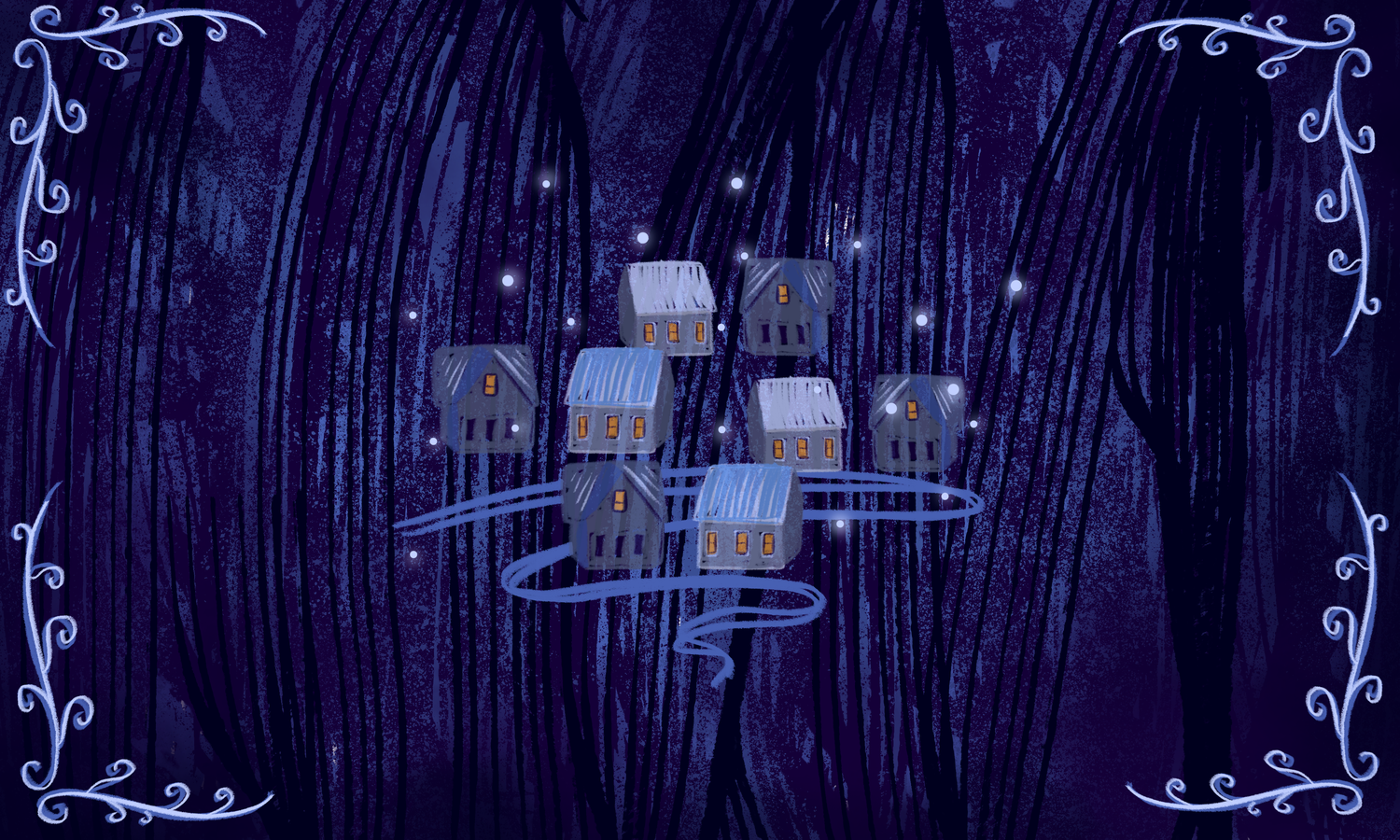
David Lynch’s neo-noir mystery film “Blue Velvet” premiered 40 years ago in September 1986. The movie opens with the haunting ’60s hit “Blue Velvet,” sung by Bobby Vinton, as a screen of blue velvet gives way to the title and then to a bright, colorful depiction of American suburbia: pearly white picket fences, perfectly trimmed rosebushes, and a friendly fireman patrolling the quiet streets. What is meant to be a calm setting quickly becomes a disturbing image.
Even 40 years after its premiere, Lynch’s “Blue Velvet” does a great job of unearthing the darkness that exists under the suburbs’ carefully maintained surface. Behind the roses and fences exists a private world, one of great loneliness and depravity.
The post-war American suburb has long been sold to the public as a symbol of stability and prosperity. The 1950s popularized the ideal of the perfect nuclear family, perhaps with a dog or two, a family of four, and a safe neighborhood removed from the bustle of the city. By the 1980s, when “Blue Velvet” was released, this image had become deeply ingrained in American culture. Lynch utilized this ideal by presenting almost everything associated with suburban life in the opening. The roses are beautiful, and the fences are freshly painted. The houses sit closely in a row, yet simultaneously feel dangerously isolated.
We cut to a man watering his plants in his yard, as he suddenly suffers from a stroke and collapses onto the ground with the hose still running. The camera then pans downwards, towards the dirt, where large insects crawl and fight beneath the grass — the only witnesses to this man’s death. A whole other world crawls underneath.
From there, the movie follows young college student Jeffrey Beaumont, played by Lynch’s muse Kyle MacLachlan, who also famously played Paul Atreidies in the less successful 1984 “Dune.” After returning to his quiet hometown of Lumberton, North Carolina, Jeffrey discovers a severed ear in the middle of a grassfield. The discovery of the ear does more than introduce the central mystery plot of the movie: It becomes Jeffrey’s entrance into the world that had previously gone unnoticed to him and the rest of the town. Curious about its origins, he begins investigating and is drawn to a hidden world that exists right around the block. Here, he meets Dorothy Vallens (Isabella Rossellini), a jazz club singer, whose life is being terrorized and controlled by criminal Frank Booth. He had kidnapped her husband and son, using them to control Dorothy while repeatedly sexually assaulting her.
Booth is undoubtedly the most disturbing character in “Blue Velvet,” played to grotesque perfection by Dennis Hopper. Still, Frank himself may not be the disturbing aspect of this movie. Instead, it’s the fact that Frank’s world and Jeffrey’s world can coexist within one place. There’s no division between the two. The darkness exists within the same community, even if it’s obscured by white picket fences.
To uncover the mystery, Jeffrey doesn’t need to travel far — the apartment complex where Dorothy is being held hostage is around the block. His investigation brings him closer to the people within his own community who are already connected to the world he is just beginning to expose. Sandy (Laura Dern), the daughter of the police chief, lives next door, and she and Jeffrey begin a romantic relationship through all these entanglements. The violence which plagues Dorothy’s life exists alongside the perfect houses and their lawns; The grotesque and the ordinary occupy the same space.
Still, the movie remains beautiful. Lynch masterfully subverts the audience’s expectations: Beauty rarely leaves the screen, even in the film’s most disturbing moments. Beauty exists in the characters themselves, in Dorothy’s eye makeup under the blue lighting of the nightclub, in the color of the flowers, and even in the terrifying scene of Frank lip syncing to Roy Orbison’s “In Dreams.”
After we become aware of Frank and Dorothy, we can no longer experience the beauty in quite the same way. Lynch even reminds us of this in the closing moments of the film, when we return to the same suburban imagery with which we began. The neighborhood has returned to peace, and Bobby Vinton again sings: “and I still can see blue velvet through my tears.” But after everything witnessed prior, the velvet has become associated with something much darker — Frank’s violence and his disturbing intimacy with Dorothy as he makes her bite down on his blue velvet handkerchief. The lyrics almost become “through my teeth” instead of “through my tears.”
Moreover, the darkness that Lynch unearths is inseparable from the culture of the time it was made in. Released in the 1980s, the film arrived during a decade, once more, deeply invested in images of prosperity and familial stability — especially with the rise of the Reagan era. Since then, the physical landscape of American suburbia has changed substantially. We have more advanced technology now, the houses often look different, and the cultural expectations around building family and community have obviously shifted. However, this doesn’t mean that the anxieties Lynch identified have vanished. If anything, they have only become easier to notice.
Essentially, “Blue Velvet” is interested in the difference between how we present our lives versus how we actually live and experience them. There exists a public image — one’s house, yard, and family — and a private one that cannot be seen from the surface. Darkness can exist even within places that show no obvious signs of it. Even so, this darkness isn’t frightening simply because it exists; It’s frightening because it can exist completely unnoticed. In today’s world, a neighbor can live 10 feet away from you, yet know absolutely nothing about your life.
The physical closeness of a suburb creates an appearance of community without necessarily creating intimacy. The neighborhood promises a communal vision while simultaneously giving each family its own private space. Everyone is close enough to see into each other’s windows, but far enough that they can remain strangers for years. That is a different form of loneliness from physical isolation — it’s a far more dangerous one.
40 years later, the contradiction remains recognizable. Perhaps that is why Lynch’s “Blue Velvet” does not feel like a portrait of a particular decade so much as a nightmare that the American suburbs continue to perpetuate. The suburb, whether it’s Lynch’s or ours, is frightening not because evil exists behind the white picket fence, but because the fence cannot tell us anything that’s happening behind it. The beauty of the ideal then becomes very disturbing.
—Staff writer Anastasia Poliakova can be reached at [email protected].
Want to keep up with breaking news? Subscribe to our email newsletter
Have a tip for The Crimson? Share it confidentially