Of Dust and Dragons: Boston’s Underground Puppet Library
hen the weather is nice, Ms. Mouse sits on a bench in the Boston Public Garden, knitting. In front of her is a wheeled wooden stand displaying small puppets and other miscellanea. Visitors who approach Ms. Mouse and her art emporium can take one of these objects in exchange for whatever they wish to give — cash, PayPal, Venmo, or stories.
A visitor once told a story about her grandmother, who was walking by a graveyard. She crossed paths with two women who, in passing, said, “I love your purescent socks.” She thought about it for a moment. “Purescent socks?” But when she turned around, no one was there.
In exchange for this tale, the storyteller got to take a trinket from the art emporium.
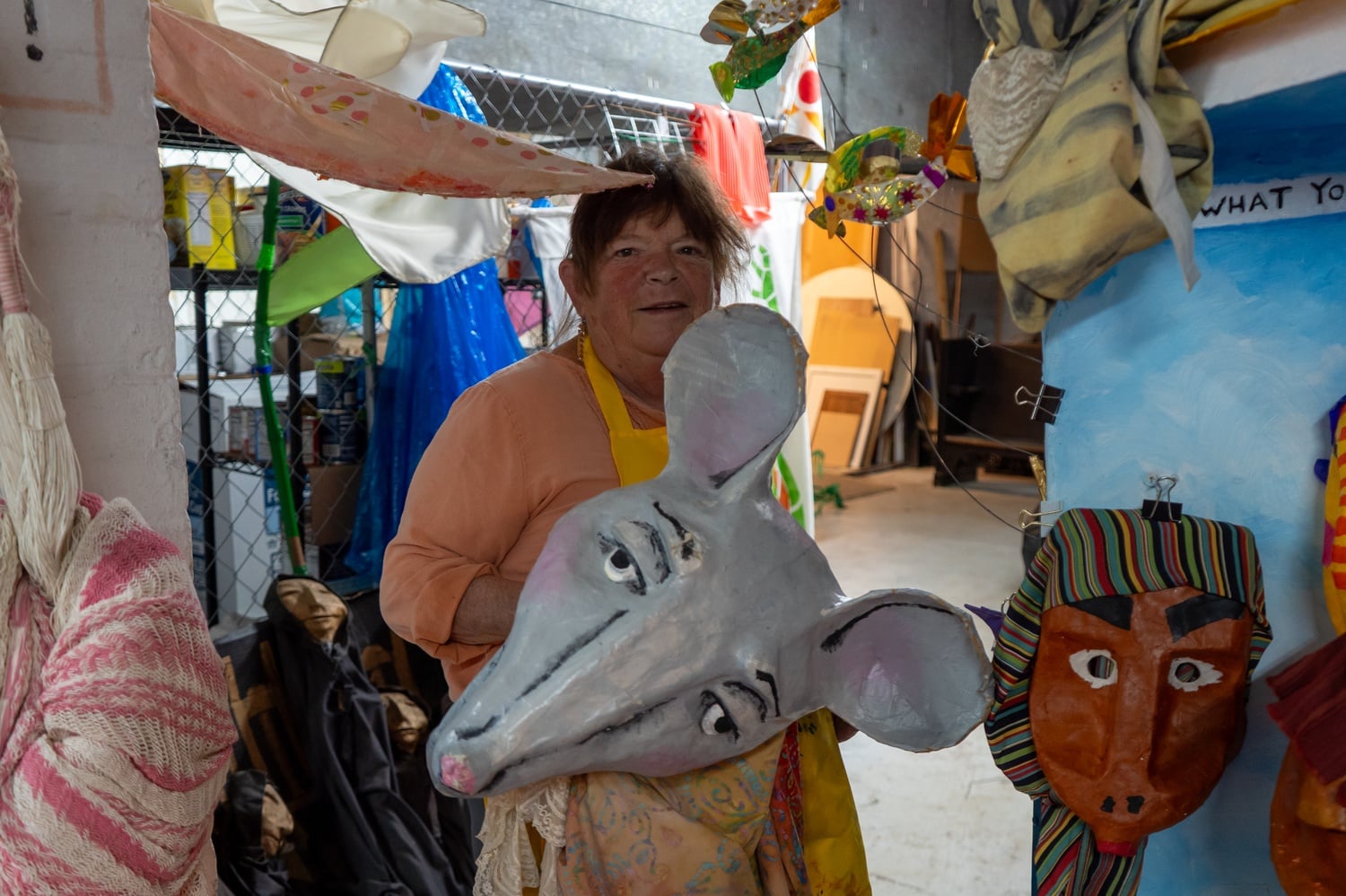
Ms. Mouse’s head is papier-mâché, with a large snout, two big round ears, and a rather lifeless pair of eyes painted onto her gray face. Beneath this rodent mask is Sara Peattie, who co-founded the Puppet Free Library with her late partner, puppeteer George Konnoff.
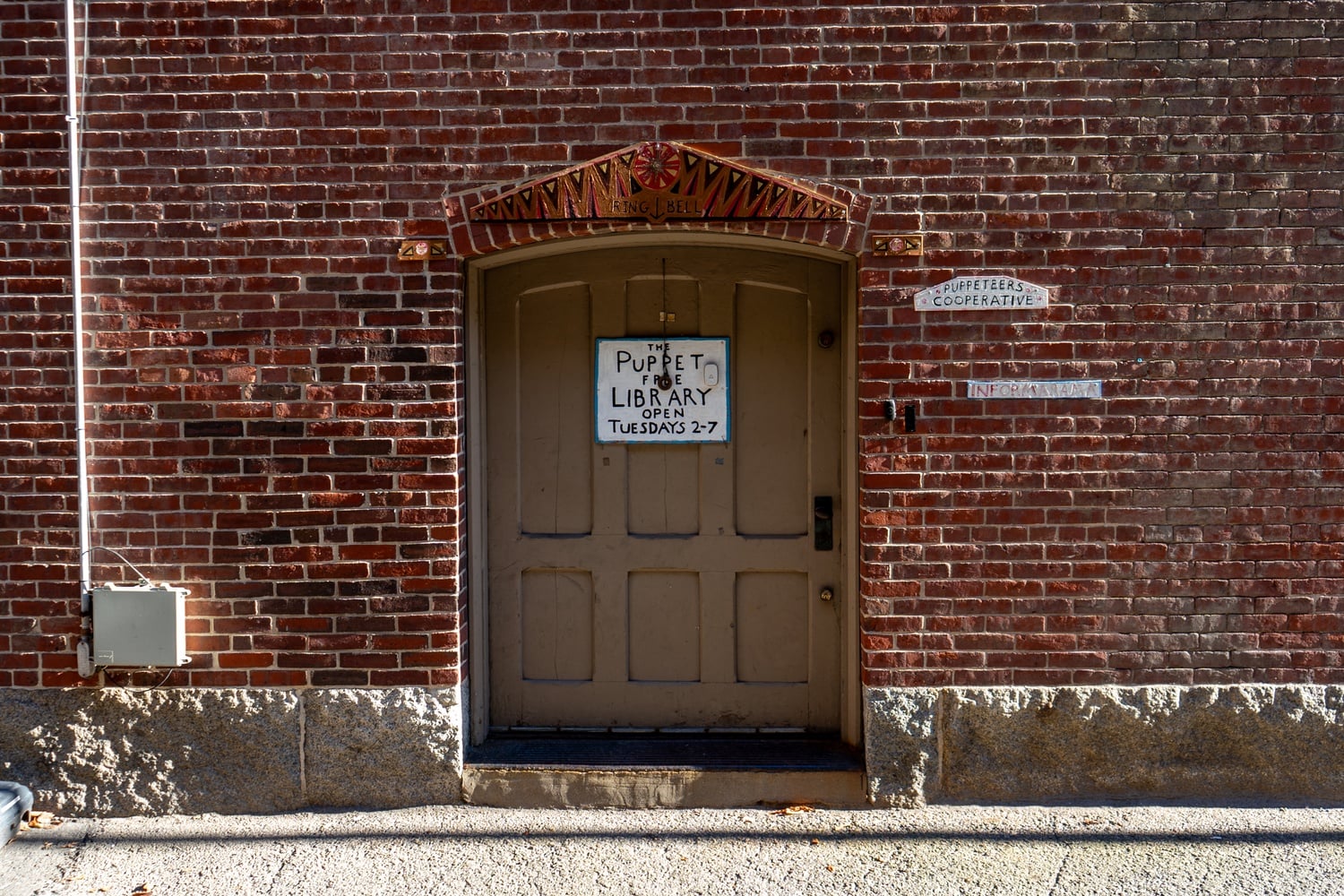
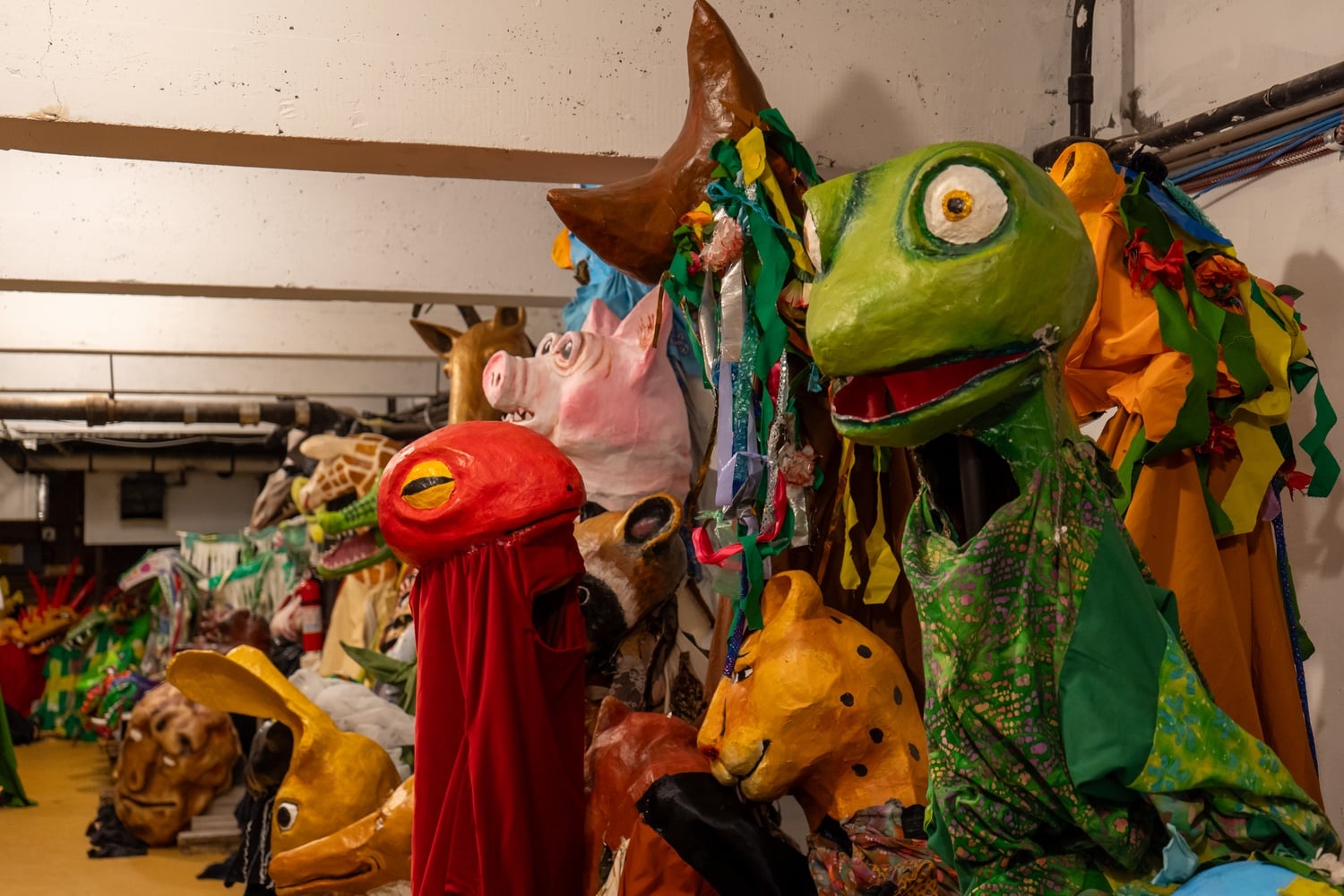
Located in the basement of historic Emmanuel Church on Newbury Street in Back Bay, the library holds more than 300 handmade puppets available for anyone to borrow. The process is simple: Visitors scrawl their names and numbers in a composition notebook that serves as a ledger, their entries showing little regard for the ruled lines. Peattie trusts that borrowers will return what they take.
“They always bring them back,” Peattie says. “Nobody has the closet space.”
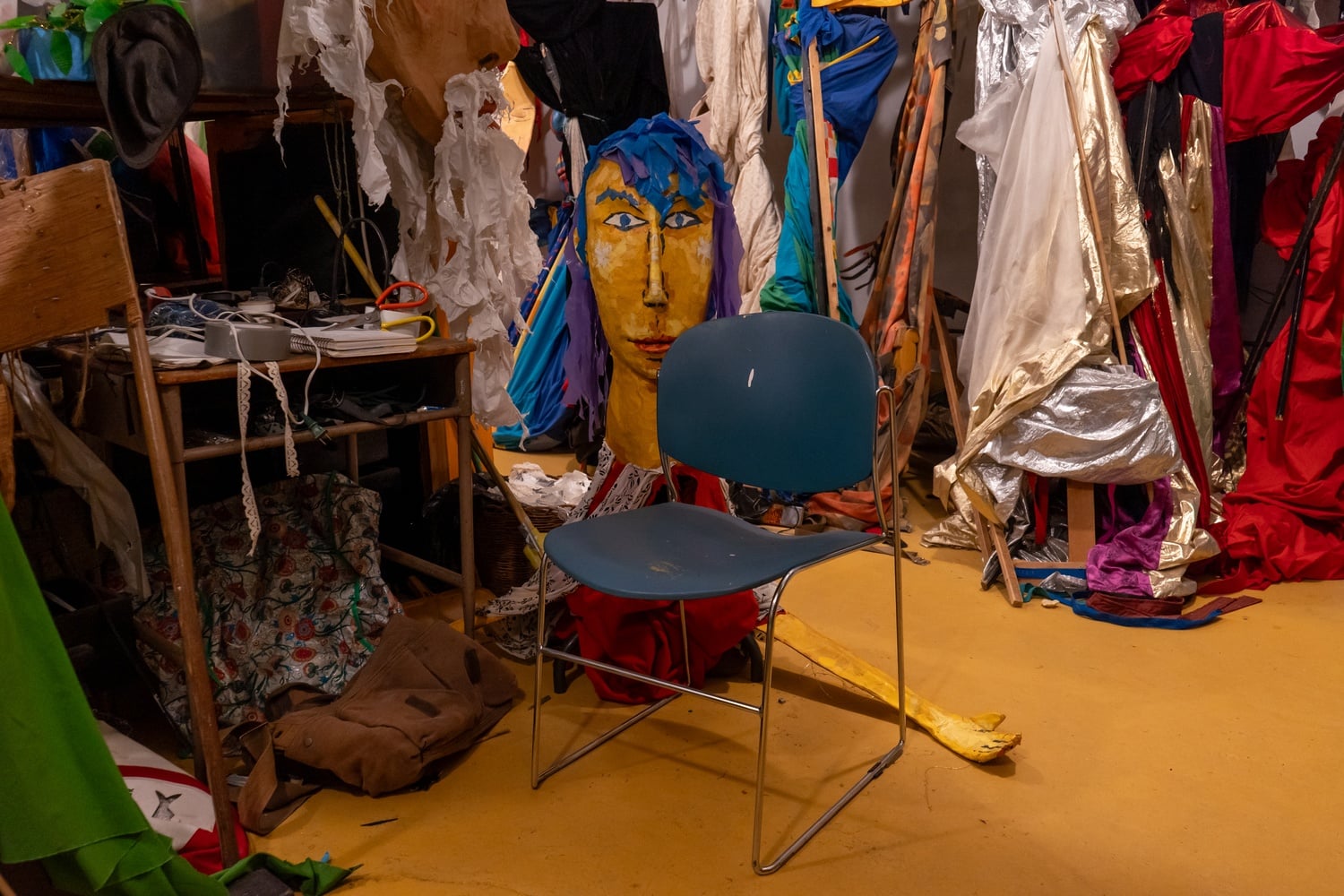
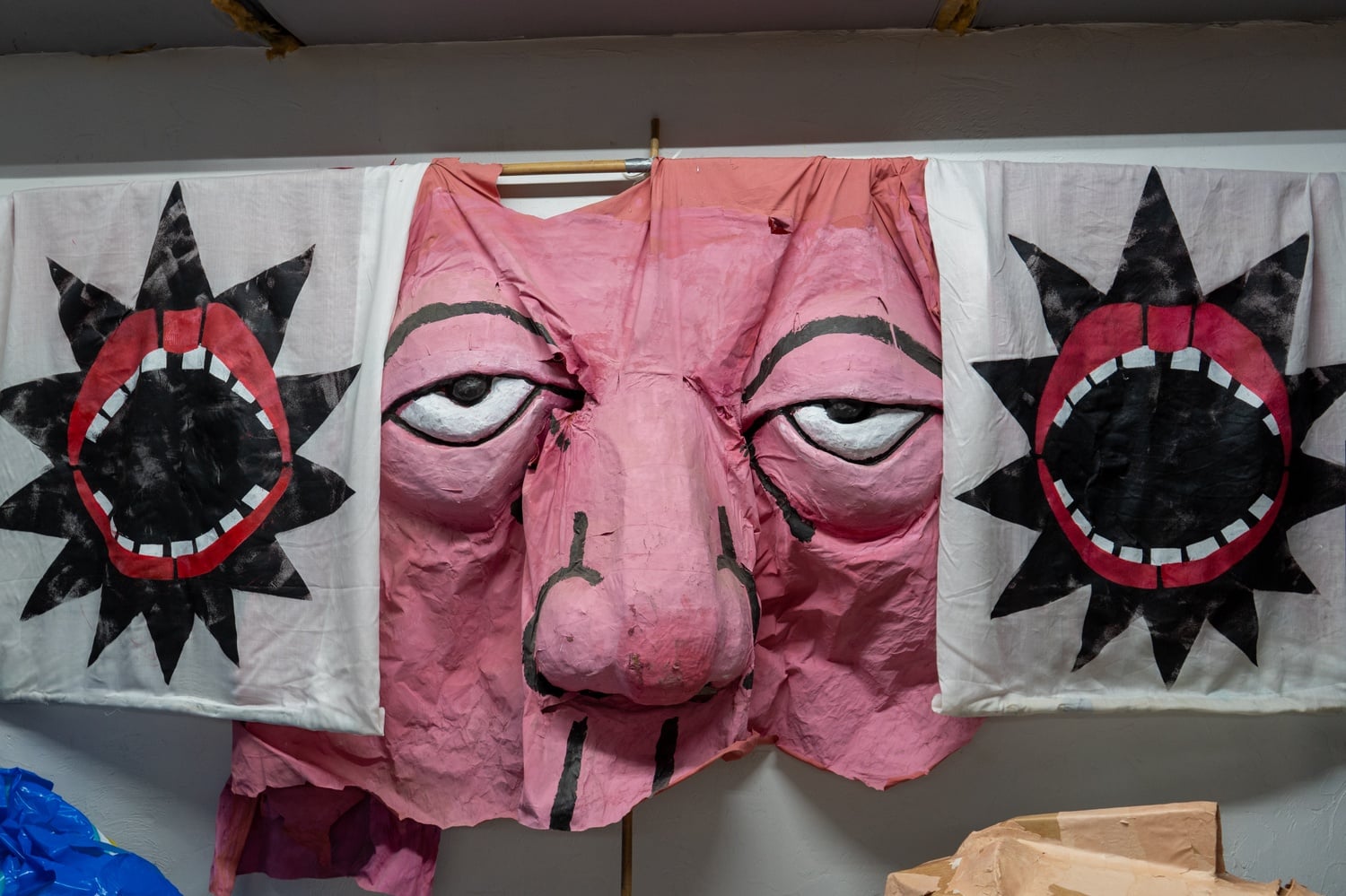
She’s probably right. A few of the library’s items are what the word “puppet” brings to mind — marionettes, “fish sticks”. But most are something else: huge, wearable apparatuses. Some of the most popular puppets tower at 12 feet tall, and others span 10 feet wide. Some, folded haphazardly throughout the space, are even larger.
Puppets lived beneath the church long before Peattie’s library existed. Peattie says she has no idea how the original puppeteers ended up there, and even now, she says, there is no formal arrangement with the church upstairs. (Emmanuel Church did not respond to a request for comment about its arrangement with the library.) As far as she knows, since at least the 1960s, each group of puppeteers has passed the space down to the next.
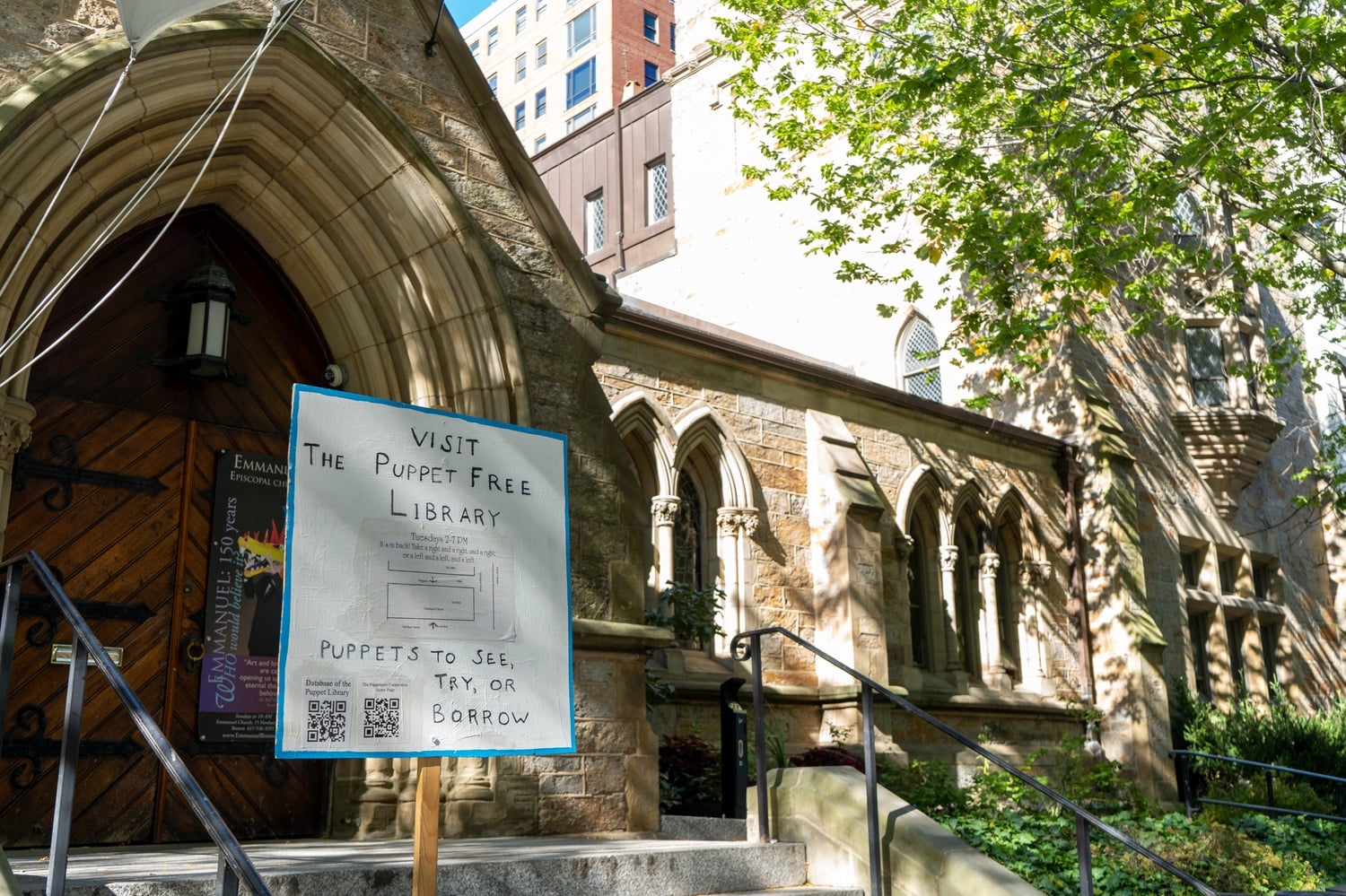
“I arrived here working with a different group, and I stuck around, which is how things have happened around here,” Peattie says.
The library’s founding was similarly informal. “It wasn’t anybody’s decision, no more than moving here,” Peattie says. “We had all these puppets. They were stored. People kept borrowing them.”
Eventually, borrowers began asking each other about the whereabouts of different puppets, and someone started writing down the exchanges. “Once there was a library book,” she says, “it was a library.”
Ms. Mouse isn’t the only creature of her kind in the Public Garden. Many borrowers take puppets out just to walk around the park. “It’s strange because you’re a very different person, and people are very different to you,” Peattie says.
Others borrow puppets for parades, protests, plays, and family events.
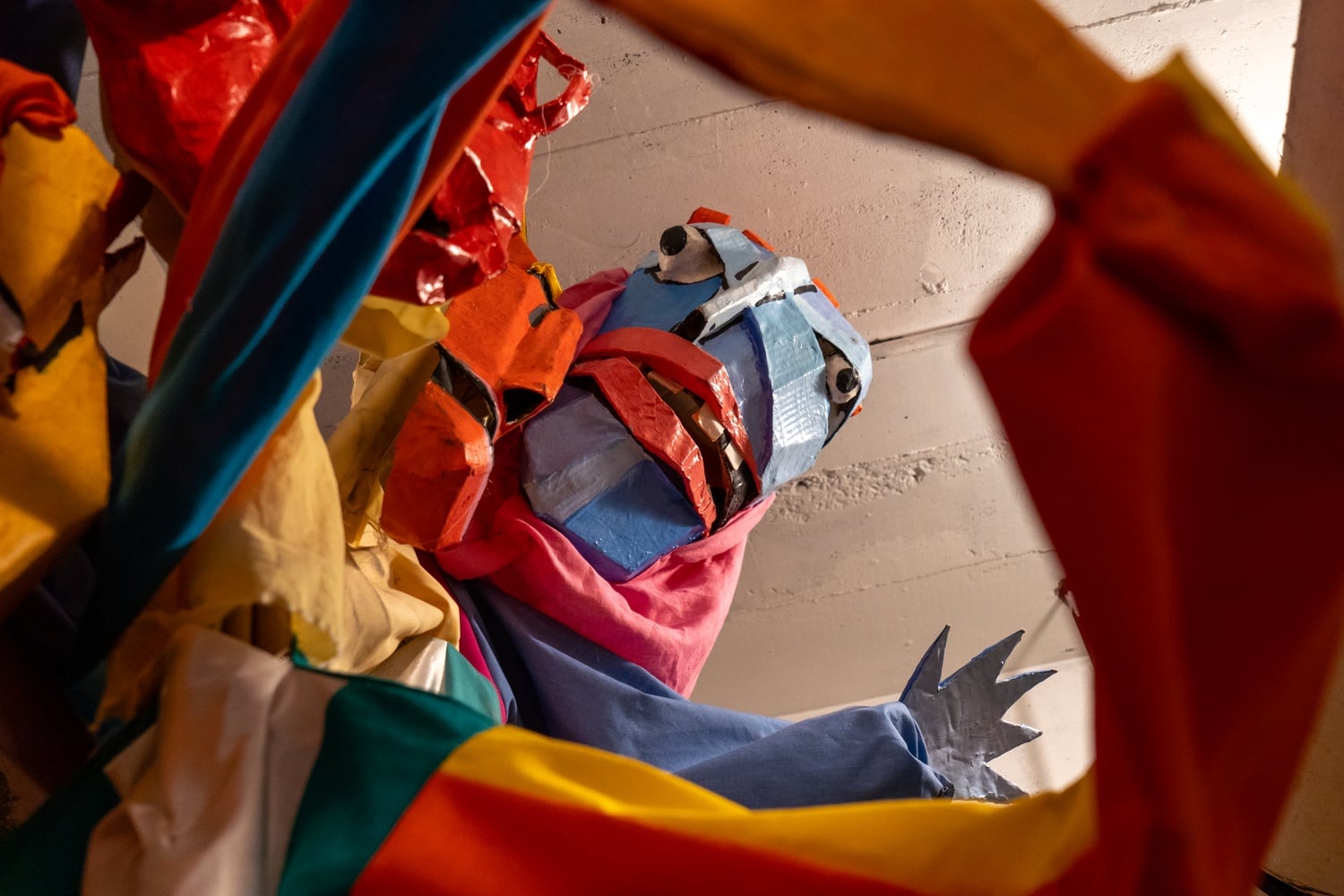
The most popular puppets, Peattie says, are the dragons. Some are long, with tails trailing off the back of a big mask, and require up to 12 people to bring the creature to life. There are bird dragons modeled after the prows of Viking ships, lizard dragons, snake dragons, horse dragons, and Chinese dragons that Peattie describes as dog-like.
“Anything can be a dragon, so how could you ever get tired of it?” Peattie says. “Dragons are good. Dragons are bad. Dragons look like anything you want.”
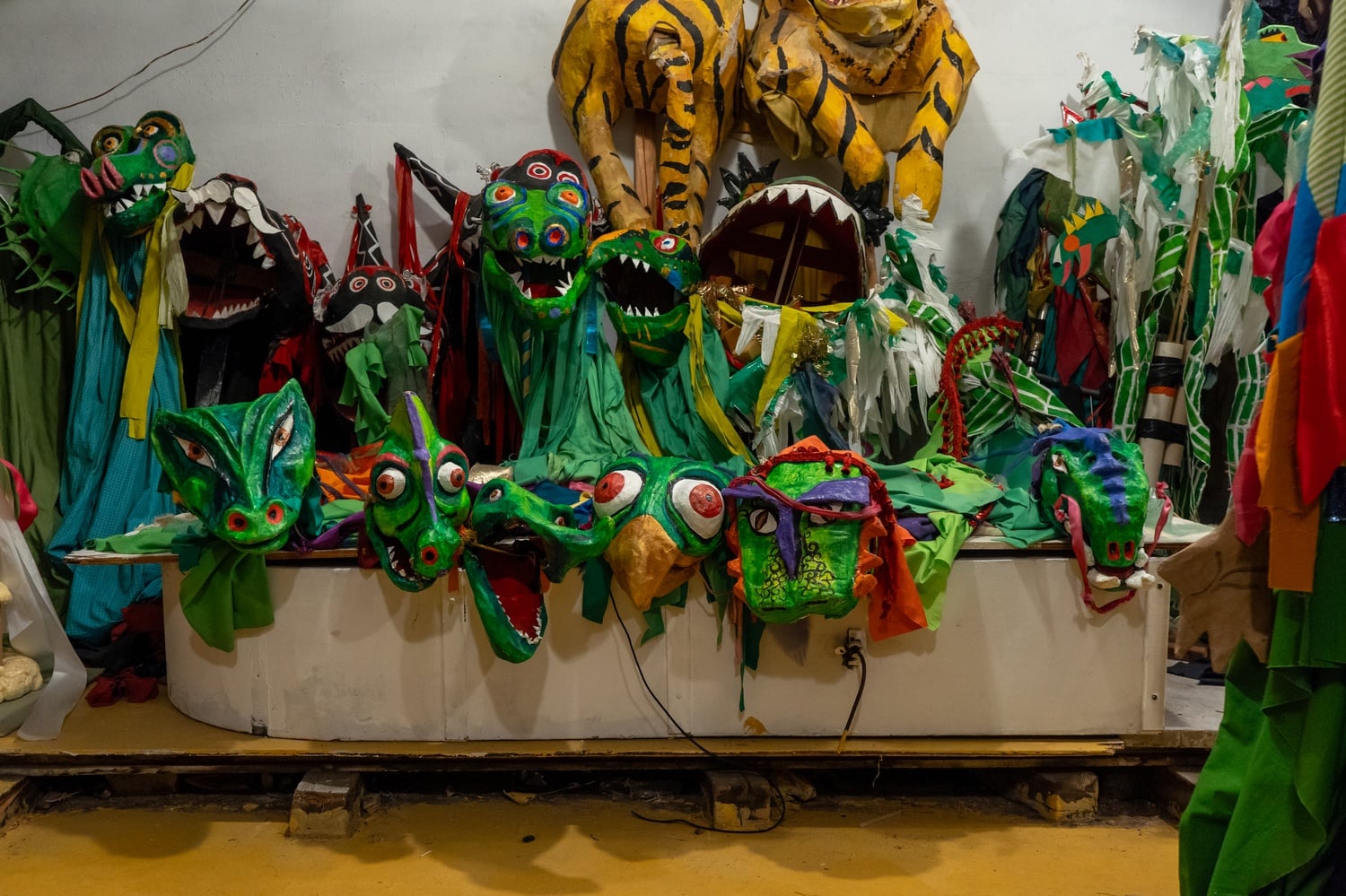
Puppets can represent just about any idea, and Peattie often uses them to teach. Separating frightening ideas from real people, she says, makes those ideas “less scary and less threatening.”
Mark Pelletier, a fellow librarian, created one of the library’s signature dragon shows, “The Little Dragon Uprising,” in which children improvise as the little dragons. It goes like this:
Once upon a time, there was a big, bad dragon, covered head to tail in spikes. One day, he decided the little dragons — and they were all much littler than him — should gather up everything they had and hand it all over to keep him fed. The little dragons were scared and confused, so much so that they started to fear each other, too. Seeing what was happening to their village, they held a meeting to find a solution. With some nudging from the narrator (“What does the big dragon have, and what do you little dragons have?”), the dragons put the pieces together and agreed to stop feeding him.
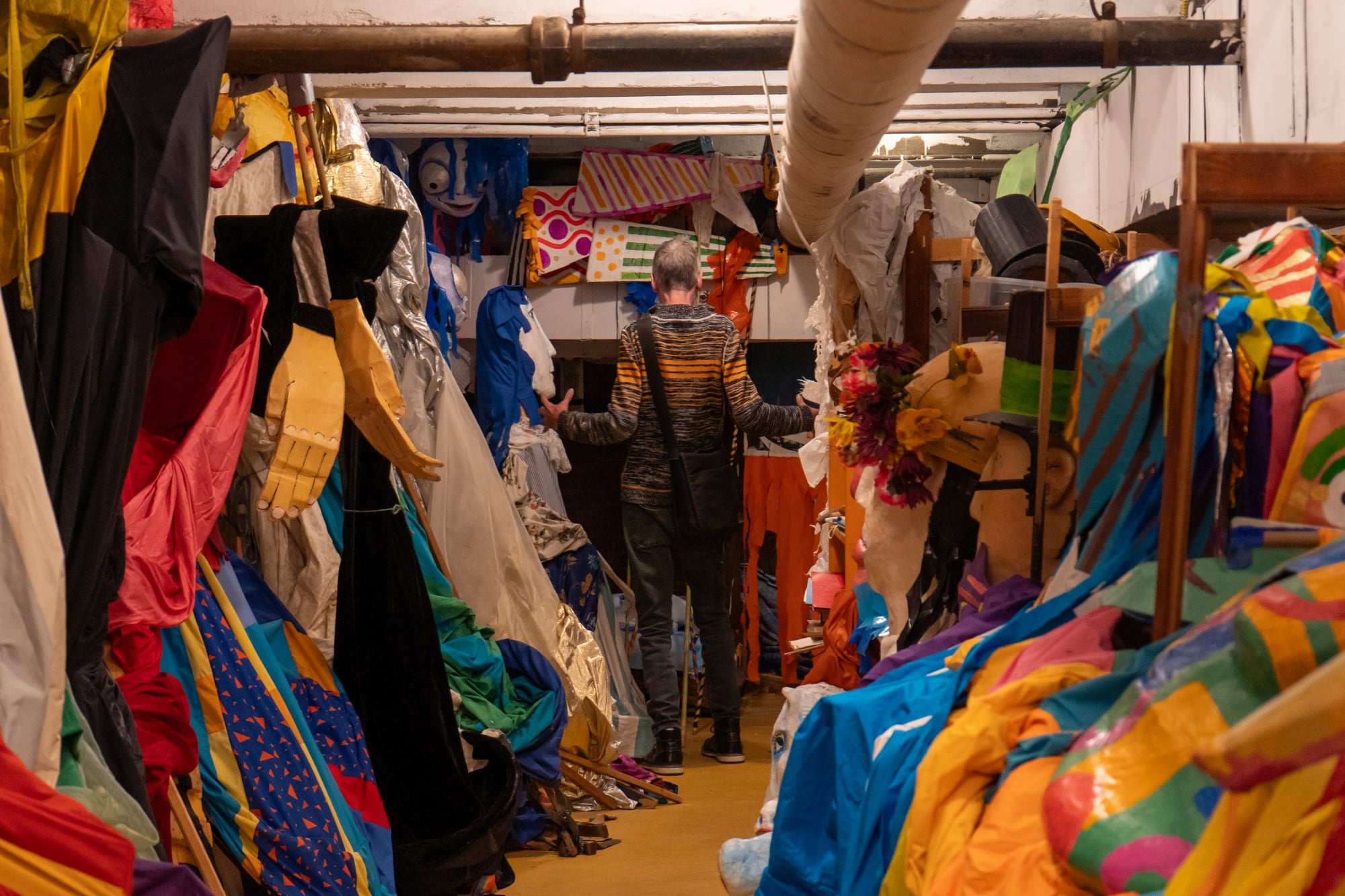
If that sounds politically charged to you, Peattie is inclined to agree. “It’s actually a bit of a socialist plot,” she says of the Puppet Library. “Always was. Shh!”
Peattie’s politics have deep roots. As a teenager in the late 1960s, she learned to make puppets under Peter Schumann, co-founder of the Bread and Puppet Theater, a radical touring company whose giant puppets became a fixture of protests against the Vietnam War.
Today, Peattie protests environmental destruction. During wildfire and hurricane season, she uses fire and wind puppets to explain the connection between natural disasters and climate change. She also brings her puppets to demonstrations at the Massachusetts State House with Extinction Rebellion, which describes itself on its website as a “decentralised, international and politically non-partisan movement using non-violent direct action and civil disobedience to persuade governments to act justly on the Climate and Ecological Emergency.”
Peattie hopes to encourage the same spirit of activism among library patrons. She plans to hold workshops teaching attendees how to make noisemakers out of ordinary household items,which can be used for protests. “It is useful to know your neighbors and get together a group that you can act with,” she says.
Sustainability is an intrinsic part of her activism, and she makes most of her puppets from recycled materials. The sheets that dress them are scraps from a local hospital, while the plastics she uses are byproducts from a plastic bag factory. Even the paper is repurposed heavy-duty photography background paper. These materials take more time to source, Peattie says, but they reduce her operating costs and environmental footprint.

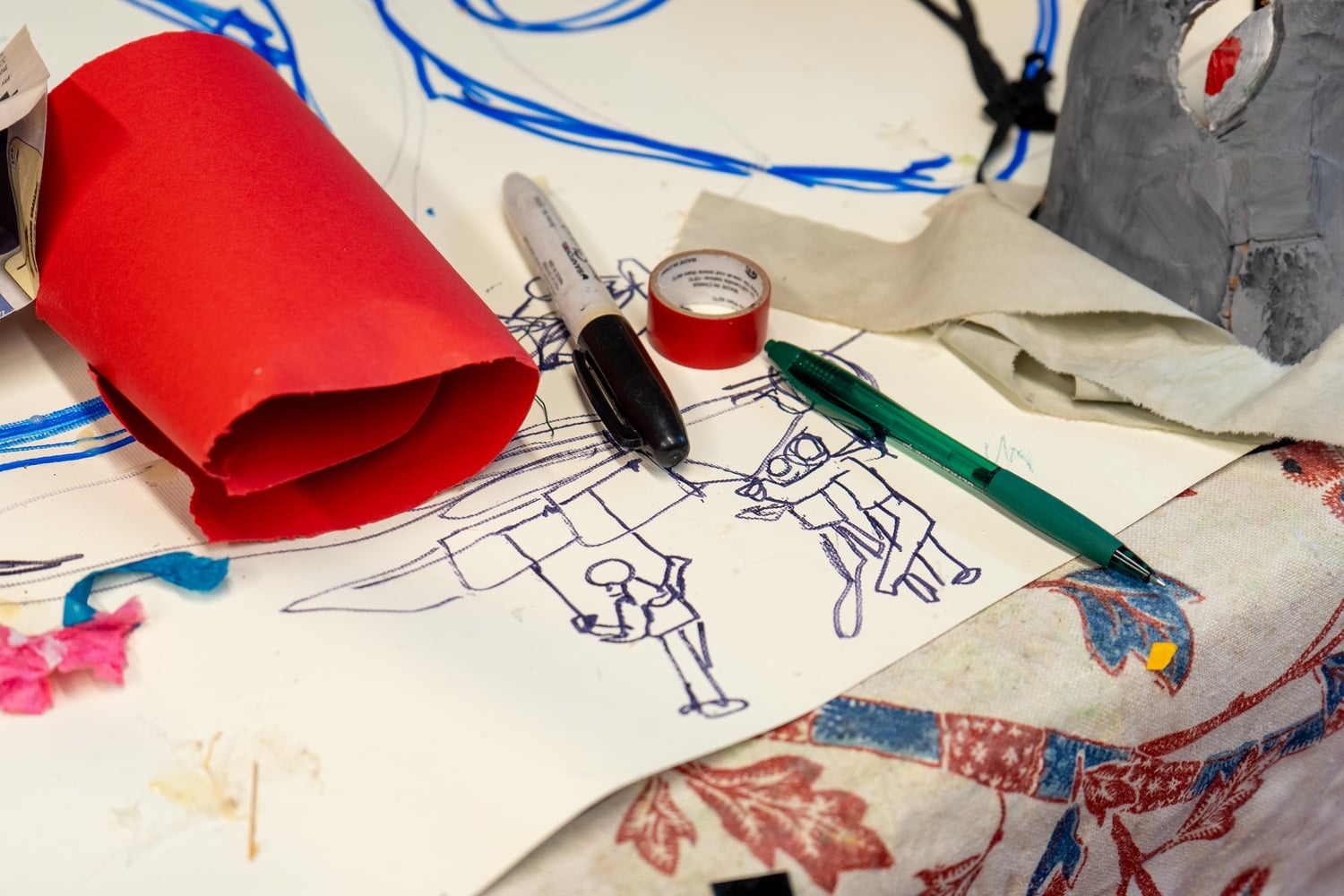
With these supplies, Peattie makes most of the library’s puppets herself. Because she’s not as “meticulous” or “obsessive” as some other puppeteers, she says, one of the larger puppet costumes takes her only about a week of steady work. She draws inspiration not just from other puppeteers, but also from the children who attend her workshops.
“I steal all their ideas,” Peattie jokes.
The spirit of storytelling — whether through Ms. Mouse, socialist puppet shows, or children awed at her dragons — is the guiding principle of the Puppet Free Library. After all, there are few other places where children can learn about collective action and adults can play with puppets.
—Magazine writer Khadijah A. Olufayo can be reached at [email protected].
—Magazine writer Maria Borrell Ferrero can be reached at [email protected]
Want to keep up with breaking news? Subscribe to our email newsletter
Have a tip for The Crimson? Share it confidentially