Former HKS Employees Allege Years of Contractor Favoritism, Construction Problems Under Campus Operations Chief
After an April asbestos finding set off an internal dispute, former HKS employees described years of alleged bid favoritism, construction problems, and management concerns under HKS operations chief Arthi Kasetty, including claims that she shared competing bid information with a favored contractor.

When testing found asbestos in duct sealant at the Harvard Kennedy School’s Littauer Center in April, an employee began looking into whether similar equipment replaced during earlier renovations had ever been tested.
The employee — Andrew J. Armington, then the director of building operations and planning at the Kennedy School — was checking for asbestos ahead of ventilation work when he decided to test the associated ductwork as an added precaution, according to a former employee.
But when Armington brought the positive test results to Chief of Campus Planning and Operations Arthi Kasetty, she pressed for a second opinion on the testing and told him not to discuss the findings with others, according to the former employee.
Kasetty later moved Armington off the project.
Armington escalated the matter to HKS Executive Dean Joshua G. McIntosh, who referred it to the school’s human resources department. After a roughly two-week review, employees were told that the school found no wrongdoing by Kasetty, the former employee said.
Armington left the department in May. He declined to comment.
But the dispute did not end there.
In June, the Massachusetts Department of Environmental Protection and Department of Labor Standards opened an investigation into allegations that HKS mishandled asbestos during the Littauer renovations.
And former employees told The Crimson that the asbestos episode was only the latest example of problems they had raised for years inside the Campus Planning and Operations department — including alleged favoritism in construction bidding, problems with project oversight, and concerns about Kasetty’s management of the department.
Francene Amari-Faulkner, a former senior project manager at HKS who left in 2023 after nearly five years, said Kasetty repeatedly steered projects to the same contractor regardless of the bids submitted.
“The bid rigging was outrageous,” Amari-Faulkner wrote in a statement to The Crimson. “Eventually, several contractors stopped submitting bids because they knew the process was rigged and that the project would always get awarded to this one contractor.”
Get The Crimson in your inbox.
“It was degrading for me as well as we all knew what was going on. There was nothing I could do. She was my boss,” she added.
Three former HKS employees identified the contractor as DPM Design and Construction, an Arlington-based commercial contracting firm, and said Kasetty gave the firm information about competing bids or directed employees to prefer bids from the company.
Harvard’s procurement manual requires bids and quotes to be kept confidential and bars University personnel from giving suppliers information about competing bids.
Former employees also said projects at HKS involving DPM often departed from industry-standard safety practices, lacked required permits, missed deadlines, and resulted in subpar work.
Kasetty did not respond to repeated emails and phone calls for comment. Peter F. McAuliffe, DPM’s owner, declined to comment.
An HKS spokesperson declined to comment on personnel matters but wrote in a statement that “there is nothing more important than ensuring the safety of everyone who sets foot on our campus.”
“We take concerns raised about construction practices on campus very seriously,” the spokesperson wrote. “In coordination with Harvard Environmental Health and Safety, we have been conducting a review of our construction projects and procedures to ensure compliance with applicable policies and regulations, and we will take appropriate action as needed.”
At least one current HKS employee was scheduled to be interviewed this week as part of that review, which also covers Kasetty’s management of CPO, according to a separate former HKS employee.
This account is based on interviews with four people familiar with CPO, including three former HKS employees, and on construction records, asbestos testing reports, and state filings obtained by The Crimson. Some sources were granted anonymity to discuss sensitive personnel matters and internal department operations.
Years of Warnings
Two days after the initial finding on April 7, a broader round of testing again found asbestos in duct sealant throughout the area slated for renovation — and on ventilation equipment left over from earlier phases of the project.
An April 9 laboratory report obtained by The Crimson showed asbestos in all eight samples of Littauer duct sealant tested — three from spare ventilation equipment removed from Littauer’s ground and second floors during a 2025 renovation and later stored in a Rubenstein building mechanical room and five from ductwork on Littauer’s third floor.
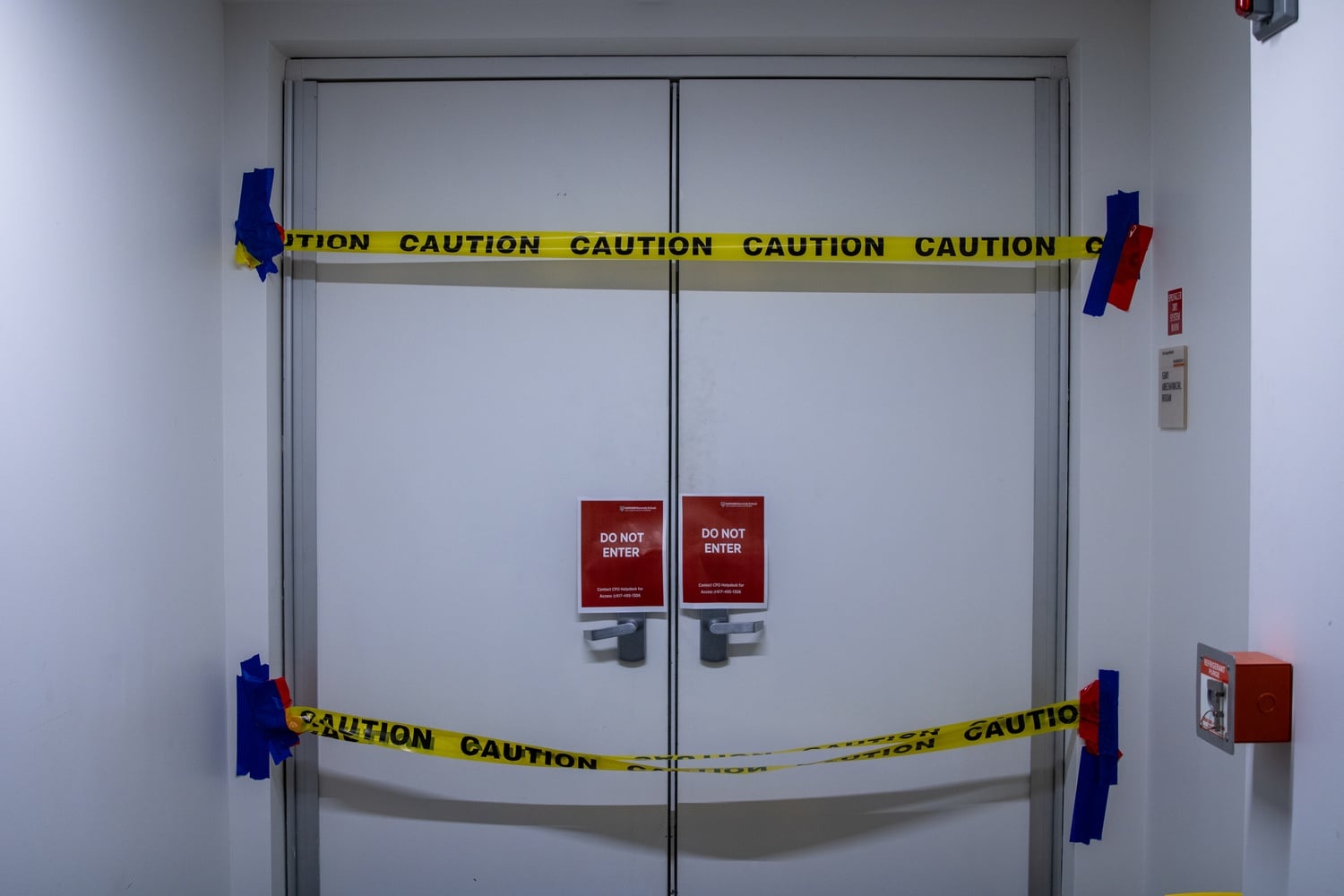
A former employee said several members of the department searched for, but could not find, records showing that the duct sealant on equipment removed from the ground and second floors had been tested or abated before the 2025 work was completed. (An HKS spokesperson declined to confirm whether testing had been conducted.)
But records obtained by The Crimson show that Harvard had encountered asbestos in similar material in Littauer years earlier.
A 2018 report found asbestos in material coating HVAC equipment in a Littauer mechanical room and recommended that it be removed if the area would be disturbed in future renovations.
In 2019, contractors removed roughly 50 square feet of HVAC ductwork with asbestos-containing duct sealant from a Littauer penthouse mechanical room. The work was conducted under containment, with air monitoring before the area was reopened.
Another report, from 2022, found asbestos in gray HVAC duct sealant near two first-floor rooms.
As Armington began reviewing asbestos testing from earlier Littauer renovations, his dispute with Kasetty escalated.
In phone conversations after the initial finding, Kasetty accused Armington of creating unnecessary work and going behind her back by independently testing the ductwork, according to a former employee. Kasetty also contacted other members of the team to ask whether he had shared information about the testing with them. (Armington declined to comment.)
Armington was placed on two weeks of paid leave roughly two weeks later while HKS investigated the matter. The review included two days of interviews with employees about asbestos findings, Kasetty, construction bidding procedures, and employees’ qualifications, according to the former employee.
After the review, employees were told that HKS had hired an environmental consultant who found no wrongdoing by Kasetty, the former employee said. Employees who asked to see the consultant’s report were told they would receive it, but were never provided a copy.
MassDEP and DLS have since conducted inspections at the school and observed the stored parts. Findings are expected in October.
McIntosh wrote to faculty and staff in June that post-construction air-quality testing found the affected areas met Massachusetts occupancy standards and that construction areas had been unoccupied.
But the notification was sent only after The Crimson contacted the school for comment — and nearly two months after Armington had urged Kasetty to notify affiliates in April.
Asked about Kasetty’s instruction to Armington not to notify others, Rosemary K. Sokas, a Georgetown University School of Health professor emerita and former director of OSHA’s Office of Occupational Medicine, said such an instruction was unusual and ran counter to best practice.
“The one employee who’s been trying to get people’s attention and they’re telling them not to talk,” Sokas said. “You shoot the messenger. You don’t pay attention when you’ve got a problem.”
‘He Always Got The Contract’
As part of the bidding process for a renovation of the penthouse atop Littauer in September 2021, representatives from several prospective contractors gathered for a project meeting.
But when a Gloucester Builders contractor saw McAuliffe, DPM’s owner, he told another contractor at the meeting that Gloucester and the other firms had wasted their time showing up, according to a former HKS employee.
Patrick Brady, a principal general contractor at Gloucester, did not deny that the exchange occurred, but wrote in a statement that contractors sometimes joke with one another at project walkthroughs. He said Gloucester eventually asked to be removed from HKS’s bidding list after unsuccessfully pursuing work there for several years.
“Strictly a business decision,” Brady wrote, adding that he was unaware of any improper bidding practices at HKS.
HKS typically solicited proposals from several contractors, who received project information and submitted bids by a set deadline, according to three former employees.
Harvard’s procurement rules require those bids to remain confidential.
“Bids and quotes submitted to the University are to be held in strictest confidence,” Harvard’s procurement manual says. “Under no circumstances may Harvard personnel give suppliers information about bids or quotes from competing sources.”
Amari-Faulkner, who oversaw major HKS construction projects as a senior project manager, said she would sometimes solicit proposals from five to six contractors, only to see the same firm get the job.
“Sometimes this one contractor would submit his bid and it would be higher than another bid,” Amari-Faulkner wrote. “A few days later, he would resubmit his bid, it would still be accepted and it would be lower than the lowest bid we had already received.”
“He, of course, always got the contract,” she added.
The three employees said Kasetty sometimes told DPM how much competing contractors had bid and that the firm subsequently submitted a lower price.
The people also said that, on some projects, employees were directed to seek a bid from DPM directly rather than conduct a broader competitive process.
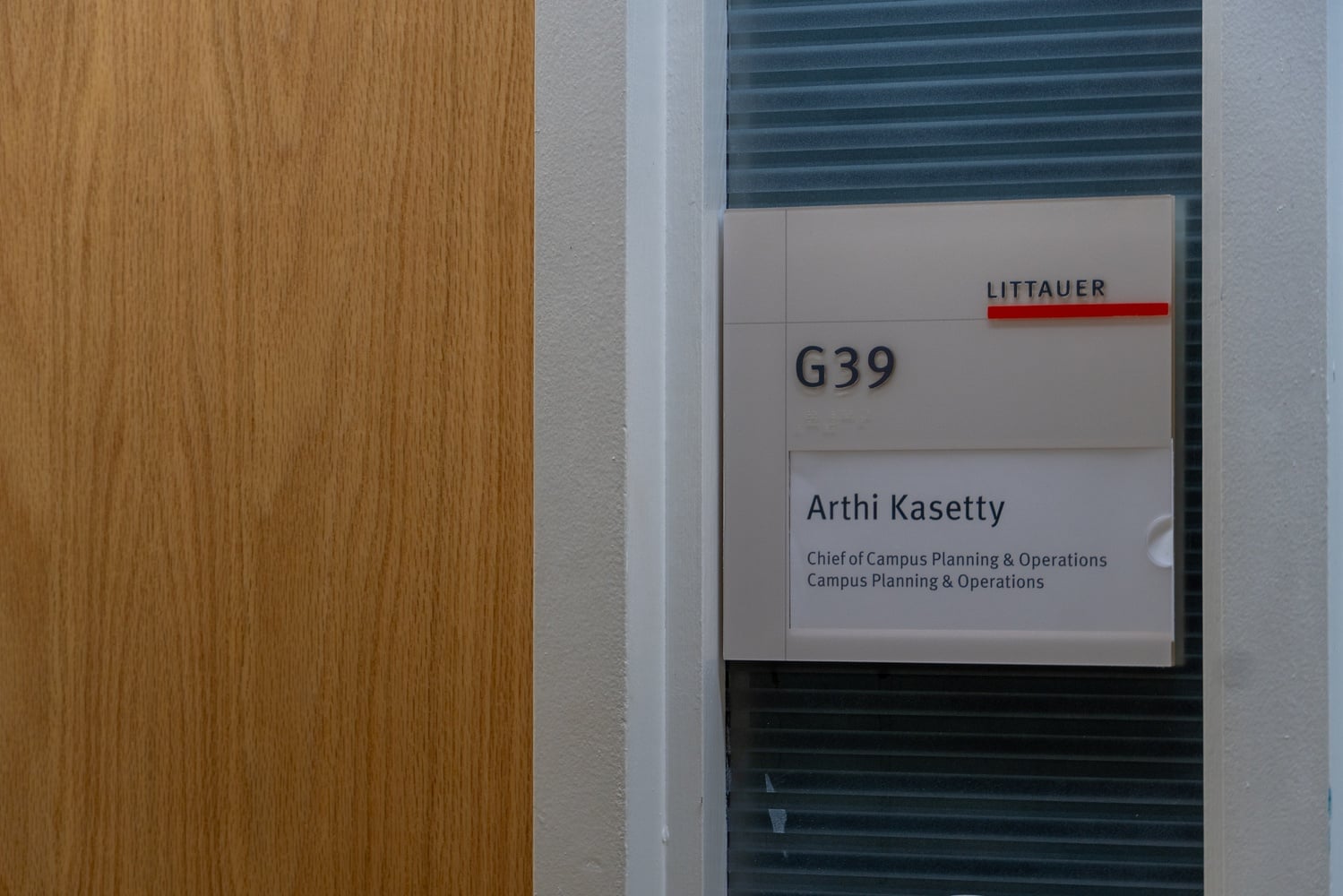
At a CPO meeting in spring 2022 about the multimillion-dollar renovation of the Bloomberg Center for Cities in the Taubman Building, Kasetty said she had told DPM its bid was too high, according to a former HKS employee who attended the meeting.
DPM subsequently lowered its price, the employee said, and won the project.
The same employee said Kasetty described giving DPM a similar warning during bidding for the Littauer penthouse renovation.
Former HKS employees also said projects involving DPM frequently departed from industry-standard safety practices, lacked required permits, missed deadlines, and resulted in subpar work.
On one project, an electrician working with DPM left exposed wiring and performed work on live electrical systems in March, according to two former HKS employees, who witnessed the scene. The work included removing a Crimson Cash machine while wiring remained live and without a permit, one of the employees said.
Former employees also pointed to problems with the Bloomberg Center renovation, which DPM led from 2021 to 2023. One former employee described HVAC problems, inadequate insulation, insufficient audio privacy, and cabinetry and flooring that began deteriorating after the renovation. The renovation was ultimately completed behind schedule.
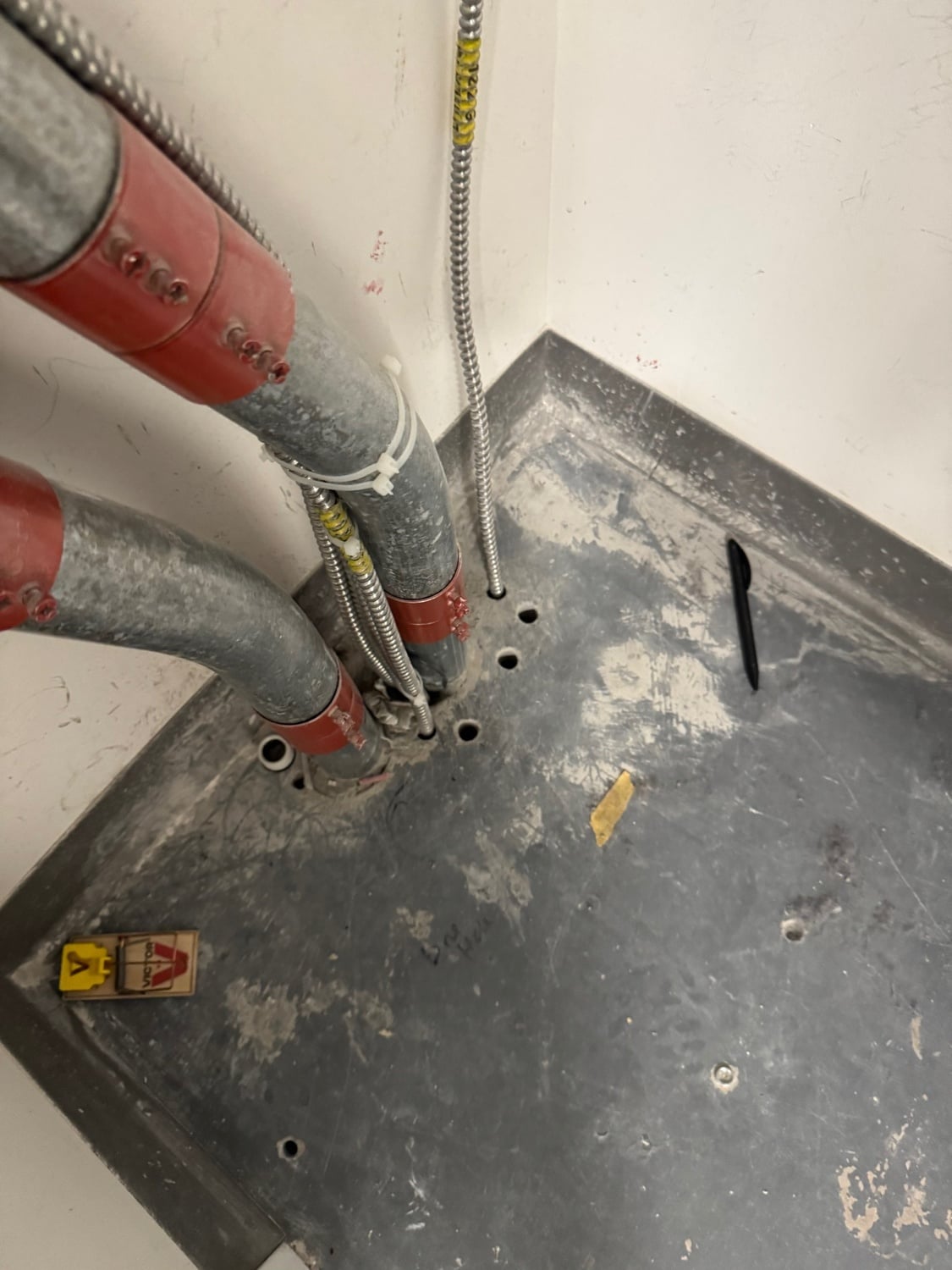
A former employee said Harvard Environmental Health and Safety issued a stop-work order during the project over concerns about workers’ safety equipment and practices. (EHS did not respond to a request for comment.)
Questions about permitting surfaced on other projects, too.
In spring 2025, a Harvard Real Estate employee and a Boston Properties representative found a DPM-led renovation underway on the second floor of 124 Mount Auburn Street and raised concerns that required building and fire-protection paperwork had not been filed, according to a former HKS employee.
Harvard spokesperson Amy Kamosa declined to comment on the episode. McAuliffe also declined to comment.
Inside the Department
The four people, including the three former employees, said the favoritism they saw in contracting was mirrored inside the Campus Planning and Operations department, where they said Kasetty concentrated responsibility among a small group of employees while sidelining others.
All four pointed to the treatment of a longtime HKS building manager as an example. Three identified him as Scott McDonald, who had worked at the Kennedy School for more than two decades.
Starting around February 2025, Kasetty began to strip away some of his responsibilities and reassigned them to other employees, according to the three people. McDonald was increasingly left with lower-stakes work involving projects such as window blinds and paint and passed over for promotions.
Tensions over McDonald’s role came to a head during a small renovation for the Carr-Ryan Center in March 2025.
After a dispute over work involving a door sensor, Kasetty asked Armington to file a formal complaint against McDonald, saying she was looking for a reason to remove him, according to a former employee.
Armington declined to file the report, the employee said. (Armington declined to comment on the incident.)
McDonald later submitted complaints and reports about Kasetty to the Kennedy School’s HR department, according to a former employee. He was laid off in June 2025 as part of a broader round of cuts that HKS attributed to budget pressures.
McDonald declined to comment.
Several other CPO positions were also eliminated as part of the June cuts, including a maintenance operator, electrician, and a loading dock manager and operations assistant. At Kasetty’s request, HKS did not replace one of the maintenance operators, leaving just one employee in the role, according to a former employee.
Three former employees said complaints about Kasetty had repeatedly reached HR.
One former HKS employee said Kasetty told them she was aware of four employees in CPO or adjacent departments who had spoken with HR about her. Three of the four people no longer work at the Kennedy School.
Former employees also raised concerns about Kasetty’s control over the department’s finances.
According to a former HKS employee, only Kasetty and the team’s business manager had access to the department’s financial statement. HKS required expenses to be coded to specific categories so spending could be tracked against the amount budgeted for each line item.
But the former employee said Kasetty repeatedly instructed the business manager, sometimes in front of other members of the team, to move expenses into particular codes or line items, regardless of where the costs belonged.
Amari-Faulkner said that although she valued her time at HKS and the colleagues she worked with, Kasetty’s management of CPO ultimately tarnished the experience.
“The Kennedy School was a wonderful place to be. I cared for and enjoyed my colleagues there,” Amari-Faulkner wrote. “It was unfortunate that one individual caused so much unneeded distress for people.”
—Staff writer Uy B. Pham can be reached at [email protected] or on Signal at ubp.88. Follow him on X @uybpham.
—Staff writer Alexa M. Schmitt can be reached at [email protected] or Signal at alexaschmitt.15. Follow her on X @alexa_m15_s.
Want to keep up with breaking news? Subscribe to our email newsletter
Have a tip for The Crimson? Share it confidentially