DOJ Probe Into China-based Financial Aid Donations Could Test Limits of Affirmative Action Ruling, Experts Say
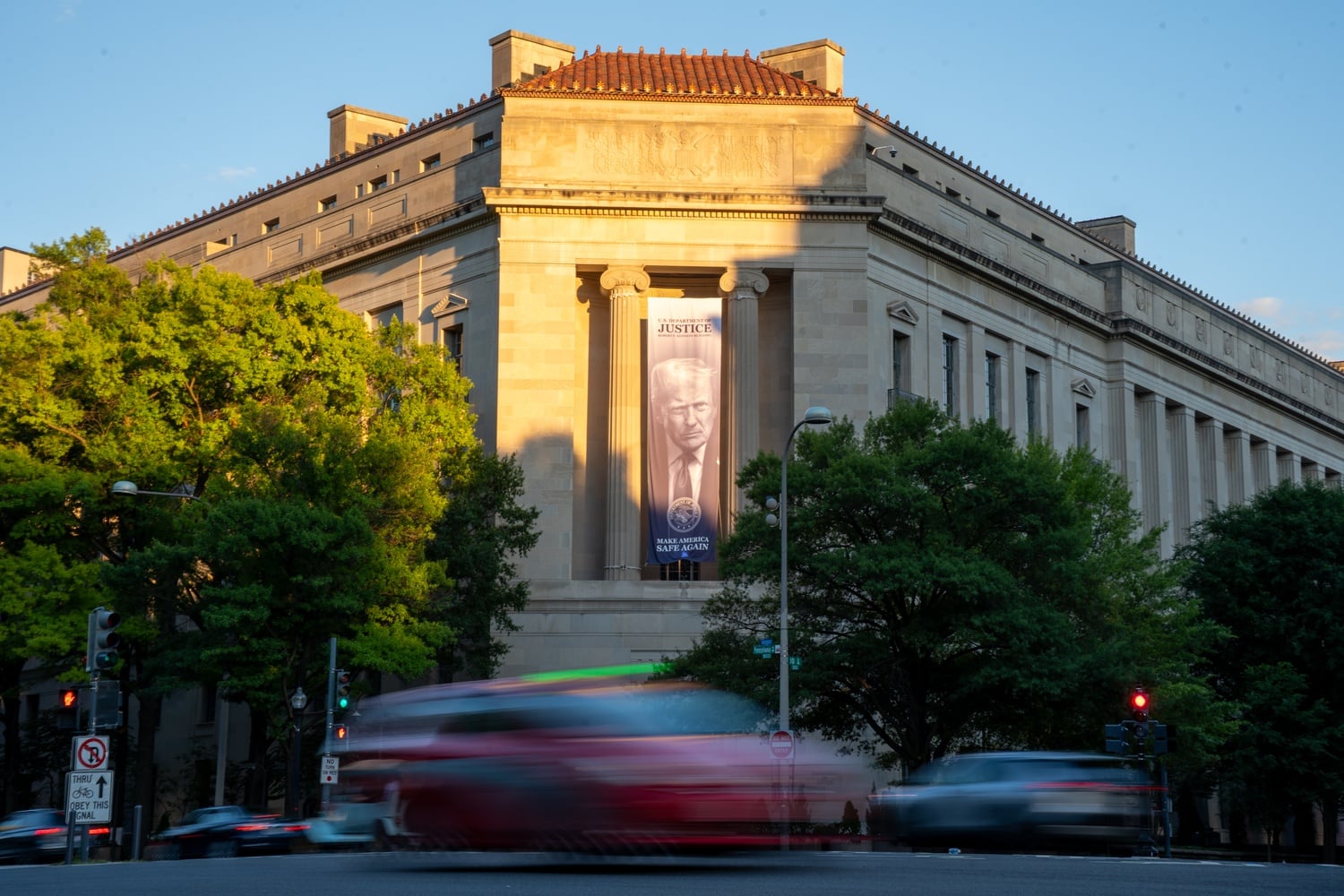
The Department of Justice investigation into Harvard’s acceptance of China-linked financial aid gifts that favor foreign students could test how far the 2023 Supreme Court ruling against race-conscious admissions reaches beyond admissions, legal experts said.
Seven legal experts told The Crimson that Students for Fair Admissions v. Harvard and the Trump administration’s broad interpretation of Title VI could provide a basis for a case challenging preference-based financial aid and scholarships. Under Title VI, institutions receiving federal funds are barred from discriminating on the basis of race, color, or national origin.
Peter F. Lake ’81, a professor of higher education law and policy at Stetson University, said the probe could ultimately produce another Justice Department lawsuit against Harvard.
“We may well be headed to the third lawsuit against Harvard coming from the DOJ,” Lake said.
“It does seem that there’s a preference now to take the lawsuit approach to enforcement,” he added.
Harvard has faced growing scrutiny over its connections to China. Last month, weeks after the DOJ first launched its financial aid probe, the Pentagon demanded that 30 universities, including Harvard, audit their foreign academic and financial partnerships.
The House Select Committee on the Chinese Communist Party also released a report alleging that Harvard put sensitive technology at risk through research collaborations with China. Harvard disputed the committee’s characterization of its research practices.
Harvard is also engaged in several other legal battles with the Trump administration. The administration is appealing a ruling that restored nearly $2.7 billion in federal research funding. Last month, a judge dismissed a separate Justice Department lawsuit against Harvard of violating Title VI in its response to campus antisemitism, a decision the government has since appealed. Harvard is also facing a DOJ lawsuit filed in February seeking access to admissions records.
Jonathan D. Glater, a professor at University of California, Berkeley School of Law, said the administration’s interpretation of the reach of SFFA suggests it may find grounds to pursue a lawsuit.
Glater pointed to a February 2025 Dear Colleague letter in which the Education Department argued that the Supreme Court’s ruling applies beyond admissions.
Get The Crimson in your inbox.
“Although SFFA addressed admissions decisions, the Supreme Court’s holding applies more broadly,” the letter reads, listing financial aid, scholarships, and prizes among areas where the department said educational institutions may not use race in decision-making.
Though SFFA focused on admissions, Lake said the decision could provide an indication of how the administration is interpreting Title VI across higher education.
“Title VI enforcement departments of Ed and Justice have been very focused on combating antisemitism, and also what broadly goes under the rubric of DEI admissions and activities,” Lake said.
“This opens up a third feature of Title VI, that sort of blends both a concern that this administration, and some members of Congress, have had about relationships with China,” he added.
Daniel G. Currell, a former Department of Education official, said that despite the novelty of legal action against preference-based financial aid, “the legal basis for going after it seems reasonably solid.”
Currell said that the broader issue was Harvard’s receipt of more than $630 million from sources based in China.
“The scholarship thing is a teensy little point there, but what it does do is it just gives the Department of Justice a point of access,” Currell said.
When the Justice Department announced its investigation, it cited $630 million in China-linked funding, arguing that some gifts appeared to require Harvard to support financial aid programs with preferences for students from particular countries. The department said it had not reached a conclusion about whether Harvard violated federal law.
But a Crimson analysis found that only about $36 million in gifts from sources attributed to China and Hong Kong carried financial aid preferences tied to students’ countries, nationalities, geographic regions, or international status. Of that amount, only about $4 million explicitly preferred students from China or Hong Kong.
Peter W. Wood, the president of the National Association of Scholars, a conservative higher education advocacy group, said federal scrutiny of foreign gifts intensified during Trump’s first term, when the Education Department began stepping up enforcement of Section 117, which requires universities to disclose certain foreign gifts and contracts.
While the current probe marks a novel use of federal civil rights enforcement against preference-based financial aid, private groups have already challenged race-based grants and scholarships in court.
The American Alliance for Equal Rights, led by SFFA president Edward Blum, has sued organizations over programs restricted by race. The group successfully challenged a grant program, run by Fearless Fund, that was restricted to Black women business owners, and has brought challenges against other race-based grant and scholarship programs.
Four experts said litigation stemming from the Harvard investigation could help clarify the legality of race- or national-origin-based scholarships beyond the admissions context.
Patrick F. Linehan, a partner at the law firm Steptoe, said universities may increasingly seek to modify donor restrictions on scholarships in response to SFFA and the administration’s interpretation of civil rights law.
Linehan wrote that his firm was advising schools to “figure out ways to express intent so that it achieves the donor’s objectives as closely as possible while still avoiding prohibited classifications under the Administration’s view of SFFA.”
Linehan said SFFA could make it potentially difficult for universities to defend explicitly race-based scholarships.
“It would be hard to argue that the rationale underlying SFFA would not apply to race-based scholarships unless one can make some sort of argument that the school is a passive bystander to the award of the scholarship,” Linehan wrote in a statement.
Currell, the former Department of Education official, said Harvard could seek to resolve the investigation before it produces another lawsuit.
“I think Harvard will try to avoid having to pay some crazy fine, but a Title VI civil rights violation is not a small thing to be found to have done, and so I think they’re going to want to minimize the damage,” Currell said.
But Linehan said Harvard’s recent willingness to challenge the administration could make a clean settlement less likely.
“I suspect Harvard’s not going to take this lying down unless the facts are egregious,” he said.
—Staff writer Alexa M. Schmitt can be reached at [email protected] or Signal at alexaschmitt.15. Follow her on X @alexa_m15_s.
Want to keep up with breaking news? Subscribe to our email newsletter
Have a tip for The Crimson? Share it confidentially
See more on: University, China, Office for Civil Rights, Department of Education, International Students