Cambridge Educators Union Reaches Tentative Agreements on Two Proposals, Remain At Odds on Key Issues
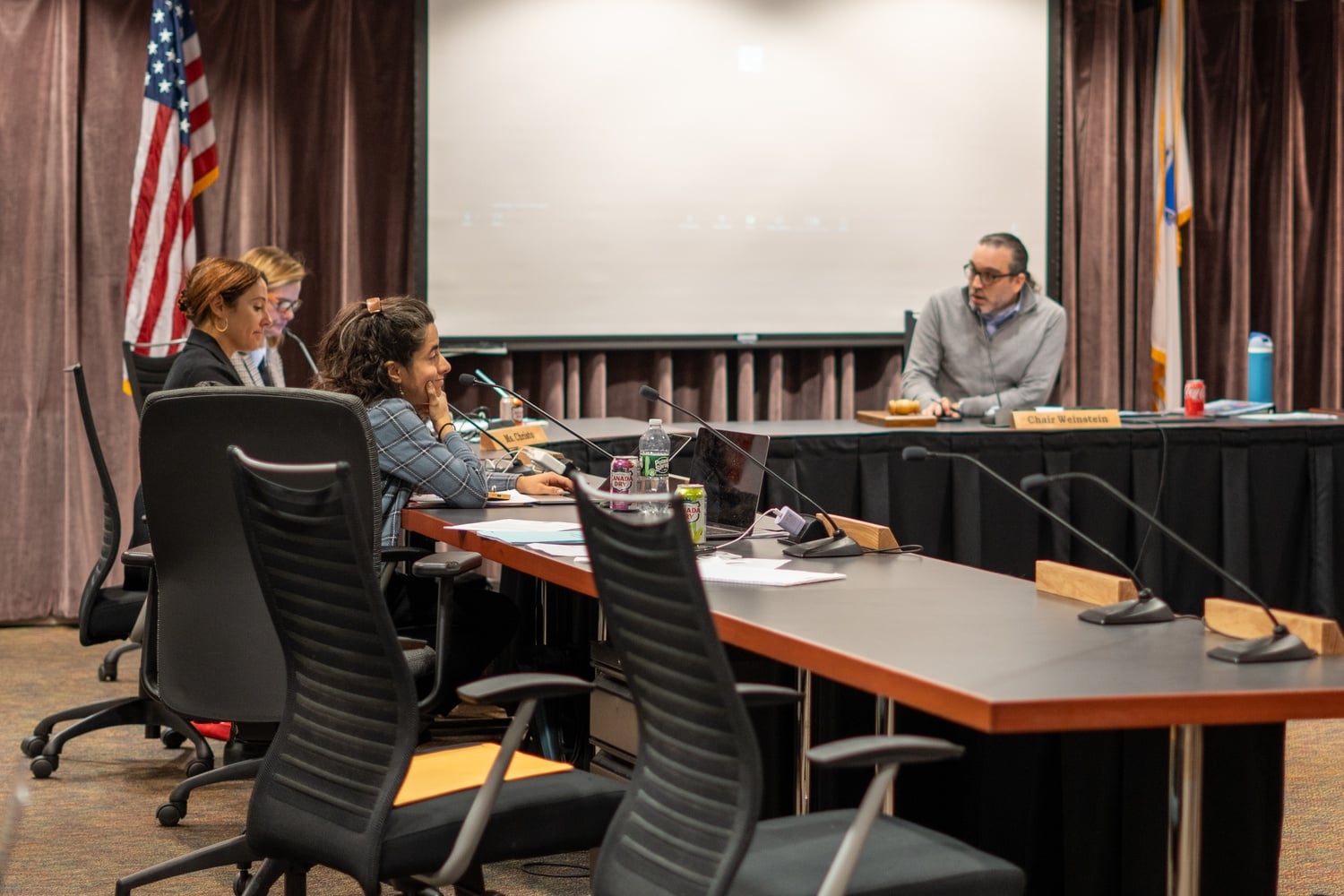
The union representing Cambridge educators and staff reached two new tentative agreements with the district last week and reported progress on several other proposals, even as disagreements over compensation and protections for immigrant students and staff continue to divide the two sides.
The Cambridge Education Association represents teachers, administrators, clerks, substitutes, paraprofessionals, and safety specialists, and has engaged in about 20 bargaining sessions with the Cambridge School Committee since January. But CEA President Chris Montero described the Oct. 7 bargaining session as a shift toward more substantive negotiations.
“We actually were going proposal by proposal and getting into the nitty gritty of why we’re stuck or why we haven’t reached agreement or what objections management has to what we proposed,” Montero said.
The union detailed much of the bargaining session’s content in an Instagram post last week — outlining the discussion brought by both sides and the progress made on several key proposals, noting 38 tentative agreements that have been reached.
The union wrote that the two newest agreements address training and resources for working with families and students, as well as compensation for substitute teachers who collaborate with colleagues outside regular working hours.
But Montero said the progress came only after a disagreement over how the parties would discuss outstanding proposals. And he said that district representatives came to the meeting with responses to three of the more than 20 proposals the union had expected to discuss.
Superintendent David G. Murphy wrote in a statement that “commenting about an individual negotiating session, particularly when it is the 20th negotiating session and those comments are devoid of any relevant context and most of the relevant facts, seems inappropriate to me.”
“I would rather the parties focus on finalizing an agreement so that our employees receive the increases in compensation for which they have been waiting patiently,” he wrote.
In the union’s Instagram post, they wrote that Murphy “said the district is not obligated to walk through their proposals one by one, since it has already provided written rationales and has ‘met our obligations.’”
School Committee member Arjun K. Jaikumar then proposed a compromise, according to Montero and the union’s post. Under the arrangement, district representatives would first present their three responses before taking a break and returning to discuss the remaining proposals individually.
Get The Crimson in your inbox.
Montero said the compromise helped turn the session into one of the most productive meetings of the negotiations.
Among the proposals that the union said the parties were “close on” agreeing to was a measure to allow educators to provide feedback on administrator evaluations, including those of the superintendent and assistant superintendent.
The district’s latest counterproposal would allow educators to give feedback on the superintendent and assistant superintendent, and provide a list each year of administrative positions that educators could provide input on. Montero said the inclusion of the superintendent addressed one of the union’s principal objections and could bring the parties closer to a tentative agreement.
A third counterproposal addressed compensation for overnight field trips, offering educators $175 for the first two nights and $250 for additional nights, according to the union. Montero described the field trip proposal as a compromise between the parties’ previous positions, and said the union “may very well be at” a tentative agreement.
Still, the two sides remain divided over several larger issues — including increased wages, parental leave, and staffing for paraprofessionals.
According to the CEA’s October bargaining summary, the union has revised its compensation proposals in an effort to reduce their projected costs. Its latest proposal would shift the proposed salary schedule to the second year of the contract, with a $45,000 starting salary in the first year.
The CEA has also revised its teacher salary proposal to include annual increases of 4 percent, 7 percent, and 5 percent — doubling the School Committee’s proposed increases of 2.5 percent, 2 percent, and 2 percent, respectively.
School Committee member Richard Harding Jr. said that the district wants to improve paraprofessional compensation but must also consider differences in staffing and costs between Cambridge and neighboring districts.
“I believe that this committee is willing to take care of the paras,” Harding said. “I think there’s some hiccups on how fast we get there.”
Another significant disagreement centered on the union’s proposed contractual protections for immigrant students and staff.
Montero said district representatives questioned whether those protections belonged in a collective bargaining agreement, arguing that they did not directly concern educators’ working conditions. But he argued that educators have professional responsibilities to protect students and should have those obligations clearly defined in their contracts.
“If it’s a professional responsibility — if it’s a thing we have to do — then yeah, it is absolutely subject to bargaining and should be in the contract,” Montero said.
Harding said he supports protections for immigrant students and families, but believes such measures are more appropriately established through School Committee policies than collective bargaining agreements.He argued that including provisions outside the committee’s direct authority in a contract could expose the district to grievances over obligations it cannot fulfill.
“We don’t see some of the very good things that the union talks about as bad,” Harding said. “We just see them as not appropriate for the contract, and that causes some tension.”
The negotiations have also spurred disagreements between School Committee members over how much information they receive about the bargaining process.
School Committee member Luisa de Paula Santos said that she has struggled to assess the negotiations because Murphy has provided limited information to members who do not regularly attend bargaining sessions.
“It’s really hard and frustrating not to be informed because at the end of the day, who is responsible to be bargaining with the CEA is the School Committee, not the district, not the superintendent,” de Paula Santos said.
She said the full committee receives updates primarily during executive sessions, which she said have become less frequent since the end of the previous school year. According to de Paula Santos, the committee previously held executive sessions to discuss ongoing negotiations twice monthly but now meets approximately once a month.
She criticized what she characterized as the superintendent’s outsized role in shaping bargaining decisions without sufficiently consulting the full committee.
“I think if someone is speaking for me, I would like to have a better sense of what those decisions that are being made in my name are,” she said.
Harding described negotiations as a series of discussions and private consultations between bargaining teams, with proposals sometimes involving relatively minor changes in contract language.
The next bargaining session is scheduled for Oct. 21 from 4 to 7:30 p.m. at Cambridge Rindge and Latin School.
—Staff writer Tess E. Sumner can be reached at [email protected].
Want to keep up with breaking news? Subscribe to our email newsletter
Have a tip for The Crimson? Share it confidentially