Cambridge Surveillance Technology Resident Assembly Weighs ShotSpotter, Security Cameras in Second Meeting
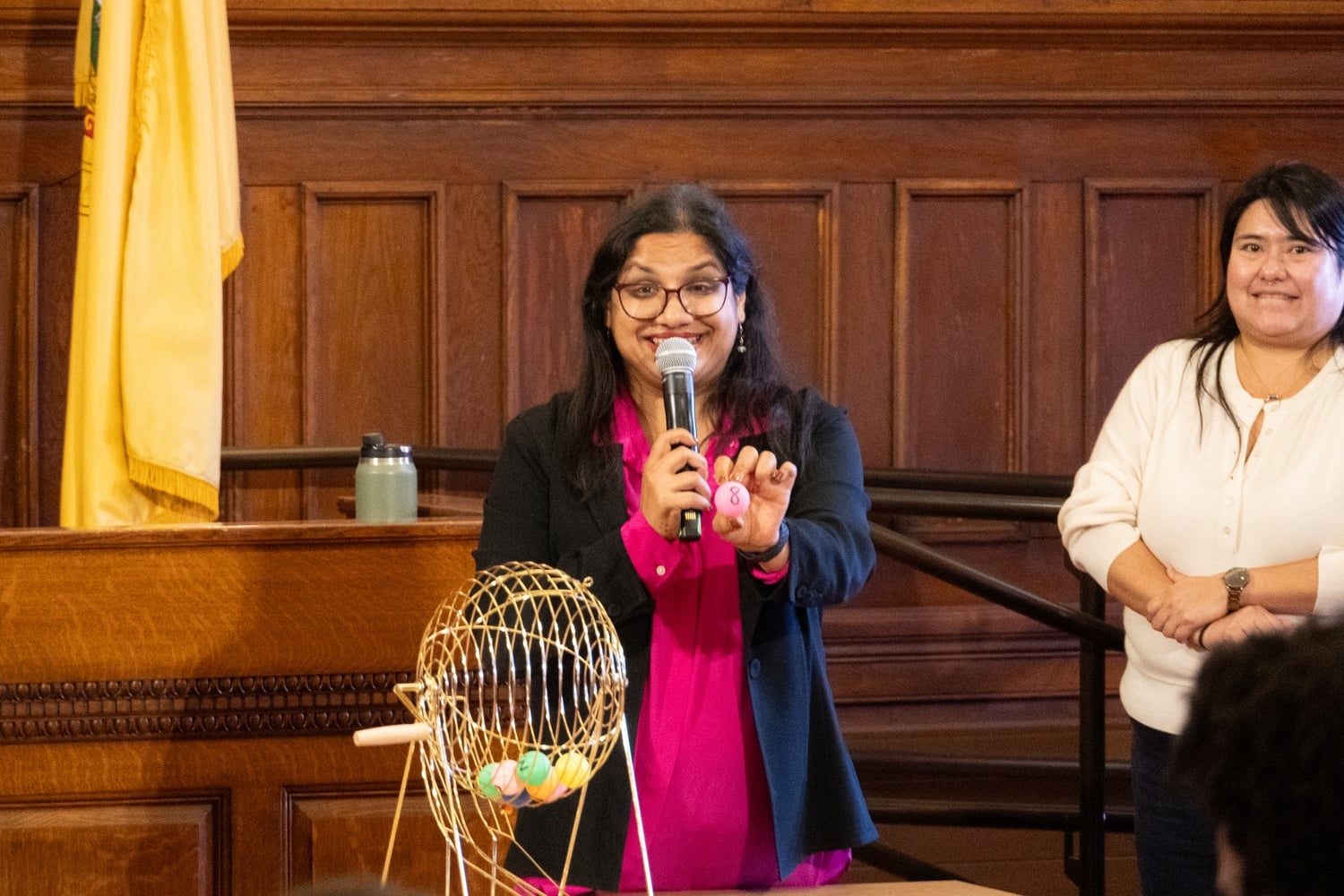
Cambridge’s 40-person resident assembly on surveillance technology held its second meeting on Saturday — marking the halfway point before the body is set to deliver recommendations on surveillance and violence prevention efforts to the City Council.
Saturday’s meeting centered on outlining issues with existing surveillance technology — and the city’s broader response to residents’ concerns.
The assembly was created as a response to concerns that the City Council had failed to listen to residents as it wavered over the future of ShotSpotter, the automatic gunshot detection system. The City Council voted to remove the technology in May, citing privacy concerns, and reversed the decision in August after the fatal shooting of 32-year-old Xavier Bautista, a Public Works Department employee.
The Council’s order to reinstate ShotSpotter, a network of microphones that detect loud noises and alert police of potential gunfire, was a temporary move, delaying a further decision until the end of the resident assembly.
The assembly has so far hosted a slate of speakers — including activists, surveillance technology researchers, city officials, and family members of people who have been impacted by gun violence. The Black Response, an activist group that has spent years pushing the city to end its use of ShotSpotter presented at Saturday’s meeting.
“What kind of city do we want to live in?” Virginia Cuello, a member of The Black Response asked “One that pays for microphones and sends multiple officers to a loud noise, or one that invests in the people and services that keep us safe?”
But much of Saturday’s meeting focused on another surveillance effort: increasing security cameras operated by the Cambridge Police Department.
CPD shared three draft proposals for expanding security cameras in public parks on Saturday. All three options included scaling the number of cameras based on the number of calls CPD has received at each location over the last two years.
Get The Crimson in your inbox.
Pigeon Park received the most calls for service during the period, 370, followed by Danehy Park with 171. Russell Field saw 148, and Cambridge Common saw 139. The first proposal would have added ten cameras across the city for roughly $118,276, while the second proposal would have added 15 cameras for about $177,415.
The final proposal came at the highest price tag, suggesting an additional twenty-five cameras would cost more than $295,692. Under each proposal, the funding would come partially from a Department of Homeland Security Urban Area Security Initiative grant.
Fatuma Hussein, a member of the assembly, said she supported the expansion of security cameras, as they make her feel safer when walking in Cambridge at night.
“I like to walk sometimes at night, so when I go to the Charles River, they have a camera there, and I feel safe because I know there’s a camera,” Hussein said.
But some members expressed skepticism about the proposed camera installations, questioning the need for increased surveillance of residents. Troy A. DaCosta, an assembly member, said cameras are “a tool,” but raised concerns over preferring them over alternative measures.
“How are we going to implement these properly? Whether it’s like having better surveillance with people, like monitoring the parks, as in like visiting the parks, better lighting, or better community engagement,” DaCosta said.
The assembly is slated to convene two more times over the next month, to outline its priorities and draft recommendations to the City Council in early December.
—Staff writer Shawn A. Boehmer can be reached at [email protected] and on Signal at shawnb.18. Follow him on X @ShawnBoehmer.
—Staff writer Claire A. Michal can be reached at [email protected] and on Signal at ClaireMichal.154.
Want to keep up with breaking news? Subscribe to our email newsletter
Have a tip for The Crimson? Share it confidentially