City to Report Back on Feasibility of Amendments to Multifamily Housing Ordinance by Early December
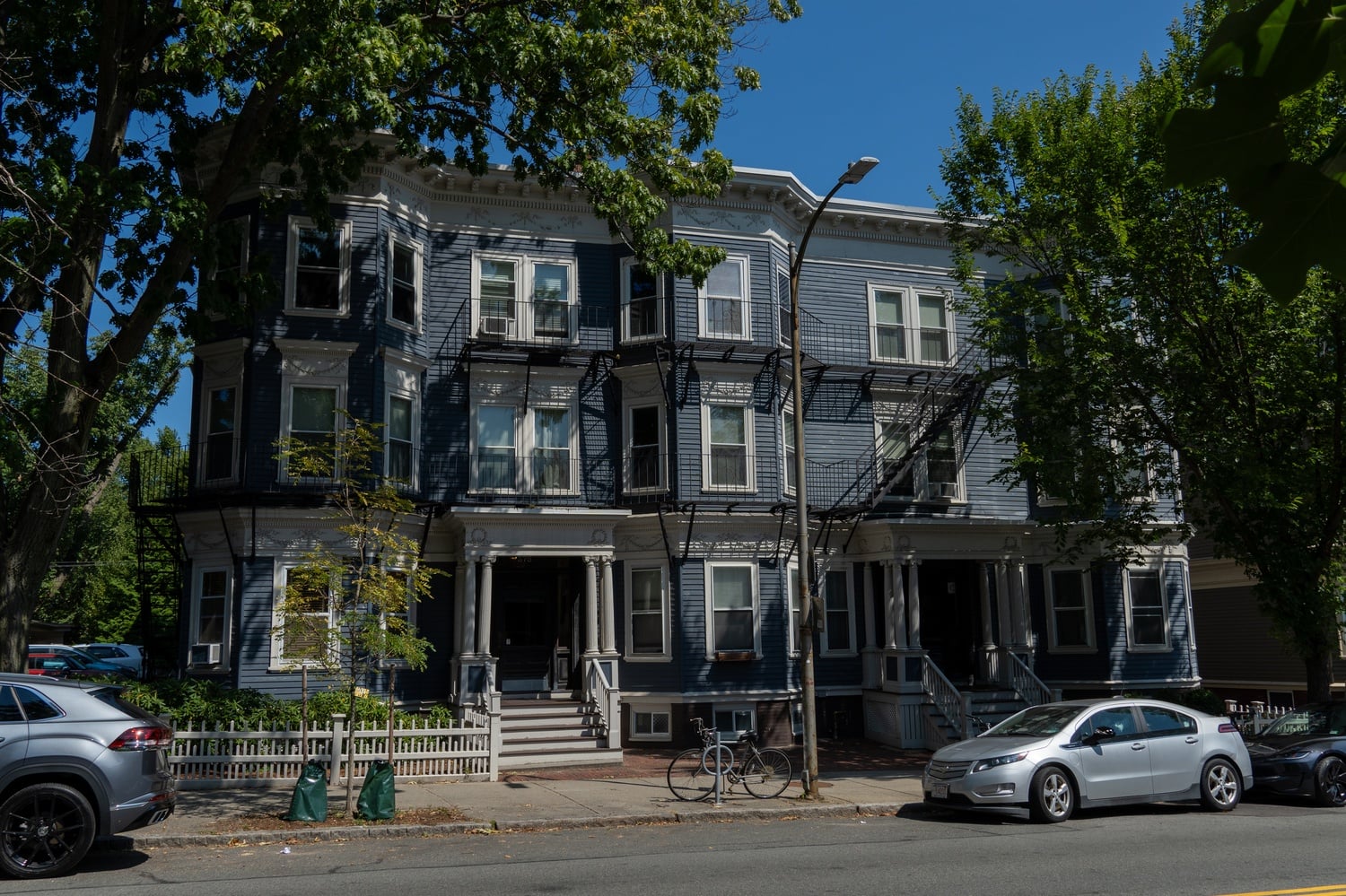
Months after Cambridge city councilors initially pushed to amend the city’s Multifamily Housing Ordinance, city staff have defined a timeline for weighing possible changes — promising to deliver a zoning petition with the amendments to the Council by Dec. 7.
The timeline, outlined at a council meeting last week, comes after Councilors Catherine “Cathie” Zusy and Patricia M. “Patty” Nolan ’80 requested a status update on the city’s feasibility assessment of a slate of proposed amendments to the ordinance.
Zusy and Timothy R. Flaherty introduced amendments in June to limit size and density of proposed housing developments, tightening the standards set by the 2025 zoning overhaul. The multifamily ordinance legalized apartment buildings citywide in an effort to boost the housing supply — allowing residential buildings up to four stories, or six for larger developments that include affordable units, on lots of at least 5,000 square feet.
The current ordinance was passed last February after nearly two years of contentious debate. The amendments, which Zusy has pushed for since January, will be subject to public hearings and Planning Board and Ordinance Committee review before they can come before the Council for a vote.
“A zoning petition can take anywhere between three and six months of public hearing and public discussion for adoption,” Assistant City Manager Melissa A. Peters said.
Zusy said she was frustrated by the slow-moving process of trying to change the ordinance, taking aim at the city’s “wait and see” approach so far. She pointed to the Community Development Department’s one-year review in March and a meeting with Harvard Graduate School of Design experts in April, which she said both suggested a lack of progress towards housing affordability made under the current ordinance.
“It’s quite obvious that we need to make improvements to it so that it has more of the impact that we had hoped it would and less of the unintended consequences that it has,” Zusy said. “I just hope we can advance as a body and make the amendments as soon as possible. It’ll be so much better for the city.”
Zusy argued that the current ordinance encourages developers to tear down existing housing and does not create the proportion of affordable units the Council intended. Zusy was the only councilor to vote against the multifamily ordinance last year.
In June, Zusy launched a crowdsourced database of developments proposed since the multifamily ordinance was passed, which details 143 proposed developments — noting which require demolitions of existing homes and the number of units each development is expected to create.
Get The Crimson in your inbox.
In response to the June policy order, city staff created a dashboard of all housing projects proposed since the beginning of 2025, which includes information on the construction status and project details for 270 developments.
Flaherty said he was concerned with developers flipping properties for profit under the multifamily ordinance. Once a building permit is approved in Cambridge, developers are able to sell the property with the permit attached, even if construction has not begun. Flaherty argued that developers are buying two- and three-family homes, applying for permits to create a larger development, and reselling the properties within 30 to 60 days for millions of dollars.
“That, in my view, is not at all what this multifamily zoning ordinance was intended to accomplish,” Flaherty said.
Councilor Jivan G. Sobrinho-Wheeler called some of the arguments for amending the ordinance “objectively untrue.” He used one developer as his example: they build multimillion-dollar single-family homes in Lexington, Newton and Brookline, but are building dozens of affordable units in Cambridge.
“If you’re mad about developers making money building housing, you’re not mad about zoning. You are mad about capitalism, like I am,” he said. “What I’m not interested in is going back to our previous zoning to make Cambridge look more like Lexington or Newton.”
Zusy pointed to a residents petition in favor of amending the ordinance and a temporary moratorium on large housing development that has garnered more than 5,000 signatures, adding that it’s “absolutely critical” for the Council to consider amendments “as soon as possible.”
“As is, the ordinance is not making the city more affordable, but it is making it much less livable,” she said.
Vice Mayor Burhan Azeem, who led much of the advocacy for passing the ordinance, countered — referencing a study done in October by pro-development group A Better Cambridge, which found that 64 percent of respondents support the multifamily ordinance, while only 28 percent oppose.
“There was a survey done of residents of the city as well,” he said, “and what I think you find is that you know support for housing is just divided along who has it.”
“Whatever system you have for allocating housing, fundamentally people physically need a place to live, and we’ve just not built that for them over the last two generations,” he added.
—Staff writer Risha Sinha can be reached at [email protected].
Want to keep up with breaking news? Subscribe to our email newsletter
Have a tip for The Crimson? Share it confidentially