Delegates Unbound
Democracy in America has never seemed so spectacular as now, when we’re knee deep in this many-monthed primary campaign whose topsy-turviness has cast Ted Cruz as the Republican establishment’s great last hope and placed a socialist senator in serious competition with the Clintons. Our European neighbors must be thoroughly tickled. But how democratic are these ballyhooed elections anyway, replete as they are with their mutinous delegates and their conspiring “super” kin?
At present, both the Democratic and Republicans Parties are beset with accusations of sanctimony and sabotage, and not undeservedly. Bernie Sanders, who has swept eight of the previous nine primaries, and his supporters inveigh against the so-called superdelegates—party bigwigs who vote as they choose. Truly super, since they possess votes worth 10,000 times more than the ordinary, undecorated citizen. 469 of these special individuals have already sworn fealty to Hillary Clinton. Sanders can muster up only a paltry 31. That Sanders could obliterate Clinton in New Hampshire by 22 points in February, yet still emerge with no advantage in delegate count due to support from the party elite, is the clearest proof of the system’s inadequacy.
Overall, superdelegates will account for 15 percent of the delegate total at the Democratic National Convention. I’ll mention in passing that in Iran, all candidates for president must similarly garner the approval of the Guardian Council, which is composed of six highly esteemed and well-credentialed worthies. “That’s much more undemocratic,” you may protest. Sure, but only seven times as much.
Media and the Man
It sometimes seems that people only ascribe influence to mainstream media whenever they wish to admonish it. So it goes nowadays, where a modish new theory blaming the media for Donald Trump’s improbable and inexorable rise has started to hold sway.
On Monday, President Obama delivered a gentle chiding to a gathered crowd of political journalists, who, in his words, have been missing substance in order to “fill the void and feed the beast with instant commentary and Twitter rumors.” Just the day before, Nicholas Kristof offered his self-flagellation blaming the usual suspects: initial dismissal of The Donald as a living laugh line, followed by lavish airtime and little fact checking.
To be sure, there are some claims that I am sympathetic to: Granting Trump an unprecedented number of phone interviews, 29 on the flagship Sunday talk shows since his campaign began, was, almost certainly, shameful deference to the campaign’s requests prompted by tantalizing ratings boosts. And we could all do better with more aggressive interviews and fact-checks.
Trumped Up
Like a floundering wedding toast, Donald Trump’s presidential candidacy was deeply funny before it became deeply troubling. Much effort has been expended of late in understanding Trumpism—both what it means and what it portends. Truth being much stranger and crueler than fiction, the politicos have less substance to offer nowadays than the comedians and the satirists. It’s a bit like being forced to live through a comedic sketch, like a Futurama gag that went on many months too long.
Thinking about Trump in dystopic terms, as I tend to do, leads me to seek sanctuary in literature. A little before Huey Long’s political ambitions were cut short by a bullet, Sinclair Lewis penned his great political satire “It Can’t Happen Here.” Of course, the impossible does happen—the authoritarian Buzz Windrip wins the presidential election and marches America steadily along the road to totalitarianism. Perhaps also instructive in the matter is Phillip Roth’s more recent “The Plot Against America,” in which the fascist Charles Lindbergh rides a wave of anti-Semitic, populist support to the White House.
Much like these fictional despots, Trump is said to be a populist, yet everyone—aside from his supporters—seems to hate that he leads the Republican primary field. The Republican Party is scrambling to avoid further embarrassment, while the depleted stock of candidates speaks conspiratorially of brokered conventions.
Change You Can Temporarily Believe In
Before he tumbled, Jeb Bush promised the Right to Rise. John Kasich wants you ready for a New Day for America, Marco Rubio looks further to A New American Century, and Donald Trump, of course, is pledging to Make American Great Again. Sloganitis extends to Democrats too: Martin O’Malley’s misbegotten campaign spoke of Generation Forward, while Bernie Sanders speaks of “political revolution.”
Almost everyone promises radical political reinvention, as if the hopelessly recalcitrant Congress would dissipate if he or she wished it so.
Consider Sanders, for example. Given that Congressional Republicans now deny the basic duty of the president to even nominate, with the advice of consent of the Senate rather than its deigning, a justice to the Supreme Court, what hope is there a Sanders administration could actually abolish college tuition? Or raise taxes on the rich, and doubly so upon the well-protected mavens of Wall Street? Or correct the Supreme Court on campaign finance through a constitutional amendment of all things?
Clinton on the Trail
Suddenly and as if on cue, as tends to happen with campaign surrogates days before an election, supporters of Hillary Clinton collectively advanced a curious argument. Madeline Albright, the former secretary of state, declared “There’s a special place in hell for women who don’t help each other” at a Saturday rally in New Hampshire. (It might not have helped much; Clinton would go on to lose lopsidedly.)
On Bill Maher’s show the night before, Gloria Steinem made that shaky premise even more dubious, offering that women supporting Vermont Senator Bernie Sanders were too busy chasing men to form their own opinions. “And when you’re young, you’re thinking ‘Where are the boys?’ The boys are with Bernie,” she said, apparently endorsing the same sexist, estrogen-emphasizing arguments of her past opponents.
Steinem has since retracted, Albright has doubled down, and Clinton played the “Good grief, we’re getting offended by everything these days” card, though one prominent partisan of hers—husband Bill Clinton—continued the campaign’s practice of accusing Sanders of sexism by way of insinuation and associative guilt just this weekend.
Islam and Democracy
Before the man was deposed, Egyptian President Mohamed Morsi was roundly derided for ramrodding through a new constitution that would have, as his critics charged, made Egypt into an illiberal theocracy. Of special consternation was its second article, which declared that “Islam is the religion of the state and Arabic its official language. Principles of Islamic Sharia are the principal source of legislation.” But when Egypt’s next constitution, shepherded in by the military and ratified as Morsi stood trial, was found to contain nearly-identical language, the bells of discontent were not rung quite so loud.
Religious clauses in constitutions have abounded in Muslim countries, whether ruled by monarchs or mullahs, presidents or prime ministers, ever since Syria’s 1950 post-colonial constitution declared Islamic jurisprudence to be the basis for legislation. Over half the constitutions of Muslim-majority states today contain similar clauses that officially recognize Islam. The motivations and practical effects, if any, of these declarations have been hotly debated, but all agree that wording matters. Sharia can be described as “a principal source” of legislation or “the principal source”; Islam is either labeled as merely supreme or laws deemed repugnant to it are made explicitly invalid.
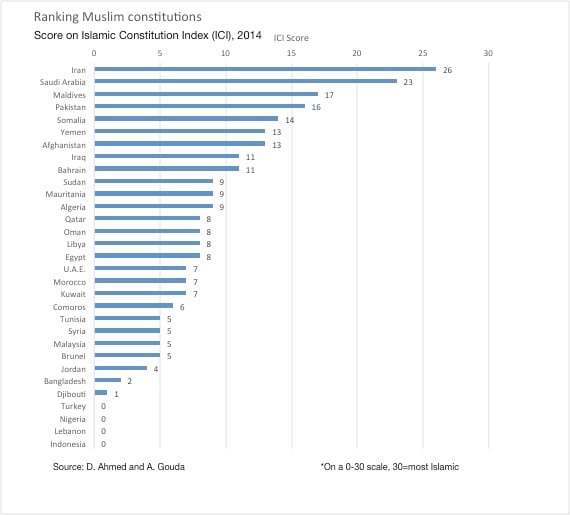
Are democracy and constitutional Islam at odds? It’s a complicated question, sure to be bandied about in the halls of the academy. But an empirical approach to this question can also be worthwhile. One helpful measure is the Islamic Constitutions Index, developed by the academics Dawood I. Ahmed and Moamen Gouda, which assesses the degree of Islamic endorsement by constitutions on a scale from zero to 30 based on the demands made on public morality, rights and legislation, and the judiciary.
Abstracting Terrorism
There may have never been something so ill-defined, yet so era-defining, as terrorism. Tangled among its debaters are two threads, one of the definition itself, and the other of its alleged misapplication.
Politically motivated violence that targets civilians may be the core of any satisfactory definition. But no sooner is a half-right theory of terrorism proposed than a crop of critics spring up to tear it on the grounds of praxis. This definition sweeps in a wide swath of criminal conduct, most of which never receives the proper label in popular discourse, and so it must be flawed.
All that abstraction for a simple observation we dance around: Why is it that “terrorism” is trotted out when the perpetrator of a crime is Muslim, and seemingly no time else?
Good Grief
The turmoil in Paris had barely ended before the upswell of well-meaning solidarity and well-wishing was met with a backlash of equal velocity.
By now, we have all the details memorized: the horrific attack at the Bataclan concert hall that left 89 dead, the suicide bomb at a soccer match that François Hollande was himself attending, the 39 restaurant-goers murdered.
“This is an attack not just on Paris. It’s an attack not just on the people of France, but this is an attack on all of humanity and the universal values that we share,” President Barack Obama said.
A Dictionary of Media Bias
If there was anything to learn from the Republican presidential candidates debate last Wednesday—and there wasn’t much—it was that the warring campaigns had finally found a common enemy other than Hillary Clinton: the mainstream media.
When asked to comment on a Sun-Sentinel editorial calling on him to resign after a notoriously shabby attendance record, Florida Senator Marco Rubio deflected to the attendance records of previous Democratic candidates and called it “evidence of the bias that exists in the America media today.” Never you mind that editorials are opinionated by definition.
“Bias” is reporting—which appears in the news and not the opinions section—that is altered and swayed based on the political preferences and agendas of writers and editors, the conscious bending of facts by way of omission and misrepresentation, even though it is branded as fair and balanced. “Bias” is not the printing of stories that make the press secretary unhappy. That’s just life.
Stalinists in Our Midst
Something is rotten in the state of Connecticut. It all started one month ago, when the Wesleyan Argus had the audacity to publish an op-ed critical of the Black Lives Matter movement. Soon came the wrath of that new breed of student, incapable of confronting opposing opinion and quick to call for radical intervention, who filed a petition to defund the Argus unless their demands were met.
Among them: that editors attend a mandatory social justice training every semester and that a dedicated space be provided on every front page exclusively for marginalized groups. Until then, boycotters of the paper have pledged to destroy copies of the paper on campus.
Read that again. Weep.
Teardrops on My Gavel
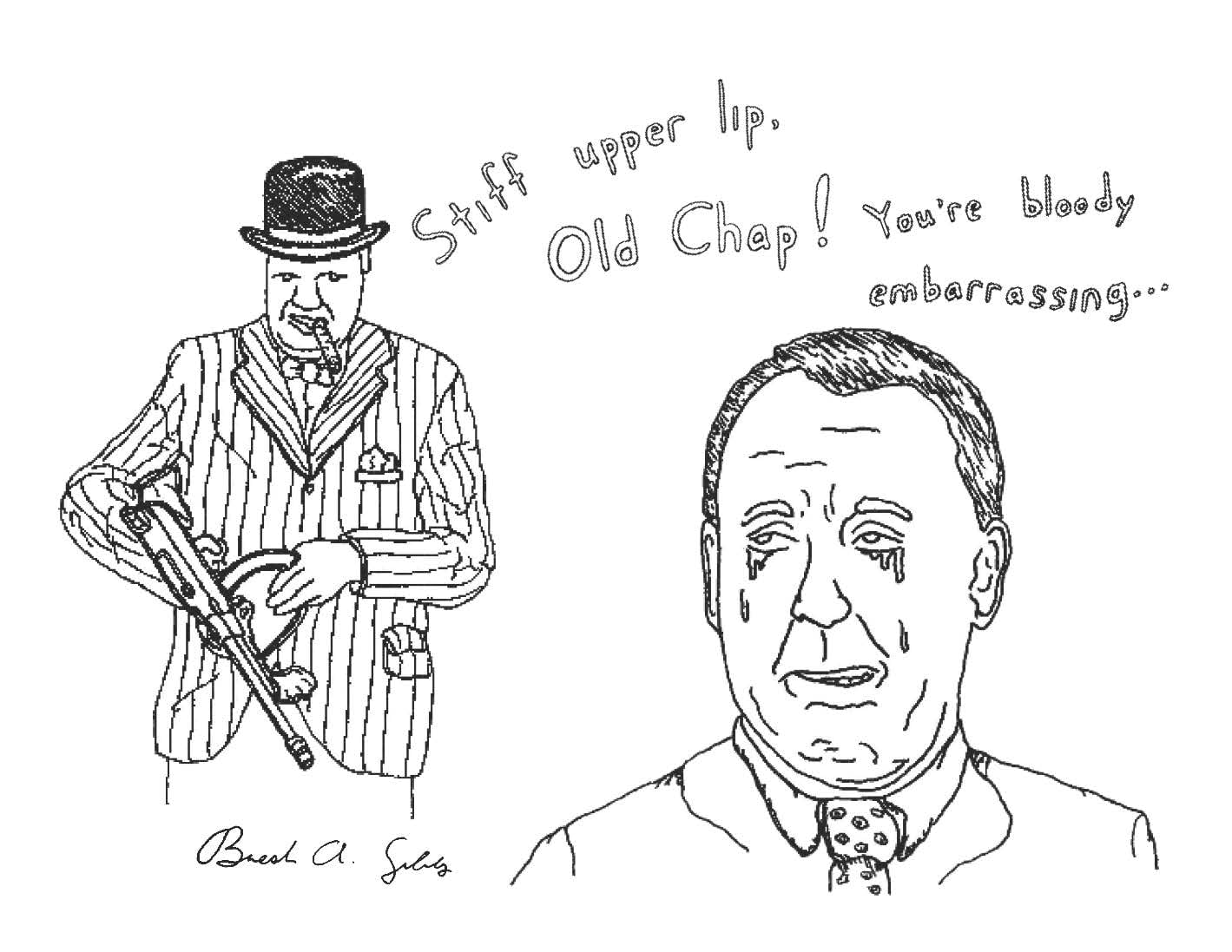
Boehner wept. Often heavily and without regard. There was no stage too big, no occasion too slight for the soon-departing House speaker, who blotted tears beside a bust of Winston Churchill in a small ceremony and quite nearly disintegrated into sobs on “60 Minutes.”
Fitting, then, that Boehner’s turbulent speakership was bookended in tears. The Ohio Republican fought back tears when Nancy Pelosi handed him the gavel in 2011, which he then accepted “cheerfully and gratefully,” only to voluntarily surrender it four short years later. Pope Francis’s address to a joint session of Congress, an equally rainy affair for the devoutly Catholic speaker, was the best coda Boehner could think of to a reign of endless tumult and insatiable insurgency that he never seemed to get a handle of.
But I come to praise Boehner, not to bury him.
The Near Myth of Cultural Appropriation
I don’t think I’ve ever personally encountered a case of cultural appropriation during my time here.
Of course, that’s not to say cultural appropriation doesn’t exist. We just happen to go to a school that tends not to host parties revolving around blackface, sombreros, and war bonnets, and live in a society that generally looks unfavorably upon those things.
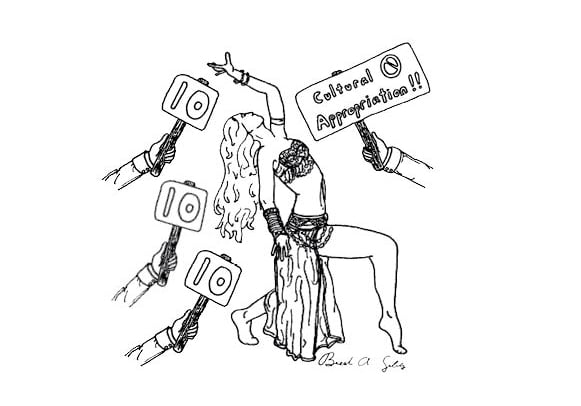
Yet virtually any casual Internet surfing will yield cries of appropriation everywhere. The very definition of cultural appropriation—taking up parts of a culture other than your own for the purposes of ridiculing it—has been expanded in the social justice lexicon to mean little more than identity policing.
Putin's Day Off
MOSCOW—It’s a cool Sunday night on the Kremlin, and Vladimir is Putin on the ritz. An attaché enters the gilded office with pink wine—the vodka’s just for the cameras—and a television remote.
“Mad Men” comes on. Smoking, terribly mustachioed oligarchs drinking themselves to death—it’s a transatlantic tale. Like all episodes, this one is self-consciously opaque, and Putin is uneasy, despite the perfectly timed delivery of an old fashioned by the keen attaché.
Donald Draper, the show’s disturbed center who deserted the army and mostly concerns himself with wallowing in self-pity, has never been a favorite of Putin’s. But the upstart junior account man Pete Campbell hardly makes an appearance in the premiere.
Southern Comfort
There we stood Saturday night, my roommate and I, screaming at the screen. My home team, the University of Kentucky Wildcats, had eked out a win against Notre Dame in a game with 20 lead changes and 12 ties, only punching their ticket to the Final Four with six seconds left, and only after pushing me and the rest of their fans to the brink of emotional collapse.
But after my heart rate had returned to resting levels (not for a while), I began thinking about what had just transpired: About 14 million people had their spirits lifted, dashed, and hurled this way and that on account of a game played by just 16 people.
Why does that happen?
The Social Justice Warrior
I’ve been puzzling over it ever since I started college. Why is it that I find myself so often agreeing with a socially just cause, but none of its proponents?
Eventually, I arrived at an answer: the social justice warrior. That walking campus cliché dedicated to rooting out today’s noxious isms and phobias—wherever they exist, and wherever they don’t.
You might object here to the absurdity of making a nuanced argument on the basis of a simplistic trope about an entire, diverse class of people, and, of course, you would be right. But that’s exactly the error I find the social justice warrior makes.
The Unartful Dodger
There’s a lot that Scott Walker doesn’t know these days. Ever since the Wisconsin Republican governor’s name began appearing alongside Jeb Bush, Rand Paul, and Chris Christie in the headlines, he’s become the latest politician to contract a sudden case of know-nothingism.
First, he literally (figuratively) punted when asked about his belief in evolution. “I’m going to punt on that one as well,” he actually said when asked the question at a London trade conference. But he clarified that “he loved the evolution of trade.”
It’s clear that Walker’s evasiveness, or most political slipshoddery for that matter, originates from the real difficulty in crafting a response unoffending to any of the motley coalitions of support that politicians have to assemble to win elections. Doing that in just a few seconds is hard, but then again, so is becoming president.
Writing from Russia, Without Love
Of all the things you might expect the Central Intelligence Agency to tweet, Cyrillic would not be one of them. Yet, there it was, one January morning—a quote from Russian author Boris Pasternak, that when translated in English, says, “I wrote the novel so that it would be published and read, and that remains my only desire.”
Unlike the Twitter account of the United States Central Command, which was seized around the same time by hackers proclaiming allegiance to the Islamic State, this was no hack. Later tweets explained the cryptic message: “Our book program arranged to publish the 1st Russian-language edition of Pasternak’s Doctor #Zhivago – a book banned in the USSR.”
It had been long suspected that the CIA had played a role in smuggling Pasternak’s famous novel, rejected by the censors for its unrosy depiction of Soviet life. But the agency remained quiet until a Freedom of Information Act request revealed a trove of documents in April 2013, detailing its intimate, often bumbling, involvement in arranging the book’s publication and smuggling in the USSR.
An Old Start to a New Congress
We tend to romanticize and overemphasize beginnings and endings.
We celebrate the coming and going of new years, and memorize the opening lines of novels and the dying words of great men.
It’s a trend that persists regardless of creed or color: God declares himself “the beginning and the end” in the Book of Revelation—precisely the phrase the great Quranic exegete Ibn Kathir chose to title his history.