Cambridge City Council Denies Landmark Designation for Democracy Center
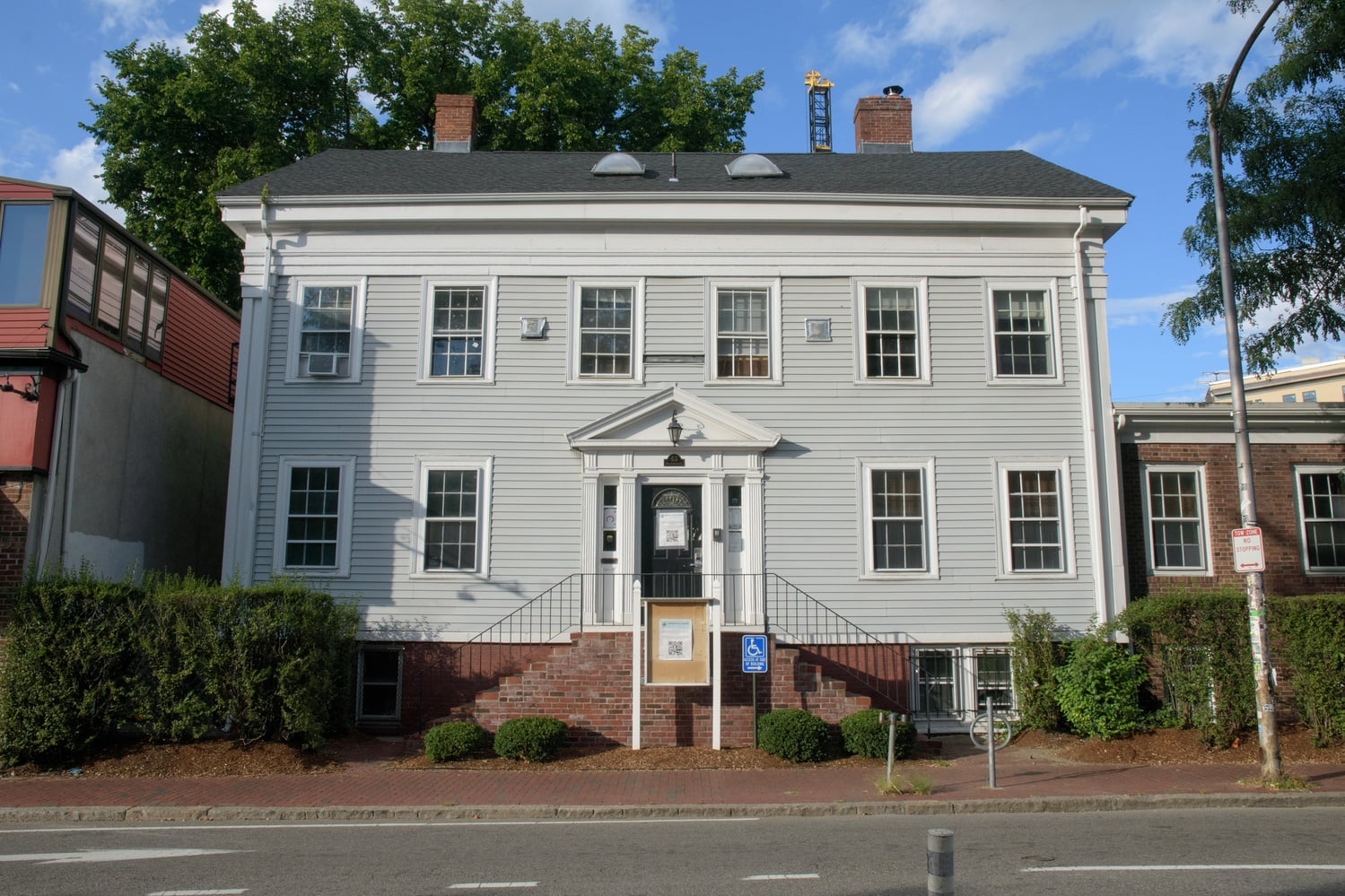
The Cambridge City Council voted Monday night to reject a proposal to designate the Nathaniel Stickney House — formerly home to The Democracy Center — as a historical landmark, ending a more than two-year dispute over the facility’s future.
The landmark designation failed in a 7-2 vote, effectively allowing renovations to the building to begin after a monthslong study by the Cambridge Historical Commission put a hold on any significant changes to the building.
But those who supported landmarking the building argued that the designation was necessary to ensure accountability and transparency when it comes to future changes to the Stickney House.
The Democracy Center, which closed indefinitely in April 2024, had previously served as a meeting space for nonprofits, activist groups, and Harvard students for more than two decades. The Foundation for Civic Leadership, the group that owned The Democracy Center, said the closure stemmed from the need for significant renovations.
The Center’s closing sparked fervent backlash from activists, some of whom launched a weeklong occupation in a final attempt to prevent renovations in July 2024.
Cambridge activist and former City Council aide Dan Totten spearheaded an effort to designate the Stickney House — a 180-year-old wood-frame residence on Mt. Auburn Street — as a historical landmark shortly after its closing, which would have subjected any renovations to much stricter guidelines in attempts to preserve its existing exterior.
“I think that there was a very strong case to landmark this building, and I think that it was highly desired from a large number of community members, and that I think the Council made a mistake in not only rejecting the landmark, but rejecting it with very little discussion,” Totten said.
The Historical Commission received a landmark designation petition a month after The Democracy Center shut its doors. And by September 2024, it had embarked on a monthslong landmark study — delaying any major renovations until the study’s conclusion.
Get The Crimson in your inbox.
Councilors Ayah Al-Zubi ’23 and Catherine “Cathie” Zusy were the only two members who voted to support the landmark designation. Al-Zubi said her support was rooted not only in the home’s historical significance, but also in her desire to support organizations that hoped to eventually return to the renovated space.
“I believe that landmarking can assist with appreciating its significance historically, culturally and safely,” Al-Zubi said at Monday’s Council meeting. “The second is out of support for the organizations and people who made The Democracy Center what it was.”
Councilors who voted to reject the landmark label raised concerns that granting landmark status would hinder necessary renovations, possibly rendering the building inhabitable long-term.
“The specifics of this case are not very positive, in that the building is falling apart,” Azeem said, adding that delaying renovations as a result of the landmark designation proposal was “making the building less habitable.”
Ian Simmons, president of the FCL, did not make an express commitment to including housing in a future renovation during the Historical Commission’s landmark study or meetings with the Council. Simmons did not respond to a request for comment on plans for the building.
The Stickney House already sits within the Harvard Square Conservation District, which has its own restrictions to renovations.
“This building is objectively historic and worthy of preservation and located in one of the most consequential historic districts you’ll find anywhere,” Totten said in a Tuesday interview.
But Councilors Jivan G. Sobrinho-Wheeler and Patricia M. “Patty” Nolan ’80 noted during the Council meeting that, because the district is historical, the need to landmark the Stickney House isn’t prevalent.
“If every space that had important meetings, including political planning or historically known people, were to be landmarked, then practically every building in Cambridge could never be altered, because our city is the epicenter of so many different things,” Nolan said.
—Staff writer Mackenzie L. Boucher can be reached at [email protected].
Want to keep up with breaking news? Subscribe to our email newsletter
Have a tip for The Crimson? Share it confidentially