Harvard Professors Clash Over Whether University Has Done Enough to Promote ‘Open Inquiry’ in Panel Event
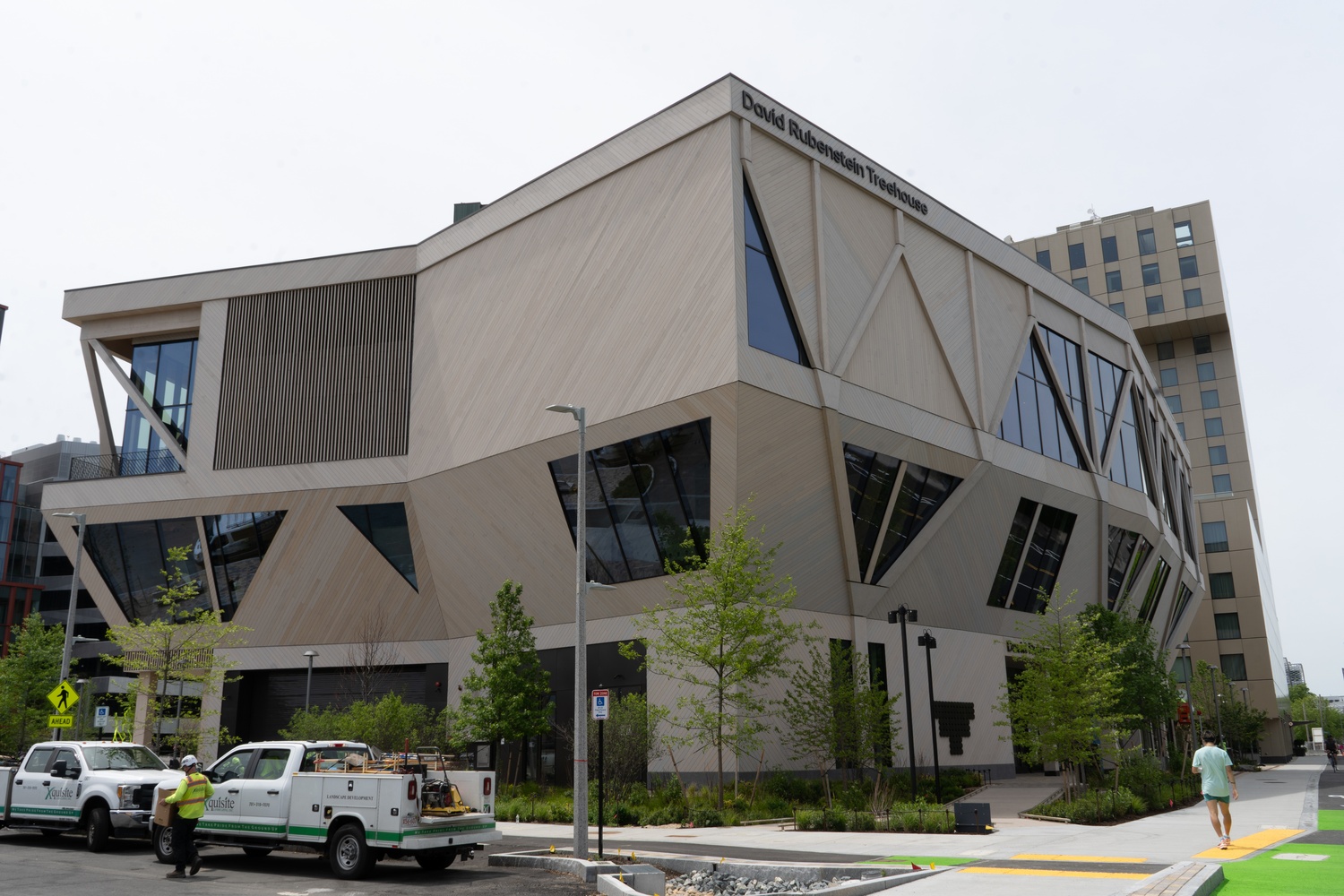
Harvard faculty members were divided on whether freedom of speech in classrooms remains a problem at the University in an “Open Inquiry” panel discussion at the 15th annual Harvard Initiative for Learning and Teaching conference Friday.
Government professor Ryan D. Enos, one of seven panelists, sparked debate after he said that he believed open inquiry was not “much of a problem” at Harvard, despite having previously raised concerns about conservatives’ ability to share their views on campus.
“I have thought that’s a problem, and I still think it’s a problem,” he said. “But I also think it’s something that we perhaps don’t give ourselves enough credit for.”
But Enos faced pushback from multiple faculty members in the audience, including Economics professor Jason Furman ’92 — who argued that “we need to be harder on ourselves internally while defending ourselves externally” — and raised concerns about persistent ideological slant in Harvard’s classrooms.
The panel was convened by Dean of Undergraduate Education Amanda Claybaugh and featured Enos, History professor Maya R. Jasanoff ’96, Psychology professor Joshua D. Greene ’96, Anthropology professor Salmaan Keshavjee, Economics professor Jeffrey A. Miron, Sociology professor Jocelyn Viterna and Assistant Dean of Undergraduate Education Gillian B. Pierce ’88.
Claybaugh opened the discussion by asking panelists about effective strategies for designing balanced courses and avoiding projecting their individual political opinions onto students. But the most contentious topic was whether “open inquiry” remains an area of concern at Harvard.
In open discussion in the second half of the event, Furman argued it did — pointing to examples of what he characterized as liberal biases in course catalogs and syllabi as evidence that there remained room for the University to improve.
Furman described an analysis of Expository Writing syllabi that he had conducted with the help of Claude. Though courses often presented multiple readings on an issue, he said the choice of issues itself often had a liberal slant.
“I thought they were really good at having readings on both sides of every issue. But almost all the issues were liberal issues,” he said.
For example, he said, syllabi on poverty included arguments on both sides of whether social programs are a good way to reduce it, but not on whether family structure is important.
Get The Crimson in your inbox.
In response to pushback, Enos acknowledged that there was room to improve at Harvard, though he emphasized the importance of setting realistic expectations — especially in comparison to other institutions of higher education.
“If we woke up tomorrow, and the faculty of Harvard represented the overall political ideology of the United States, I think in many ways it’ll be better for us at the University,” he said. “But that’s not going to happen.”
“If we have a faculty that’s 90 percent liberal, and that’s the world we live in — and maybe that’s the problem we want to solve, but that’s a different problem — if that’s the world we live in, then do we do better than another institution with 90 percent liberals out there?” Enos added.
At Friday’s event, panelists also discussed strategies for balancing syllabi and teaching while acknowledging their personal biases.
Miron described one course he teaches — Economics 1017: “A Libertarian Perspective on Economic and Social Policy” — as an example of how to be candid about individual biases while still encouraging student participation.
“I don’t claim in any way, shape, or form to be unbiased or even-handed,” he said. “I tell them I’m a libertarian. I basically believe all the things I’m going to teach you.”
Miron emphasized the importance of sequencing topics to build up to more difficult conversations. In his own course, he said, he starts by making the case for legalizing drugs before advocating a libertarian approach to gun ownership, same-sex marriage, and border policy.
Greene said that although his politics are “pretty different” from Miron’s, he uses “pretty much to a T, exactly the same approaches” in his own courses — “in terms of sequencing things, and in terms of making sure people are challenged, and also not trying to represent myself as neutral, which is actually impossible,” he said.
Friday’s panel prompted faculty to reflect on issues the University has placed a renewed emphasis on in recent years.
In spring 2024, Harvard convened an “Open Inquiry and Constructive Dialogue” working group to discuss how to support the free exchange of ideas on campus after the University drew broad criticism for its response to Hamas’s Oct. 7, 2023 attack on Israel.
In the years since, the University has thrown its weight behind initiatives that support “open inquiry” and “intellectual vitality.” It has also begun a push to diversify the ideological background of its faculty, asking donors for $10 million gifts to endow new professorships in pursuit of “viewpoint diversity.”
A Harvard spokesperson did not respond to a request for comment.
—Staff writer Sebastian B. Connolly can be reached at [email protected] or on Signal at sbc.23. Follow him on X @SebastianC4784.
—Staff writer Summer E. Rose can be reached at [email protected] or on Signal at ser.85. Follow her on X @summerellenrose.
Want to keep up with breaking news? Subscribe to our email newsletter
Have a tip for The Crimson? Share it confidentially