Where the Grade Cap Falls Flat
When it comes to grading, Harvard should stop painting with such broad strokes.
Beginning in fall 2027, most undergraduate courses in the Faculty of Arts of Science will be permitted to award A grades to only 20 percent of their students, plus four. Though the cap remains a year away, Dean of Undergraduate Education Amanda Claybaugh has already encouraged faculty to start implementing the cap. Now, performance-based courses are scrambling to comply, weighing whether to impose more mechanical rubrics or abandon letter grades altogether.
Ultimately, the uncertainty makes the flaw in Harvard’s policy plain: The grade cap was too coarse in the first place.
We believe that a common grading standard should not be confused with a common grading distribution — which is exactly what has happened. As we’ve pointed out before, relative grading makes little sense in advanced, highly selective courses, such as Mathematics 55, Physics 16, or the Safra Undergraduate Ethics Fellowship Seminar. Students enter these courses only with substantial preparation — or in other words, substantial distinction.
This means that at an already-distinct university, the most distinct of the distinct students must compete for further distinction. At some point, the concept loses purchase.
And yet, this is what the Harvard-Radcliffe Orchestra is forced to do. To join, musicians must pass a rigorous audition process, and members spend upwards of eight hours a week rehearsing.
Similar to the case of Mathematics 55, it is unfair to thrust distinction-based grading on members of such a robust ensemble composed of students selected for their talent and experience. Beyond that, a comparison-based grading method actively works against the orchestra’s mission, as it fosters individual competition in an environment that demands its students to master material collectively.
An orchestra, after all, should be trying to play in harmony.
Thus, HRO should be permitted to either seek an exemption from the cap or move to SAT/UNSAT grading. FAS should establish that similarly selective, collaborative courses can do the same.
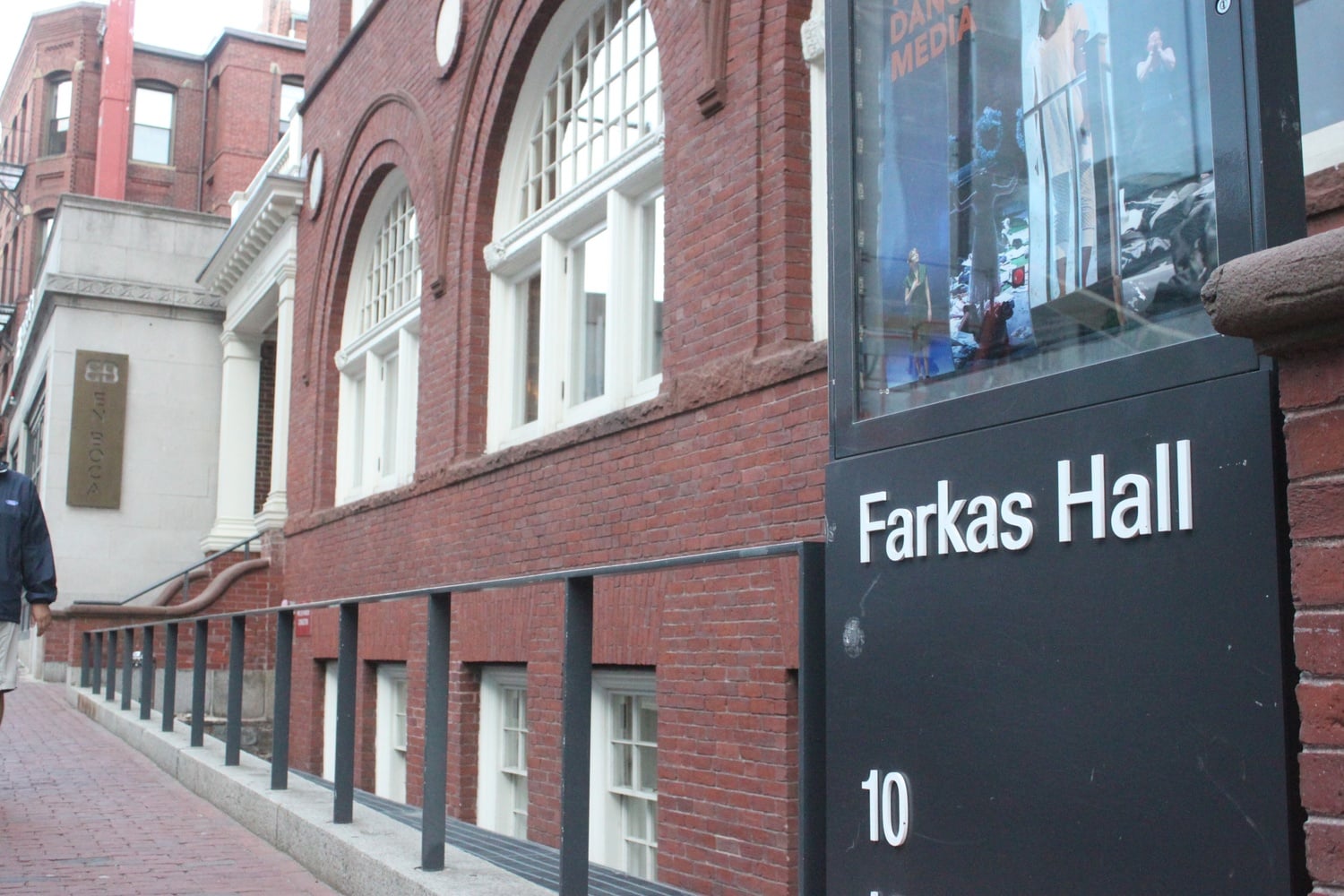
Other performance courses expose a different defect in the cap. Unlike say, mathematics, Theater, Dance, and Media does not always have a clear progression from introductory to advanced courses. Beginners and experts might find themselves in the same classroom.
Here, it would be arbitrary to deny a beginner the opportunity of distinction by nature of how the course is structured. And yet, the instructor must.
The lack of a clear basis to assign grades in these environments seem to explain why faculty are tempted to value more pedantic measures: things such as punctuality, short written assignments, or highly granular rubrics.
We think that in many cases, the result of such schemes lacks substantial pedagogical value. Do we truly believe that the mastery and distinction of an assiduous rubric-follower necessarily exceeds that of a good student who checks a few less boxes?
In art, the answer is no. The point is to promote human expression and the bounds of our creativity, not excel at a stream of response papers.
If we take a step back to look at all of these necessary exceptions to the grade cap’s application, it becomes clear that such a blanket approach ignores context and undermines the pedagogical goals of too many classes.
Had Harvard prioritized mastery alone — assessing against demanding standards appropriate to each discipline — rather than distinction from one’s classmates, many of these dilemmas would never have arisen.
Regardless, the grade cap is coming. In the short term, administrators should hand special courses a fair way to operate in spite of it. In the longer term, Harvard must reconsider a policy that requires so much improvisation to accommodate the diversity of Harvard’s curriculum.
In other words, don’t force every course to perform the same score.
This staff editorial solely represents the majority view of The Crimson Editorial Board. It is the product of discussions at regular Editorial Board meetings. In order to ensure the impartiality of our journalism, Crimson editors who choose to opine and vote at these meetings are not involved in the reporting of articles on similar topics.
Have a suggestion, question, or concern for The Crimson Editorial Board? Click here.
Want to keep up with breaking news? Subscribe to our email newsletter
Have a tip for The Crimson? Share it confidentially