Former Harvard AI Adviser Joins Anthropic Oversight Trust Weeks After Stepping Down
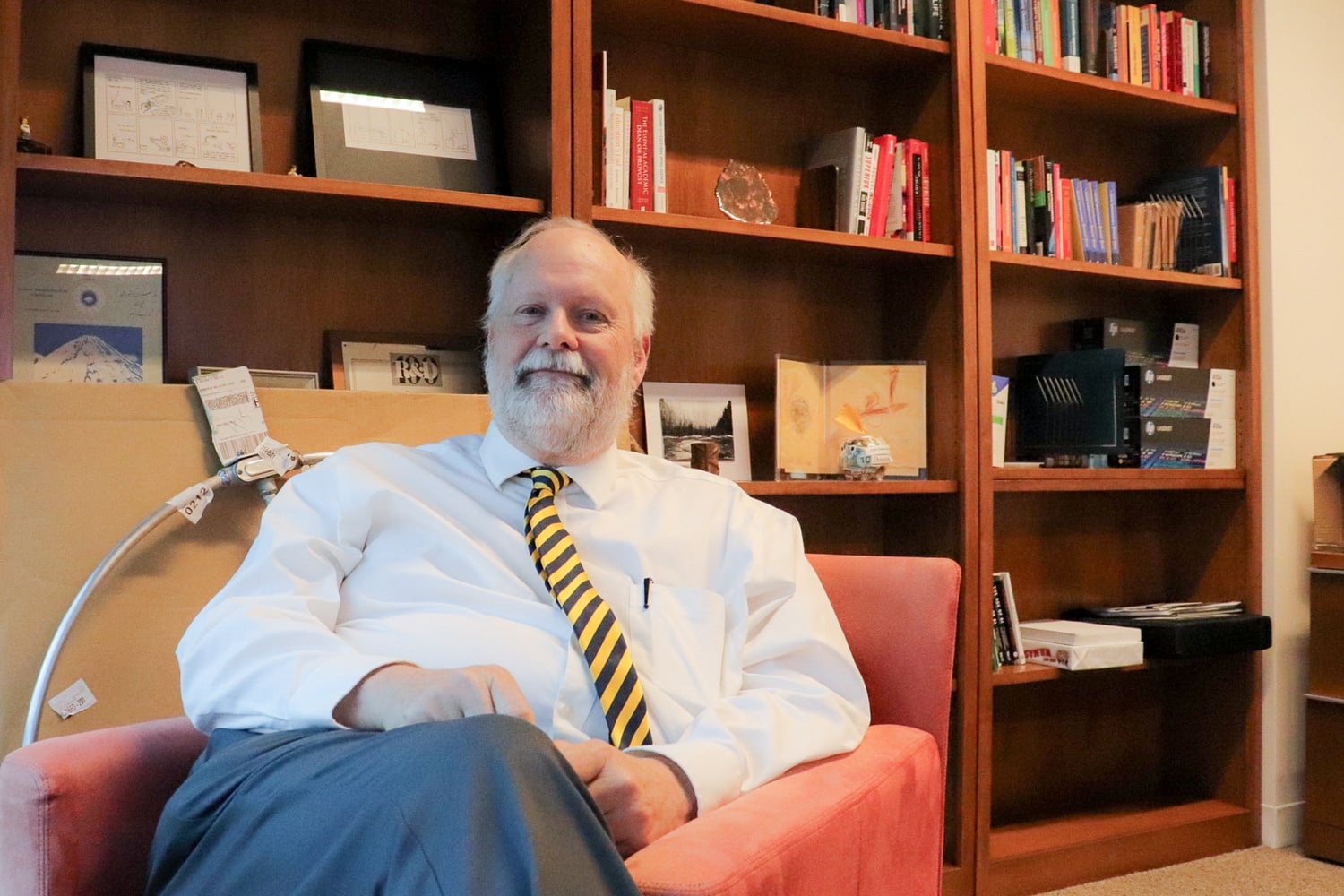
Harvard Physics and Astronomy professor Christopher W. Stubbs has joined the oversight body of artificial intelligence company Anthropic, the company announced Wednesday.
The body, known as Anthropic’s Long-Term Benefit Trust, has the authority to appoint a majority of the company’s board and advises its leadership on decisions involving the risks and societal impacts of AI.
The announcement comes less than three weeks after Faculty of Arts and Sciences Dean Hopi E. Hoesktra announced that Stubbs was stepping down from his role as senior adviser on generative AI for the FAS.
In his role as adviser, Stubbs, who also served as Harvard’s dean of science from 2018 to 2024, helped secure access to leading AI models for FAS affiliates, including Anthropic’s Claude. He also helped design guidance for faculty and researchers on using the technology, according to Hoekstra.
Stubbs remains an active member of Harvard’s faculty and will continue to serve on the FAS’ committee on generative AI, Hoekstra wrote in the Oct. 1 announcement.
Hoekstra named Astronomy and Physics professor Douglas P. Finkbeiner, who spent last year on leave working with Anthropic, as Stubbs’ successor.
Stubbs, who conducts research on particle physics and cosmology, has said that AI has “transformed” his work, accelerating quantitative and data-driven research.
“I use AI tools in my research every day and see what they make possible, and as an educator I have confronted some of the hard questions they raise. As a grandfather, I want to help ensure that AI is developed and deployed for the long-term benefit of humanity,” Stubbs said in Anthropic’s Wednesday announcement.
Stubbs declined to respond to a request for comment, directing all inquiries to Anthropic.
An FAS spokesperson did not immediately respond to a request for comment.
Get The Crimson in your inbox.
He is one of several top University affiliates who have become involved in the AI industry while maintaining their ties to Harvard.
Harvard Corporation member Mariano-Florentino “Tino” Cuéllar ’93 served on Anthropic’s trust from January until August, when he stepped down to become the company’s first global affairs officer. Cuéllar has been a member of the Harvard Corporation, the University’s highest governing body, since 2019.
Harvard faculty have also pursued industry affiliations through the Catalyst Professorship program, launched in 2024 to encourage current professors to maintain relationships with the private sector.
Two of three inaugural Catalyst professors work in AI: Computer Science professor Boaz Barak also holds a technical staff position at OpenAI, while Physics Professor Michael Brenner researches artificial intelligence for Google.
Expanding access to AI tools, an effort Stubbs spearheaded at the FAS, has also become a priority for Harvard’s leadership.
University President Alan M. Garber announced in September that Harvard was investing $150 million in research in infrastructure, While $100 million will be distributed directly to schools to, the remaining funding will support University-wide research priorities and computing infrastructure, including expanding access to commercial AI models.
In a Memorial Church address the same month, Garber predicted that AI would accelerate advances in knowledge — advances he called “essential to human progress and at the core of our excellence as a research university.”
College Dean David J. Deming also doubled down on the importance of AI in a start-of-year address to incoming students, saying that the technology would launch a new era for higher education.
Deming, who studies the impact of artificial intelligence on the workforce, also urged faculty to explore ways to integrate the technology into their courses. In a September email to students, he wrote that classroom AI guidelines would be a top priority for the College in the coming year.
—Staff writer Sebastian B. Connolly can be reached at [email protected] or on Signal at sbc.23. Follow him on X @SebastianC4784.
—Staff writer Summer E. Rose can be reached at [email protected] or on Signal at ser.85. Follow her on X @summerellenrose.
Want to keep up with breaking news? Subscribe to our email newsletter
Have a tip for The Crimson? Share it confidentially