Cambridge Should Divest
A city cannot change the world alone, but it can get the ball rolling.
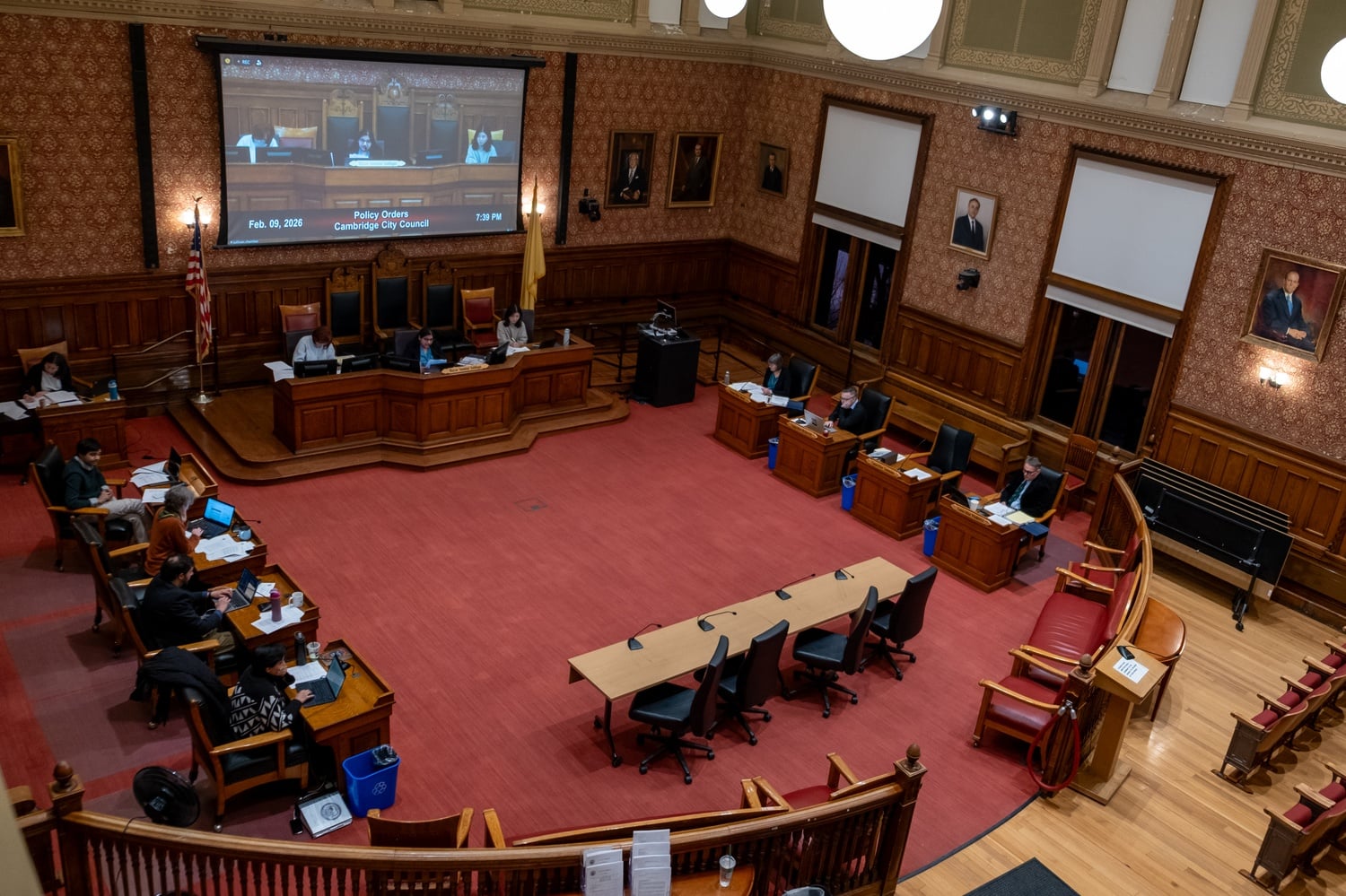
Today, the Cambridge City Council is considering whether to divest from companies with ties to Israel. Among the many arguments made during a six-hour public comment session last week, supporters expressed concerns over city funds contributing to atrocities against Palestinians, while opponents argued the city shouldn’t be involved in international affairs to begin with.
Wherever the Cantabrigians stand, more than 260 residents attended the comment session. They clearly feel strongly about their city’s potential involvement in the ongoing crisis, and their elected representatives have an obligation to listen. In our view, the City Council should vote yes on divestment.
Critics claim that local governments should not focus on conflict overseas. But the question of divestment properly belongs before the City Council. If the citizens of Cambridge are angry over the city government’s reported investment in companies tied to violence and human rights abuses in Gaza and the West Bank, where else are they meant to turn but to said government?
It’s important that a democracy provides avenues for citizens to express their priorities. In Cambridge, residents have shown this conflict matters to them by electing representatives committed to the issue: Both Jivan G. Sobrinho-Wheeler and Ayah A. Al-Zubi ’23 indicated during their campaigns that they would support divestment.
Municipalities control material levers with direct ethical implications, from pension fund management to investment portfolios. On that front, divestment is anything but unprecedented. In 1980, the Cambridge City Council voted to divest from companies with ties to South African Apartheid. In 2007, Massachusetts pension funds divested from select companies doing business in Sudan, alongside 34 other U.S. states and our own University.
These precedents make many of the ostensible procedural objections to divestment hard to take at face value. The more controversial an issue is, and the more power amassed to defend the status quo, the more we see avoidant politicians and insecure interlocutors alike act out of moral hesitation: a reluctance to act on what one already knows is right.
We welcome arguments that dispute the utility, political efficacy, or trade-offs of divestment. But attempts to elide even considering the act come too often in bad faith.
In Cambridge’s case, moral hesitation appears to take the form of distraction through proceduralism — disputing whether divestment belongs before a municipal government or can be reconciled with its fiduciary duties — rather than confronting the ethical question at hand.
Instead, the Council should consider the policy on its merits.
Divestment is both morally coherent and politically shrewd. On moral grounds, something must be done about the grotesque magnitude of violence and unchecked power held by the Israeli state. In September, the world’s largest academic association of genocide scholars agreed that Israel has met the legal criteria for genocide in Gaza. This week, a United Nations inquiry reasserted its claim that Israeli authorities have committed genocidal acts in spite of the ceasefire.
It is imperative that each of us ask what steps we can take to stop the atrocities happening abroad enabled by the United States’ backing.
Nevertheless, critics are right to say that Cambridge alone divesting is unlikely to change what is happening in Gaza and the West Bank. Research on divestment, in general, has not shown an overwhelmingly significant causal impact on company operations. But this is not the only impact possible.
Divestment’s power can instead come from its ability to influence others in a larger political sequence. Cambridge’s decision can sway local governments and institutions across the country to take similar steps, consolidating political will and paving the way to more consequential actions by federal and international actors.
Movement is sorely needed: Despite the sea change that has occurred in American public opinion, the issue of support for Israel has been sidelined by a gridlocked federal government. We are hard-pressed to find another lever as well-suited to initiate change.
Cambridge has a proud history of standing up for human rights — it should not back down now.
This staff editorial solely represents the majority view of The Crimson Editorial Board. It is the product of discussions at regular Editorial Board meetings. In order to ensure the impartiality of our journalism, Crimson editors who choose to opine and vote at these meetings are not involved in the reporting of articles on similar topics.
Have a suggestion, question, or concern for The Crimson Editorial Board? Click here.
Want to keep up with breaking news? Subscribe to our email newsletter
Have a tip for The Crimson? Share it confidentially