HUDS Workers Should Not Be Gig Workers
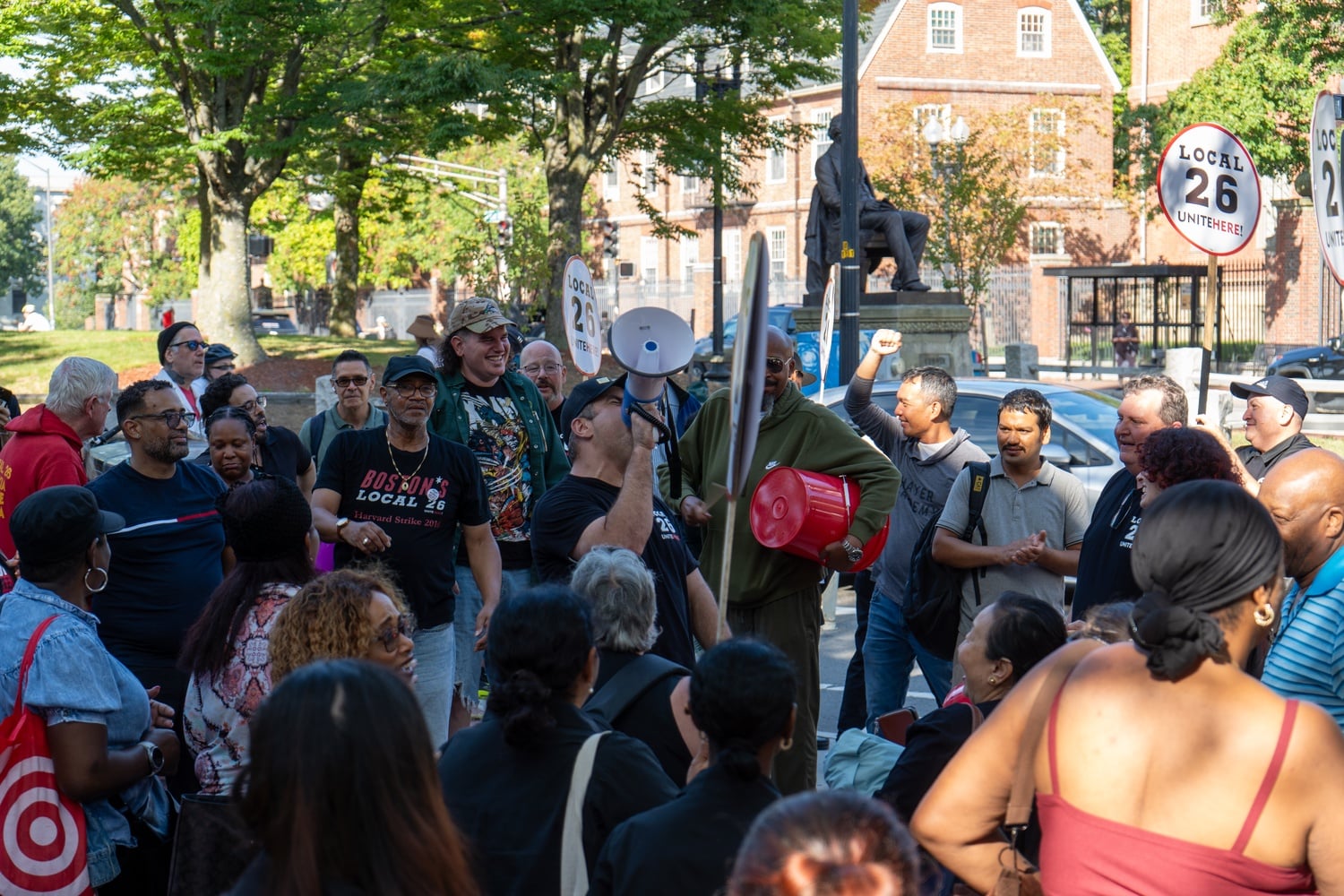
You may not see it when you swipe your ID and a Harvard University Dining Services worker thanks you with a smile. You may not hear it when someone breaks a dish and a HUDS worker assures the mortified dish-breaker that “it happens” and that they will take care of it. You may not taste it in the high-quality meals that HUDS workers prepare three times each day.
But Harvard is stretching its dining hall workers to a breaking point.
Since their 2021 contract expired this summer, HUDS workers have continued to show up to serve Harvard’s students. They have continued to cook, wash dishes, and greet students, carrying out the essential duties that provide a core part of the student experience.
UNITE HERE Local 26, the union representing dining staff, is making three central demands in the ongoing negotiations. These demands are not only reasonable, but essential to workers’ ability to provide for themselves and their families.
First, the workers are demanding a wage increase. Working people are increasingly struggling with the rising cost of living, and HUDS staff are no exception. In one of the most expensive areas in the United States, some HUDS workers may have to move further from campus to be able to afford a place to live. As the commute becomes longer, more money is lost to gas and car repairs, not to mention time each day that could otherwise be spent with their children and families.
Second, HUDS workers are asking for a more affordable insurance plan. Harvard offers health insurance plans to employees, including Local 26 members who work at least 20 hours each week. Here’s the catch: the cost of that insurance can be prohibitive. This forces staff to make the impossible decision between paying for health insurance or other essentials.
Finally, workers are asking Harvard to commit to providing year-round, life-sustaining jobs. The most recent contract guaranteed that authorized hours would be maintained for “every current HUDS employee” but only as long as they stayed in their current role. It failed to guarantee that Harvard would not decrease the hours of new hires or employees who change positions, effectively allowing Harvard to replace full-time jobs with part-time jobs.
While it is hard enough to get by on a full-time HUDS job, when hours are decreased to part-time, it becomes near impossible to get by on one job alone.
Do we really want the people who show up every day to prepare our food to also have to juggle part time work like Uber, Doordash, house cleaning, or home repairs just to afford their most basic needs? HUDS workers should not be gig workers.
As it stands, HUDS workers already do not receive regular wages over summer breaks, instead receiving a small monthly stipend. Part-time jobs that last ten months per year are even less sustainable.
Importantly, HUDS workers and students are not powerless in the face of these challenges.
In 2016, Harvard left HUDS workers seeking better wages, conditions, and hours with no option but to strike. In a 22-day strike, HUDS workers put their financial livelihood on the line, painfully sacrificing weeks of wages to stand up for their dignity and that of their co-workers. With the support of hundreds of students who rallied in support, the strike was ended and the workers got the conditions they deserved.
We ask all students who recognize the value of the work done by HUDS staff to ask Harvard to do the same. HUDS workers work hard enough each day. They should not also have to put this much effort into getting the wages and benefits they need to live.
Make it clear to Harvard: Students care about our dining hall workers. Just as they have our backs, we will have theirs. We will do what it takes to make sure they get what they deserve.
Sean B. Merrill ’30 lives in Wigglesworth Hall. Terence M. McCafferty ’26-27, a Social Studies concentrator, lives in Cabot House.
Want to keep up with breaking news? Subscribe to our email newsletter
Have a tip for The Crimson? Share it confidentially