Reboot AI
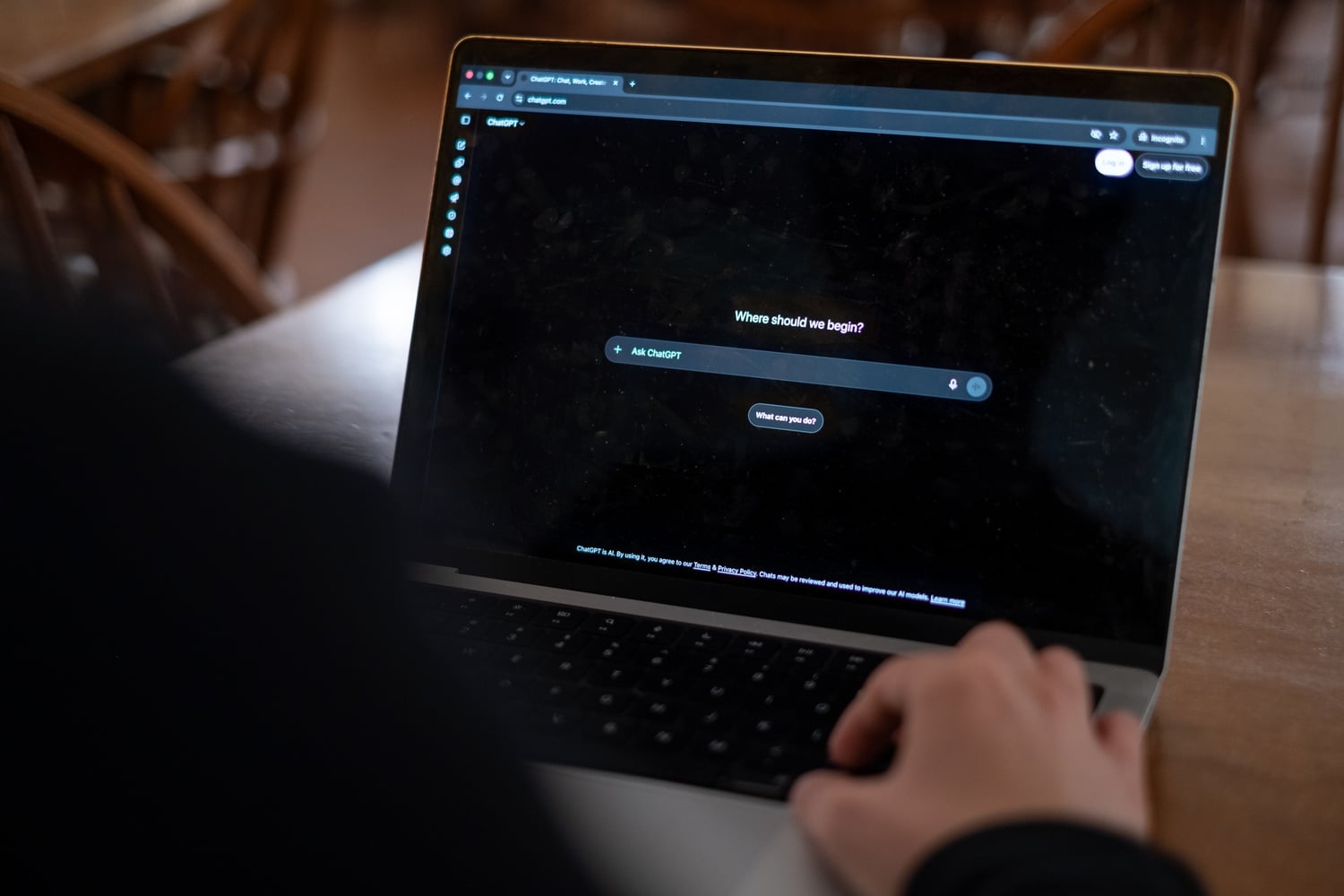
Last week, I caught up on September’s artificial intelligence discourse. Within minutes my browser had proliferated tabs on a dozen topics: warnings about a humanity-destroying singularity, reports of local clashes over data centers, and paeans to advances in mathematics and biology. Halfway through reading the letter from Fields Medalists explaining why math is a fundamentally human endeavor, my computer froze.
Like my machine, Harvard is overwhelmed by the volume and variety of issues related to AI. Trying to load too many processes simultaneously, we are incapable of running any of them. We need to reboot our relationship to AI, starting by specifying AI’s problems and possibilities. So: let’s examine some of these “frozen tabs.”
One debate centers on AI’s potential to enhance our work. We can read stories like those touted by Harvard President Alan M. Garber ’76, in which AI enables research both of a kind, and at a speed previously impossible. Simultaneously, experts question whether comprehensible results, even if true, align with the mission of fields like mathematics — a critique made by those Fields Medalists.
There is also AI’s threat to effective student assessment. Faculty are turning to handwritten assignments, blue books, oral exams, anything that can verify students’ real skills. Discovering forbidden AI use is a formidable technical challenge. Yet simply assuming everyone follows the rules would implicitly accept cheating.
And then there is the question of AI, literacy, and thinking. Like many — dare I say most — of my colleagues, I regard strong reading and writing skills as central to a liberal arts education. Yet Harvard’s approach towards AI too often suggests that a ChatGPT summary or a Claude-drafted essay provide the same educational value as the slow, difficult work of reading and writing.
That’s a lot of information to take in — too much. When my computer freezes, I reboot. It’s time for Harvard to reboot its approach to AI.
How should we do that? A proper restart means funding reading and writing as generously as AI, rebuilding the analog tools that let us teach and assess honestly, and returning decisions to the faculty who do the teaching.
First, Harvard needs to consistently explain the importance of and advocate for reading and writing. The Bok Center’s highly visible promotion of AI innovation in the classroom, the consolidation of the Writing Center, and messages like Harvard College Dean David J. Deming’s at the start of the term — all encourage the belief that reading and writing are optional skills. Harvard should launch initiatives to reaffirm excellence in reading and writing in every discipline.
Second, we must build infrastructure to support analog teaching and learning practices. Opportunities here abound: dedicated, internet-free computer labs stocked with keyboards and paper; required writing-lab hours; a final exam schedule that accommodates oral exams; internet-free classrooms and study spaces; a return to course packs and textbooks. We spent years replacing this analog infrastructure with a digital University — it’s time to reinvest in older technologies.
Third, we have to approach AI from the bottom up. AI’s accessibility campus-wide, the visible campaign to provide support for research and teaching with AI tools, eager attention to AI in speeches by University leaders — all demonstrate that AI is a top University priority. Do the faculty agree?
It’s hard to tell because AI decisions have been made primarily by administrators and a set of ad hoc AI committees — one in FAS and three at the University level — a para-administration outside normal faculty governance. However hardworking and well-intentioned those ad hoc committees are, they bypass the system of consultation we already have in place.
That system, while far from perfect, includes standing committees overseeing research, technology, the honor code, educational policy, general education, graduate education, prizes, and more. Insofar as AI will enable or require new approaches in these areas, the groups already dedicated to that work should lead the way. Dean Deming’s recent announcement that the Education Policy Committee would make recommendations on AI is a step in the right direction. Faculty and student needs, then department needs, then division needs: that’s how to invest in education from the bottom up.
It may be true that AI will transform higher education and enable new forms of teaching, learning, and research. But transformation must not entail abandoning our mission.
Harvard exists to educate people and search for truth, whether we do that with a blue book, a whiteboard, or a black-box large-language model. We must harness AI to serve our University, not retrofit our University to serve AI.
Derek Miller is the Felice Crowl Reid Professor of English, Chair of the Standing Committee on Theater, Dance, and Media, and Chair of the FAS Standing Committee on Information Technology.
Want to keep up with breaking news? Subscribe to our email newsletter
Have a tip for The Crimson? Share it confidentially