Where Are All the Public Servants?
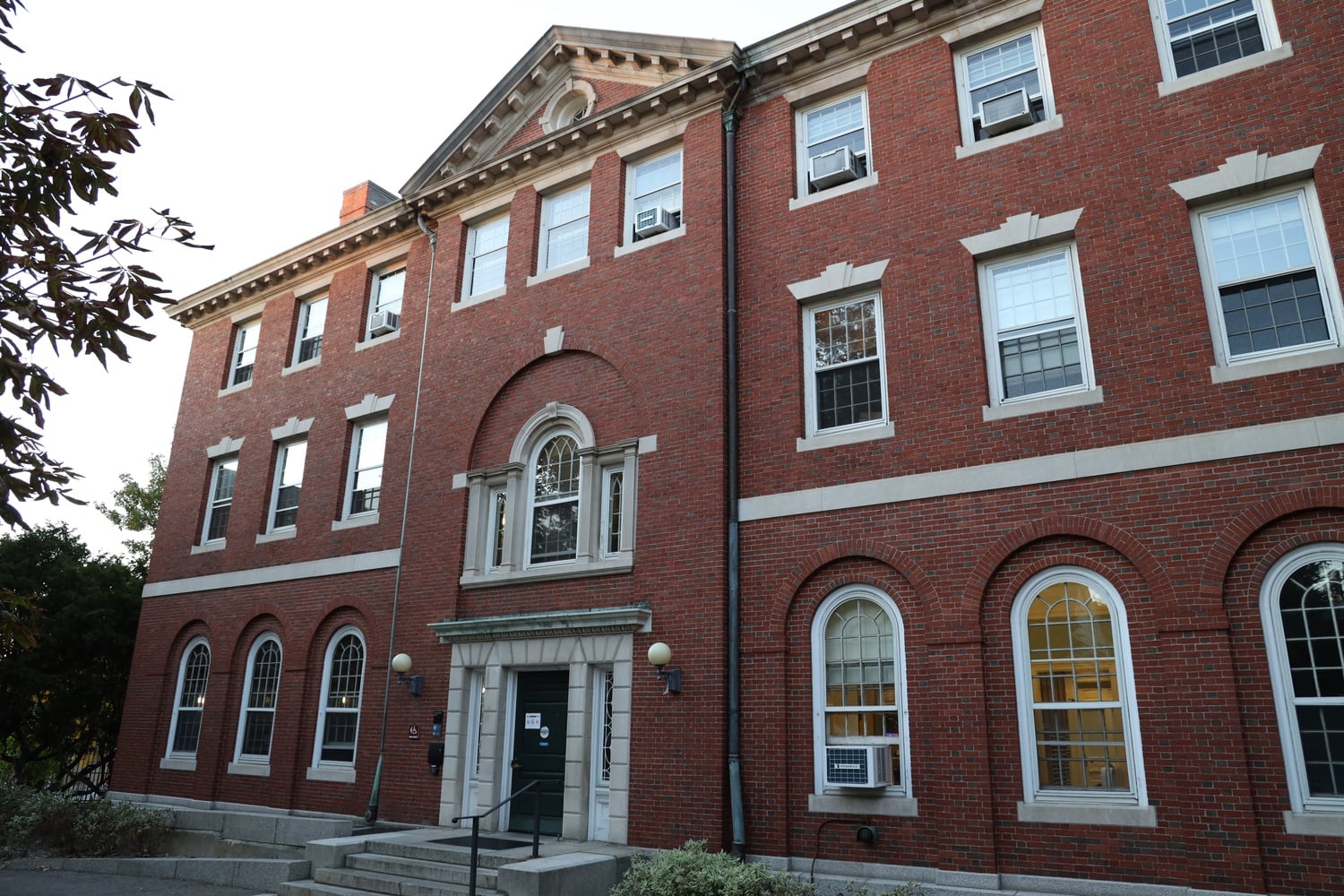
The Harvard Phillips Brooks House Association has over 1,200 volunteers this semester, more than at any point since the Covid-19 pandemic. What are the rest of the College’s some 6,600 students doing?
Despite the best attempts of groups like the PBHA, Harvard is failing at public service due to a lack of interest. The PBHA is larger than at any time in recent memory, and even so, less than a fifth of Harvard’s undergraduates are taking part. Student leaders in the Institute of Politics, meanwhile, are turning to networking opportunities instead of hands-on service.
If the College wants its students to serve the world once they graduate, then it needs to require them to do so.
First, let me establish why public service should be a priority.
Harvard College’s mission is “to educate the citizens and citizen-leaders for our society.” Though public service is not mentioned explicitly, the idea of being a leader and caring for society all but requires it. Indeed, the most important aspect of leadership is servant leadership. Harvard should make this implication explicit and affirm the importance of public service as a central value.
Yet, on campus today, the predominant extracurricular culture is certainly not one of service. Almost all of the more prominent student organizations on campus — such as Harvard Undergraduate Consulting Group, Harvard Undergraduate Consulting on Business and the Environment, and Harvard Financial Analysts Club — are pre-professional in nature.
The problem only gets worse when students graduate. Critics have oft decried how many students sell out to careers in consulting, finance, and big tech — and how few enter public service.
There’s a common perception among the public that Harvard exists for the enrichment of its elite membership. Just last week, former Governor Chris Sununu (R-N.H.) suggested in an interview with The Crimson that Harvard’s endowment no longer serves a “core purpose” and has instead become money begetting money. As long as so many students sell out, it seems the latter is true.
Given the University’s current public relations crisis, we should do more to ameliorate our image in the eyes of the public.
So, how can the College both appease its critics and fulfill its mission? Require students to work in public service after they graduate — or pay the price.
As brash as this idea may sound, it’s hardly original. The Harry S. Truman Scholarship offers a perfect model. Recipients of the scholarship are required to work in public service for three out of seven years after graduation. The scholarship construes “public service” broadly to include work in government, non-profits, schools, research, and more.
One might wonder, what would deter someone from breaking the public service requirement? In the case of the Truman Scholarship, recipients have to repay the funds they’ve received. Harvard could follow a similar path, requiring repayment of some or all of the grants that the College generously gifts to the majority of students to finance their education.
This proposal may seem harsh, but it would simply mean that students who sell out would effectively be fined — like a progressive income tax. This payment scheme would then generate money to fund future scholarships, and ideally, the College would increase its financial aid even more.
Harvard gives students incredible opportunities, often at a cost paid by the College. Students should pay it forward through service — or pay it back.
Truthfully, money alone may not fix the public service problem. The underlying issue lies in the type of students we admit. But creating post-graduation requirements will signal to students what Harvard is looking for and begin fostering some self-selection.
If this change makes certain students not want to come here, then it is working exactly as intended. Let the sellouts go to Yale University instead.
This kind of brazen change may seem beyond the realm of possibility, but if the grade cap shows anything, it’s that Harvard is willing to lead the charge against a seemingly insurmountable battle — one that we must win.
Short of a post-graduate requirement, the College could take other, easier steps to promote public service.
The most straightforward is to require students to complete community service hours. More generally, the College must think carefully about service as it downsizes the Phillips Brooks House staff and moves the Mindich Program in Engaged Scholarship under new oversight.
Another simple solution is to give more of the Student Activities Fee funding, which doubled to $2.7 million this year, to the PBHA, which has historically faced deficits.
As many have pointed out, one mantra found on Harvard’s campus is “Depart to Serve Better Thy Country and Thy Kind.” The College would do well to make sure that happens.
Matthew R. Tobin ’27, a Crimson Editorial editor, is a double concentrator in Social Studies and Economics in Winthrop House.
Want to keep up with breaking news? Subscribe to our email newsletter
Have a tip for The Crimson? Share it confidentially