History and Literature Department Announces ‘Urban Studies’ Track
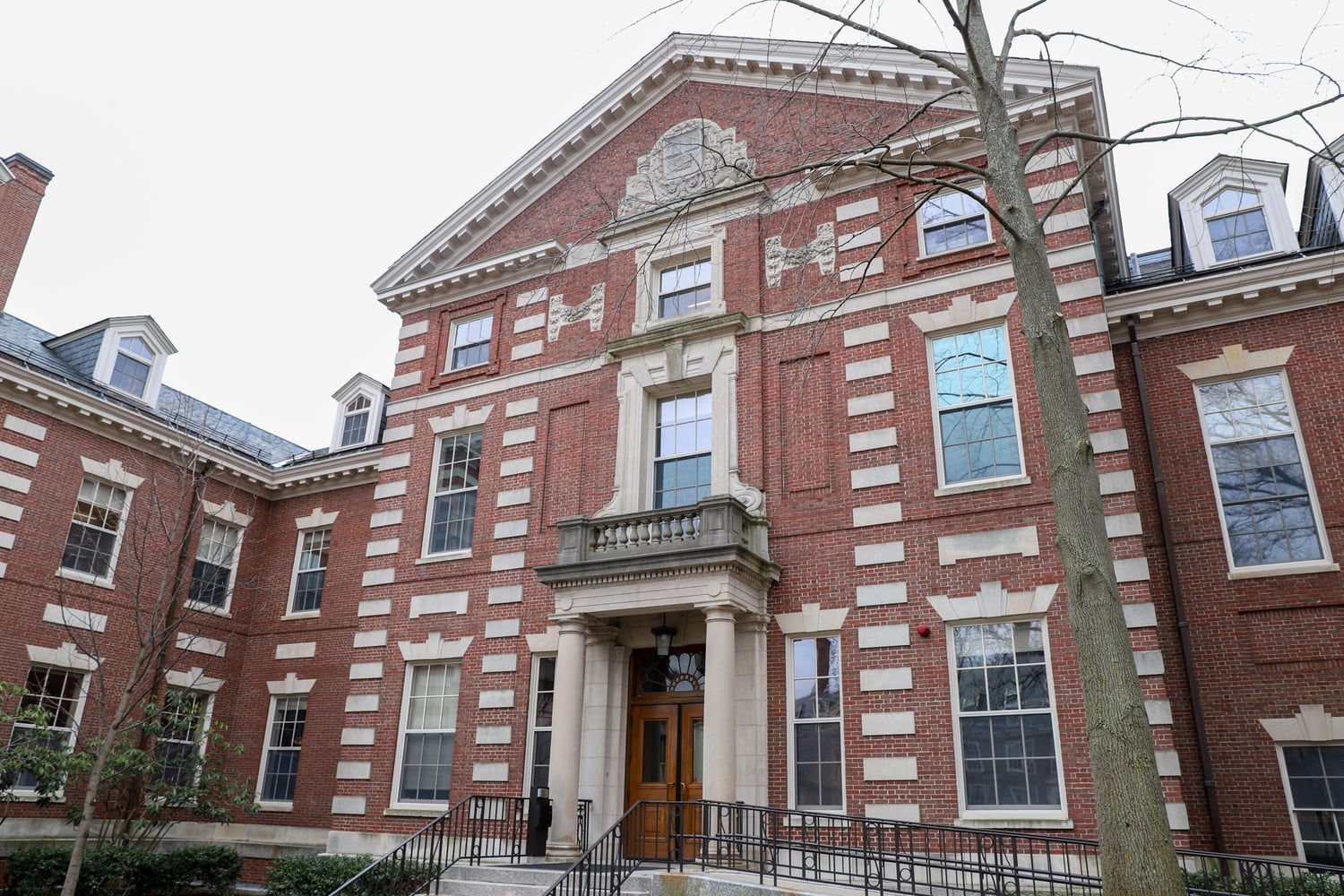
Harvard’s History and Literature Department will launch a new “Urban Studies” track for concentrators beginning next academic year, marking the College’s first formalized undergraduate program dedicated to the study of cities after sustained calls for a unified academic home on the subject.
The new track will allow students to study the “processes of urbanization and the urban experience” and examine cities “from the granular to the global,” Associate Director of Studies Angela S. Allan wrote in a Wednesday email to department affiliates.
Students who pursue the track will be required to take a core course in urban studies, one course focused on cities before 1900, one on the period from 1900 to 2000, and a quantitative reasoning course related to the field.
The launch follows years of advocacy from undergraduates and faculty who pushed Harvard to formalize a secondary program in urban studies, arguing that the College lagged behind peer institutions and forced students interested in the topic to piece together coursework scattered across departments.
Chloe I. Hawkey, a lecturer in History and Literature who will teach the seminar Hist-Lit 90HO: “New York Modern” in the fall, said formalizing a path in urban studies was long overdue.
“Urban Studies is and has for a while been a pretty common interdisciplinary concentration or major at other schools,” Hawkey said. “In some ways Harvard is kind of late to the game on that.”
A range of interdisciplinary courses will count toward credit in the field, from English 184CF: “City Fictions,” taught by English professor Tara K. Menon, to Economics 50: “Using Big Data to Solve Economic and Social Problems,” instructed by economists Raj Chetty and Gregory A. Bruich, according to a new page on the department’s website.
History and Literature Chair Bruno Carvalho will teach a new core course in the urban studies field, called Hist-Lit 10: “The Culture of Cities,” beginning in fall 2027. He is also slated to offer the course Hist-Lit 90HN: “Soccer, Globalization, and Urban Life” in fall 2026, an expansion of a first-year seminar he previously taught.
Get The Crimson in your inbox.
Carvalho — who serves as co-director of the Harvard Mellon Urban Initiative — has pushed to establish a secondary field in urban studies since arriving at Harvard in 2019.
“Humans only began to live in cities a few thousand years ago, but most of us now inhabit an urban world,” he said in an interview on Wednesday. “It’s important for us to understand what that means.”
Before coming to Harvard, Carvalho was the co-director of the Princeton-Mellon Initiative in Architecture, Urbanism and the Humanities and affiliated with Princeton’s Program in Urban Studies.
Carvalho said that while the program he helped lead at Princeton was “wonderful,” he sees History and Literature’s new track as distinct because of the department’s identity “in the ampersand” that focuses on integrating fields instead of treating them as separate entities.
“Sometimes, Urban Studies programs can be a bit territorial,” he said. “History and Literature is a program that is set up to bring together history and literature, and bringing it together is part of what makes cities wonderful places.”
“They bring together ideas and people and resources and so on,” he added.
Dennis M. Hogan, a lecturer in Hist and Lit, who teaches the seminar Hist-Lit 90HM: “The University and the City,” said the new track reflects the department’s broader interdisciplinary approach and growing student interest in the field.
“What we’re really doing in History and Literature is we are training students to approach subjects from an interdisciplinary point of view,” he said. “Urban Studies is a field that there’s been a growing student interest in, and luckily, it’s a field that we have the expertise to speak to.”
Clyve Lawrence ’25-’27, co-president of the Harvard Undergraduate Urban Sustainability Lab, said the new track is “a step in the right direction” toward closing what he called a longstanding gap in urban studies at the College.
“I think that this field of study within the History and Lit department is a good step toward really closing a gap that we’ve seen at Harvard around urban studies and studying the vibrant places that cities can be,” he said.
Kayla P.S. Springer ’26, a former HUUSL co-president, said the new track could help consolidate existing coursework and underscores the broader need for a more unified program in urban studies.
“Urban Studies is really the study of the future of human society,” she said. “I think it’s really important to study, and right now there are classes that are addressing the lack of programming across departments, but there’s no unifying course load.
“Except for now, with the Hist and Lit track, which is exciting,” she added.
—Staff writer Alma T. Barak can be reached at [email protected] and on Signal at almabk.54. Follow her on X @almabk_.
—Staff writer Theresa F. Bartelme can be reached at [email protected] and on Signal at theresabartelme.15. Follow her on X @theresabartelme.
Want to keep up with breaking news? Subscribe to our email newsletter
Have a tip for The Crimson? Share it confidentially