Alumni Interviewers Say Harvard’s Ban on Mentioning Race Has Created Confusion in Write-Ups
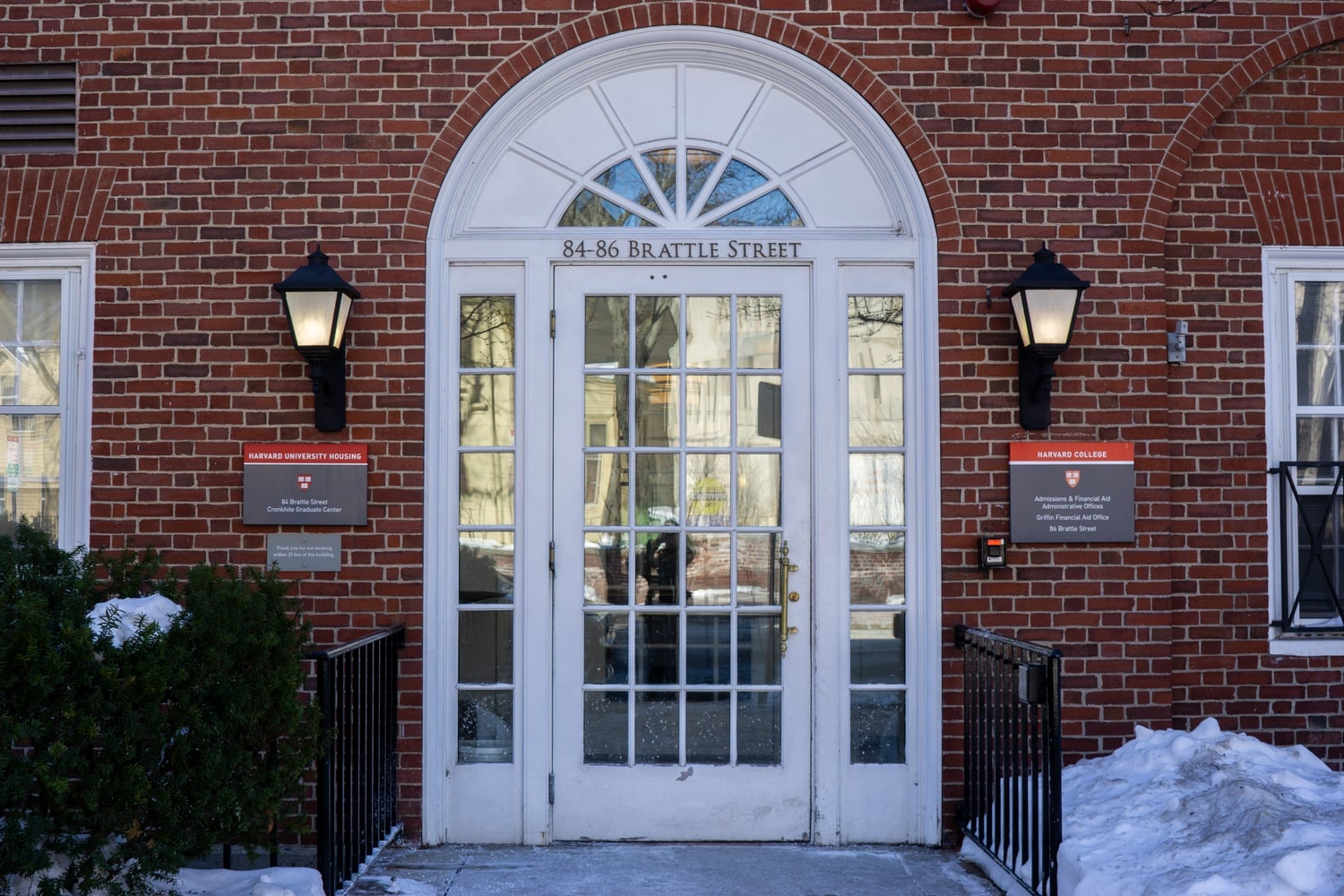
Alumni interviewers said Harvard College’s policy barring them from mentioning applicants’ race or national origin in their written reports has created confusion over what they can include in their evaluations — and made it harder to capture the full picture of applicants’ lives.
The policy, announced last fall and codified in the alumni interviewer handbook, bars interviewers from naming applicants’ religions, languages spoken, or racial and cultural organizations in their reports — requiring them instead to use vague terms like “affinity groups” or “faith events.” Reports that include prohibited details risk being discarded.
The changes have already drawn criticism from civil rights groups and legal scholars who say the policy goes far beyond what the Supreme Court’s 2023 ruling in Students for Fair Admissions v. Harvard requires. In December, the NAACP Legal Defense and Educational Fund called the guidance “unlawful and discriminatory” in a letter to University President Alan M. Garber ’76, arguing it may violate Title VI of the Civil Rights Act.
The Crimson spoke to more than a dozen alumni interviewers about how the policy has played out in practice. Interviewers said they could still represent the substance of students’ experiences, but many said the required generalizations flattened the nuances of applicants’ backgrounds.
At least eight interviewers said applicants brought up race or national origin without any prompting, and three said they were asked after submitting their reports to edit them to remove references to applicants’ national origin.
Taybah A. Crorie ’25, who interviews applicants from London and New York, said the head of her New York interview cohort asked her to remove a reference to an applicant’s grandparent’s country of origin after reviewing her write-ups.
“They sent me a text saying, ‘Hey, that needs to be removed,’ which was fine. I just found a different way to put the idea across,” Crorie said.
Other alumni interviewers received similar directives from their local Harvard Club admissions coordinators. One interviewer who had written about how an applicant of Persian descent learned about their heritage through music had their report flagged and was told to remove the explicit reference to their family culture.
Several Harvard Clubs held additional sessions to clarify enforcement of the new policy. Crorie said the Harvard Club of New York held a session in which coordinators told interviewers not to mention race or national origin and that reports would be reviewed before being sent to the admissions office. Joseph E. Brower ’24 said the Harvard Club of Chicago sent out additional resources and pre-recorded videos.
But not every club offered additional preparation. Crorie said the Harvard Club of the U.K. did not provide supplementary training material.
Get The Crimson in your inbox.
In one New York specific training session, alumni chairs described the policy change as a precautionary measure against lawsuits in the wake of the 2023 Supreme Court ruling, according to one interviewer who attended.
Kya I. Brooks ’25, a first-time alumni interviewer, said the policy has left her unsure how far she is expected to go in concealing identity markers.
“It’s easy to, for example, omit the name of an affinity group, but my question is, ‘To what lengths do interviewers need to go to conceal race, ethnicity, and national origin?’” she said. “Because it can come up in more subtle ways, like the fact that they speak different languages in their household.”
A Faculty of Arts and Sciences spokesperson did not respond to a request for comment.
Brooks said she did not think the policy was inhibiting applicants, but that it created extra work for interviewers — particularly when writing about students from more diverse backgrounds.
“If they’re involved in a lot of spaces around language, culture, and their religion, then I have to redact more information,” Brooks said.
Several interviewers said the policy’s limits were hardest to navigate when applicants themselves raised topics of race, ethnicity, or identity during conversations. Julia N. Do ’25 said that when students brought up extracurriculars tied to their identity, she found herself having to talk around the subject or change course entirely.
“It can cause some awkwardness when an applicant starts to talk about a certain extracurricular that will involve part of that identity, and you kind of have to navigate speaking around it, or otherwise just not acknowledge it and move on to an unrelated question,” she said.
“I think it still is pretty limiting in capturing the full depth of the applicant’s life experience, because we do have to dumb down an applicant’s really complicated or multi-faceted identity in something really general,” Do added.
Mark V. Smolinski ’24 said the same problem followed him into the writing process. He said applicants’ ethnicities regularly surface when they discuss cultural clubs or languages spoken at home, and that he has struggled with how much of that to put in his reports.
“I think it’s for some people, kind of inevitable that their ethnicity comes into the conversation just based off of their interests, like if a student is interested in cultural clubs or say they speak a certain language — that pretty often comes up,” he said.
“I find I’m second guessing myself on whether or not I should be writing about certain topics, if there was a student who say they experienced some form of racism,” he added. “I don’t know if it’s something that I can avoid.”
—Staff writer Celine Muir can be reached at [email protected] or Signal at celinem.33. Follow her on X @celinemuir1.
—Staff writer Alexa M. Schmitt can be reached at [email protected] or Signal at alexaschmitt.15. Follow her on X @alexa_m15_s.
Want to keep up with breaking news? Subscribe to our email newsletter
Have a tip for The Crimson? Share it confidentially