As Costs Climb, Developers Turn to Cambridge’s Affordable Housing Trust, Report Finds
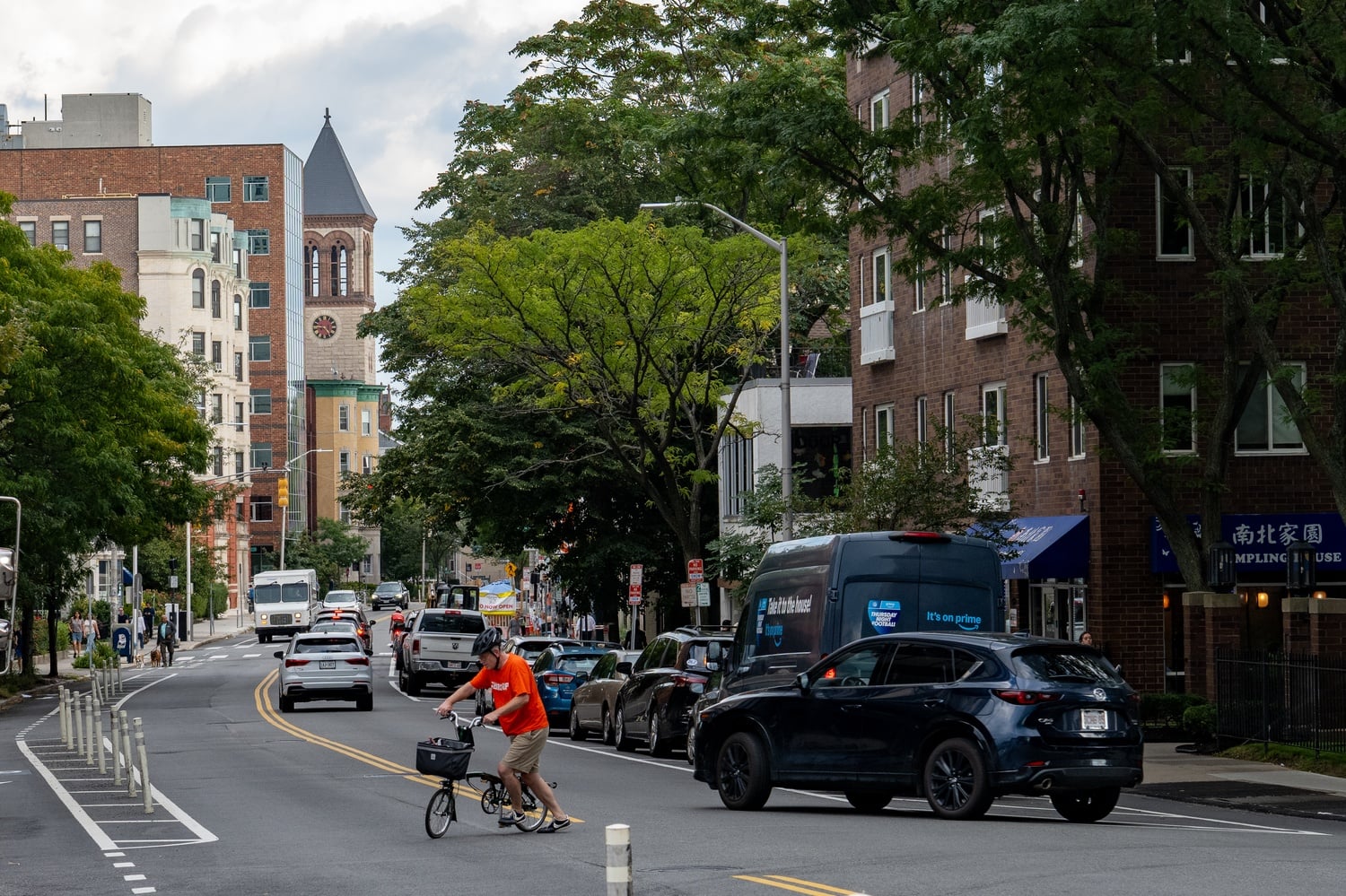
Cambridge's Affordable Housing Trust has become the financial backbone of nearly every large affordable development in the city, according to a report released last week evaluating the last five years of the program.
The city established the trust in 1989 to finance property acquisition, renovation of existing affordable housing, and new affordable developments. But as construction costs have surged, what began as a supporting role has become indispensable.
Cambridge established the Affordable Housing Trust in 1989 to support affordable housing developments. But as developers have struggled to keep pace with rising construction costs, the creation of hundreds of units has become reliant on its funds.
The city has more than tripled its investment in the trust in the last decade, now allocating more than $40 million annually. Since fiscal year 2021, the trust has helped create or preserve more than 900 affordable housing units, and has funded more than 1,000 additional units currently in the development pipeline.
“The Affordable Housing Trust has been at the center, and it has been the most powerful tool that we've had to expand, to preserve affordable housing, to ensure that everybody, especially people who are low income, have access to our community and can be part of this city,” City Manager Yi-An Huang ’05 said at a press conference last week.
In fiscal year 2025 alone, the Trust committed more than $66 million to affordable housing projects, with 134 new affordable units completed and opened to residents by year's end. Over the last five years, the AHT has financed the acquisition of 14 properties for conversion into affordable housing, according to the report.
The report highlighted a number of large-scale developments across the city — including the recently approved project at 2072 Massachusetts Avenue and the preservation of the 504-unit Fresh Pond Apartments, completed in 2021.
City officials attributed much of the recent development success to policy changes enabling increased housing production — chief among them the Affordable Housing Overlay, a zoning reform passed in 2020 that allows 100 percent affordable developments to exceed existing height and density limits. All 16 projects passed or under review through the AHO have received AHT funding.
The trust draws from several city sources — the operating budget, taxes, and developer contributions — as well as external contributors. Harvard's 20/20/2000 Initiative, piloted in 2000, provided the Trust with $6 million capitalized as a low-interest revolving loan fund.
City officials — including Huang and Mayor Sumbul Siddiqui — released the report last Wednesday alongside the unveiling of 52 New Street, the first development approved under the AHO in January 2022.
Get The Crimson in your inbox.
The AHT has also increasingly backed Permanent Supportive Housing, designed for residents exiting homelessness or living with disabilities. Three PSH projects have received AHT support in the last two years, offering services like case management and mental health support.
116 Norfolk Street — a PSH development and the first AHO project to open to residents — received more than $10 million from the AHT. The 62-unit development, opened last June, was primarily offered to individuals exiting homelessness. The Cambridge Housing Authority partnered with Eliot Community Human Services to provide full-time on-site case managers.
The 62-unit development opened last June, and was primarily offered to individuals exiting homelessness.
The Cambridge Housing Authority, which manages the property, partnered with Eliot Community Housing Services to provide support services — including full-time on-site case managers. Acknowledging the additional support offered in PSH is critical, according to the city’s Housing Department Director Christopher Cotter.
“Our support of PSH reflects our understanding that people may face many barriers to housing and that affordability is only one of them," said Housing Department Director Christopher Cotter in a press release. “Other barriers may require long-term support, which is why this type of affordable housing is so important.”
In addition to subsidizing development, AHT funds are also used to back two of the city’s affordable homeownership programs.
Cambridge launched HomeBridge in 2017 — a program that gives financial assistance to first-time homebuyers earning between 60 and 120 percent of Area Median Income. The program also restricts the resale price of homes purchased, aiming to keep the units permanently affordable.
Units purchased through HomeBridge become a part of the city’s affordable homeownership stock. When a resident sells a unit, it is purchased by the AHT through the Affordable Homeownership Resale Fund. In the last five years, the fund has allowed 30 income-restricted units to be sold to new buyers, according to the report.
For residents like Delfine Masongo, who spoke at last week's press conference, the opportunity to secure permanent trust-funded housing has been a lifeline. Masongo said the affordable unit she was able to rent “did not just give me shelter, but took me as a whole person and molded me to what I am today.”
“Cambridge has given me wings,” Masongo said.
Still, the report underscores challenges ahead: rising housing costs, growing waitlists, and increasing construction costs and interest rates that make residential development less feasible.
Huang described the report as both a reflection on recent progress and a roadmap for continued investment.
“That is why we have worked deliberately and urgently to dramatically ramp up our investment in new affordable housing, preserve existing units, and support policies that keep Cambridge livable for residents at all income levels,” Huang wrote.
—Staff writer Adelaide L. D. Roger can be reached at [email protected]. Follow her on X @adelaidelrg.
Want to keep up with breaking news? Subscribe to our email newsletter
Have a tip for The Crimson? Share it confidentially