Cambridge Sees Early-Stage Developments One Year After Overhauling Its Zoning Code
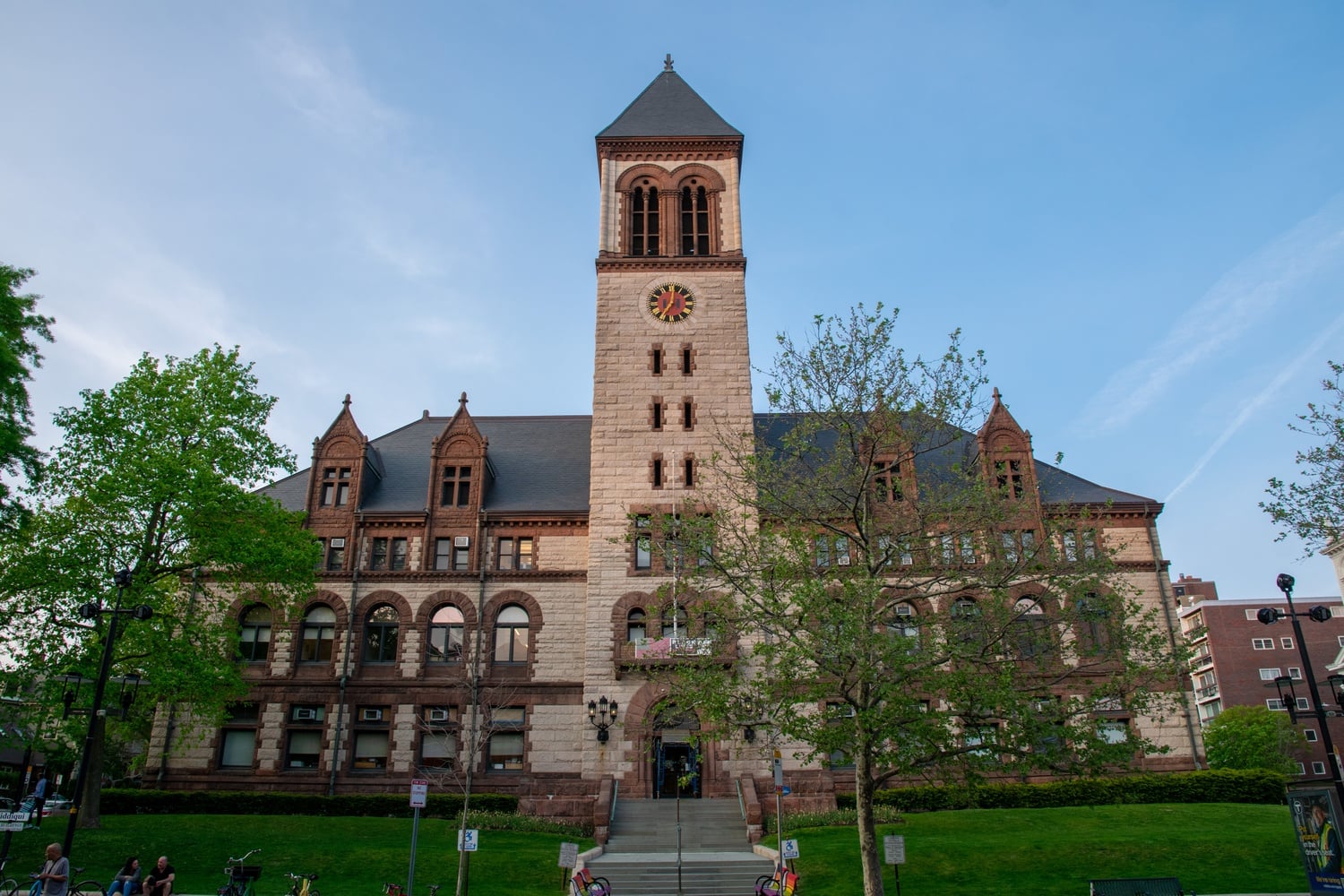
A year after Cambridge overhauled its zoning laws to spur more housing development, city staff say the ordinance has begun pushing projects into the development pipeline — even if the results remain nascent.
Staff from the city's Community Development Department presented the first annual report to councilors on Wednesday evaluating the outcomes of the multifamily zoning ordinance passed last February, which legalized the development of larger multi-unit developments across the city.
The one-year report — required under a provision of the ordinance — is the city's first evaluation of the zoning reform, and city staff said it was intended as a baseline for tracking how the ordinance will reshape Cambridge's housing stock over time. The city intends to conduct a five-year study beginning in 2030.
“One year is not enough to draw definitive conclusions on the effects of the zoning change,” said Jen Caira, the CDD’s deputy chief of planning.
In 2025, the city permitted no new large-scale housing projects. Fifty smaller developments received permits last year — a slight increase from the 43 buildings that received permits in 2024.
Zoning and Development Director Jeff Roberts said many large developments — those containing more than 100 units — remain in early stages, with most proposed projects not yet reaching the permitting stage by year's end. The data nonetheless points to a clear and growing interest in multifamily development, he said.
“We’ve seen a notable shift from single family and two family construction to multi family and townhouse construction as well as a shift away from alterations that reduce the number of units towards alterations that increase the number of units,” he said.
Cambridge set a goal in 2018 to add 12,500 units to its housing stock by 2030 — a target it is currently falling significantly short of, having added roughly 3,100 units through the end of last year. The city passed the Affordable Housing Overlay in 2020 and amended it in 2023 to allow taller, denser buildings to be constructed by-right if they contain only income-restricted affordable units.
Get The Crimson in your inbox.
Roberts said the growth seen in the ordinance's first year signals that the city remains on stable footing to meet its affordable development goals.
“Although the future is always uncertain, it seems like for now, the pipeline of affordable housing development that was set up following the Affordable Housing Overlay is not slowing down, and that seems to be remaining strong,” he said.
Councilors remained skeptical of the ordinance's tangible outcomes following the presentation. Councilor Catherine "Cathie" Zusy said the city should weigh the impact of new developments on surrounding neighborhoods beyond the data, adding that residents living near ongoing construction sites were "really upset about developments happening close by in messy job sites."
“We did focus on numbers in your reporting — and it was a great report — rather than on how it’s impacting the neighbors and the neighborhoods themselves,” she said.
Vice Mayor Burhan Azeem, who co-sponsored the multifamily zoning ordinance, urged caution against revising it before the city can fully assess its effects, saying that most developments are still in early stages.
“I think new construction is terrible — and that you have to deal with loud noises, parking, closing issues — but we’ve not actually seen any of these buildings actually open yet,” Azeem said.
“And that’s the fun part, where you get to meet your new neighbors, and then all of a sudden they’re not so bad people, and you have new friends and new life and new customers for your stores,” he added.
—Staff writer Maya Fu can be reached at [email protected].
—Staff writer Risha Sinha can be reached at [email protected].
Want to keep up with breaking news? Subscribe to our email newsletter
Have a tip for The Crimson? Share it confidentially