Artist Profile: Manar A. Abrre ’26 on Intersecting STEM and the Arts at Harvard
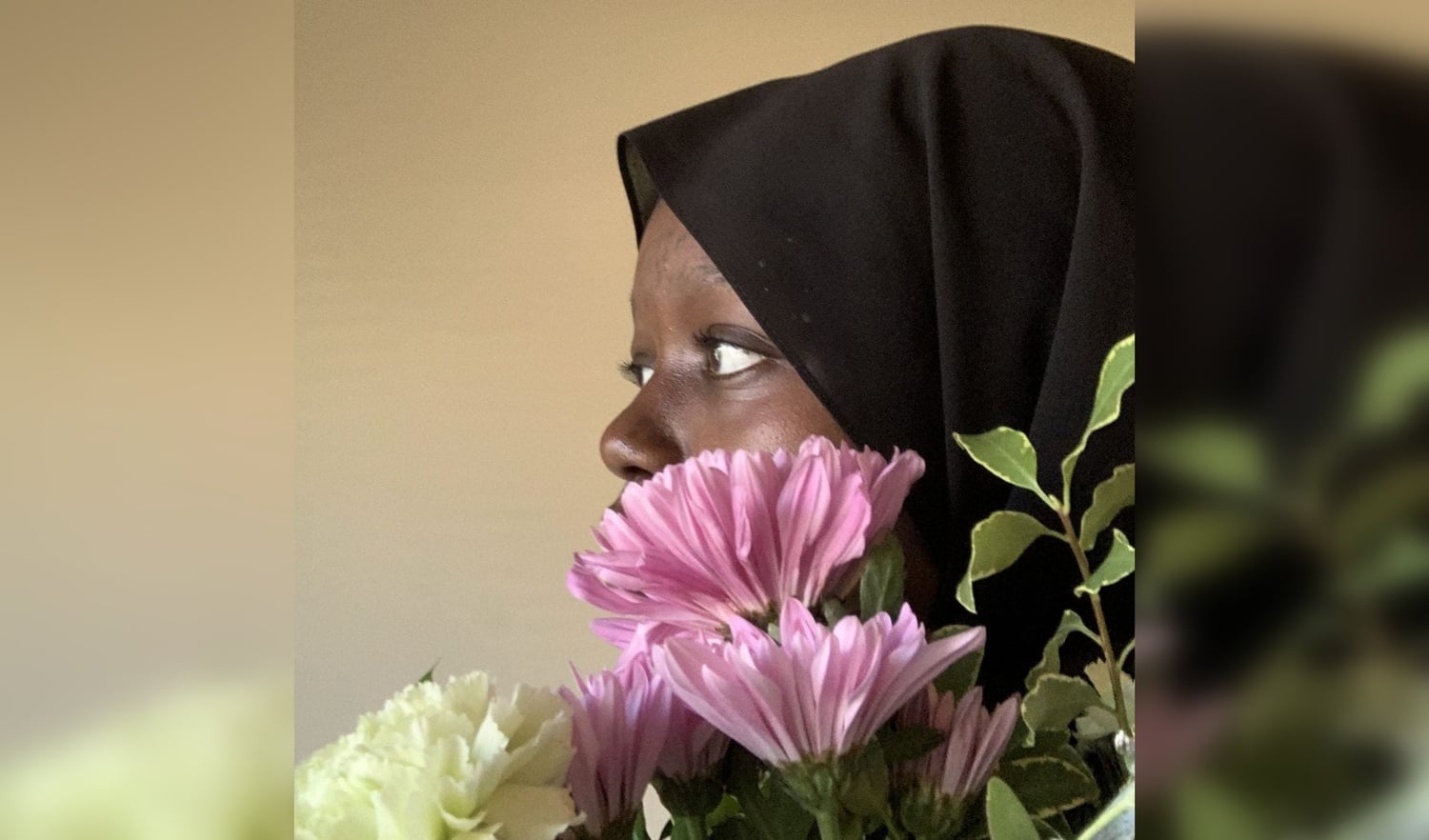
Manar A. Abrre ’26 is a recipient of Harvard’s Office for the Arts 2025 Artist Development Fellowship for her portfolio of medical and anatomical illustrations titled “Internal.” These six pieces in her portfolio explore how an artist can distort images to evoke strong emotions.
Abrre’s unique artistic approach draws upon her studies as a student concentrating in Neuroscience with a secondary in Art, Film, and Visual Studies.
“I really like understanding how humans think and behave, because that gives me an idea of how I can evoke reactions through my art, and how I understand my art, not just as an intuitive thing, but also [with] having this evidence of how humans perceive certain images,” said Abrre in an interview with The Crimson.
“The fields are often very segregated from each other, but I think there’s a lot of overlap,” Abrre said. “They both take these abstract concepts and ground them in concrete things that we can tangibly feel. I feel, with art, you are trying to — whether it’s visually or sonically — capture an emotion or a story or a feeling. And, with the sciences, you’re trying to explain how we think, feel, behave in a concrete, systematic way.”
Since high school, Abrre has been employing medical art to reflect broader themes, as her high school art portfolio was a series of surreal medical and anatomical illustrations focused on the dehumanization of black bodies.
“[It] was a way to depict, to strip down, biological forms to [a] universal thing, to communicate that theme. I think that medical art, and bio art, has a lot of communicative potential,” said Abrre.
She started working on “Internal” as part of the “From the Laboratory to the Studio: Interdisciplinary Practices in Bio Art” course in the Artist Residency Programs at the School of Visual Arts. Throughout this month-long residency, she participated in workshops focused on bio art, using mycelium and creating SCOBY — a symbiotic culture of bacteria and yeast used by artists as an eco-conscious alternative to substances like leather and plastic.
Additionally, this experience analyzed the ethics of art that uses living and semi-living organisms. Although “Internal” does not contain live specimens, Abrre explained how bioart can raise ethical dilemmas.
“As an artist in general, you have to also think about ethical considerations, and how that gets complicated by museums that have live specimens and all these things. So having that foundation of having done the artist residency and being introduced to some of those concepts and how other artists approach using specimens and depicting things was helpful,” said Abrre.
While “Internal” focuses on the intersection between medicine and art, Abrre has also integrated technology into her art pieces. When Abrre was a sophomore, she participated in Conflux — a student organization at Harvard that intersects artistic philosophies with cutting-edge technology to explore bioart. Conflux highlighted to Abrre how art can be more interactive by adding technology — a trait she employed to depict communication between human and nonhuman forms during her time in the program.
Abrre noted how the ability to connect STEM and the arts has enabled her to be “more well rounded as an artist.”
“Especially coming from someone who has a traditional arts background and the sort of neuroscience background I have is not very engineering or technical at all, [Conflux] was out of my comfort zone, and I really liked having that to push myself,” said Abrre.
After her sophomore year, Abrre has continued to use technology in her work, as she is leading a film project in Conflux this year and recently took “Embodied Practices: Coding and Interactivity for Artists” — an AFVS course focused on using code and electronic components to create art.
In addition to exposing her to the intersection of technology and art, she is grateful to the resources at Harvard for allowing her to experiment.
“Before coming here, I was mostly doing painting and drawing and more traditional mediums. But since coming here, [and] having access to the AVFS department, like film equipment, I’ve been able to really explore filmmaking. That’s something that I’ve become really passionate about and am integrating it into my arts practice now,” said Abrre.
To encourage exploration through art, she recommends not pressuring oneself and having different avenues to express art.
“You can have arts as a part of extracurriculars and arts that you’re going to share with people and that you can work on kind of at an accelerated timeline and be more disciplined with that. And also have your personal practice where you’re just experimenting, working on your own time,” said Abrre.
This experimental approach motivated Abbre to utilize “Internal” to explore the psychology of how individuals view images. On a broader level, this portfolio reflects her past four years in college where her integration of STEM and the arts helped drive her to new passions. She is interested in pursuing film opportunities post-graduation and recommends other Harvard students also take advantage of the college’s many resources.
“I wouldn’t have really explored art tech if not for Conflux. And I recently, over the winter break, did Harvardwood 101, that was also really interesting and I got to learn a lot. There’s just so many opportunities here so just explore and apply for things,” said Abrre.
—Staff writer Shira Parnes can be reached at [email protected]
Want to keep up with breaking news? Subscribe to our email newsletter
Have a tip for The Crimson? Share it confidentially