Harvard Doesn’t Need the HUA
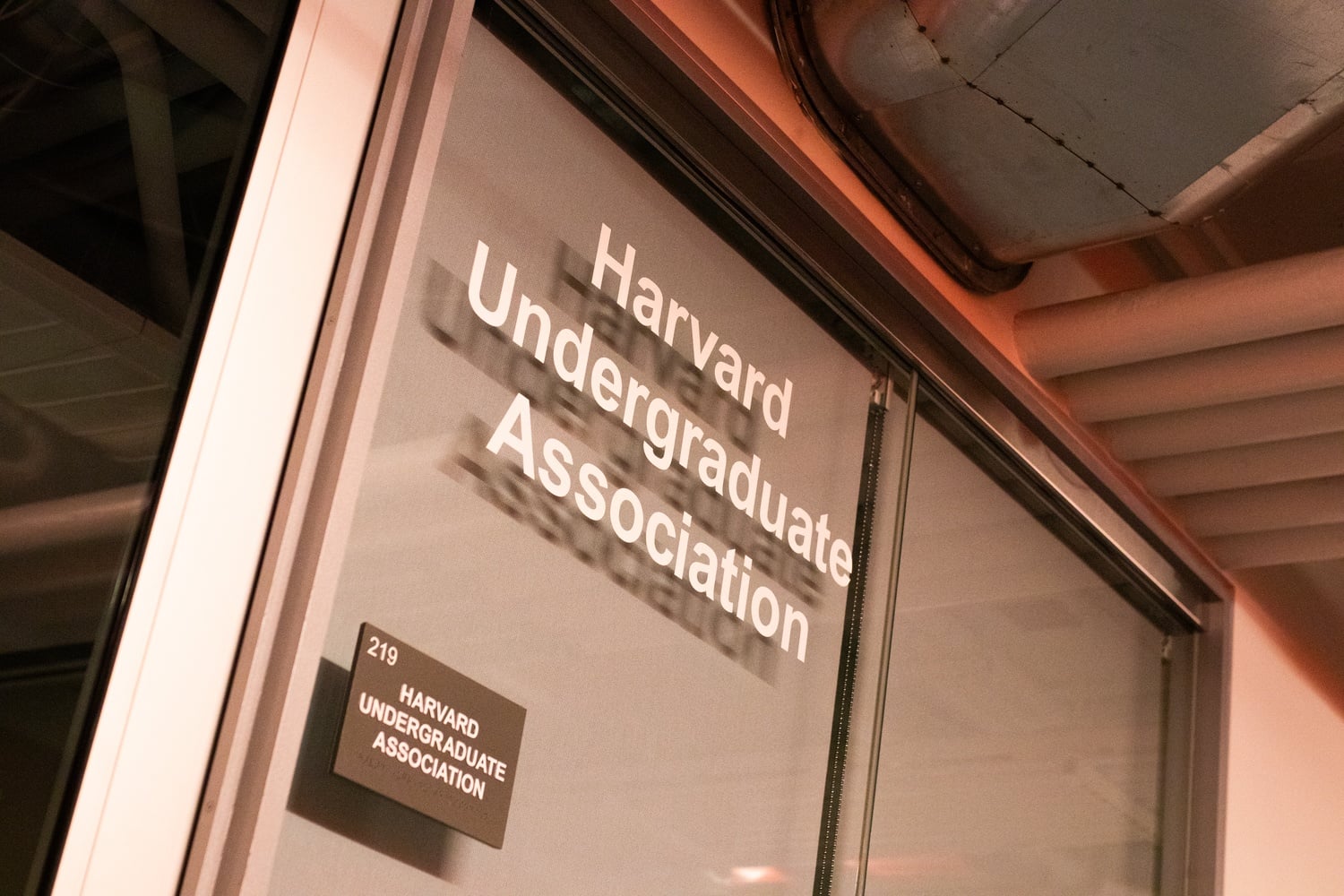
Transparency. Accountability. Advocacy.
That’s all we heard at the Harvard Undergraduate Association Presidential Debate — vague commitments, and even more vague plans to achieve them.
But this year’s candidates are hardly unique: the problem with the HUA is structural.
The HUA primarily exists to allocate funding to student organizations and interface between students and administrators — two functions which have little in common, and which the HUA has repeatedly failed to accomplish. Funding disbursements have been stalled for two consecutive semesters, and we can’t recall the last tangible policy change the organization has brought about.
Evidently, neither funding student organizations nor campus activism are tasks well suited to student government — thus, there should be no student government.
Rather than pass off the technocratic function of funding allocation to overworked undergraduates who lack special expertise or real accountability, the College could be better served by hiring staff specialists to take over.
Moreover, effective advocacy has always been done by student organizations directly, not the HUA.
In 2024, Professor John L. Comaroff retired without emeritus status following intense pressure from student groups like Our Harvard Can Do Better over allegations of sexual harassment. Fossil Fuel Divest Harvard advocated for Harvard to eliminate its investments in the fossil fuel industry from 2012 until their efforts paid off in 2021. The idea that we need an annually elected student leader to push the University for change is ahistorical and mistaken.
Accordingly, HUA elections have long been plagued by low turnout — last year’s election set a record watermark of roughly 30 percent. Students have made their view of the HUA pretty clear: It doesn’t matter.
They’re not entirely wrong.
But regardless of the HUA’s track record, there’s no reason why a student government should handle these functions. Dispersing club funding is a technocratic function, not a political one. And the best people to relay student concerns to administrators are students themselves — not a few elected representatives with a weak claim to democratic legitimacy and little institutional independence from the administrators they’re meant to pressure.
In a perfect world, Harvard would stop pretending that the HUA is a meaningful governing body. Student organization funding would be handled by competent staff, and campus advocacy would continue where it has always been most effective: in the hands of student groups with real leverage.
But that’s not the world on offer this week. Voting opened today, and Harvard’s student government isn’t going away overnight. If we must have an HUA, the least we can ask is that its leadership understand their role.
That means rejecting grandiose promises untethered from reality. Calls for student representation on the Harvard Corporation or the Harvard Management Company may sound exciting, but are highly unlikely to come to fruition. The HUA does not become relevant by willing power into existence. If anything, this rhetorical overreach contributes to student disengagement.
Students should also know which candidates have demonstrated an ability to function within the institution they now hope to lead. Candidates should understand the responsibilities — and limits — of the role. Records of attendance, participation, and tangible accomplishments ought to be available to voters.
Most of the time, candidates seem to pursue the role for the honor of a LinkedIn post, while students’ preferences reveal more of a high-school popularity contest than a serious contemplation of ability.
Many of this year’s platforms read like kitchen-sink wish lists: long lists of aspirations with little indication of priorities or grounding in reality. What student government might be able to do — at its best — is pursue a narrow set of concrete, achievable goals. That requires specificity, discipline, and an honest account of institutional limits.
That’s a low bar. But it’s one the HUA has yet to clear. Until Harvard replaces our student government’s ineffective structure with institutions fit for purpose, voters should demand seriousness from the candidates asking to preside over it: fewer fantasies, and a clear sense of what can be accomplished.
This staff editorial solely represents the majority view of The Crimson Editorial Board. It is the product of discussions at regular Editorial Board meetings. In order to ensure the impartiality of our journalism, Crimson editors who choose to opine and vote at these meetings are not involved in the reporting of articles on similar topics.
Have a suggestion, question, or concern for The Crimson Editorial Board? Click here.
Want to keep up with breaking news? Subscribe to our email newsletter
Have a tip for The Crimson? Share it confidentially