Artist Profile: Zakiriya H. Gladney ’27 on Photography, Technology, and Activism
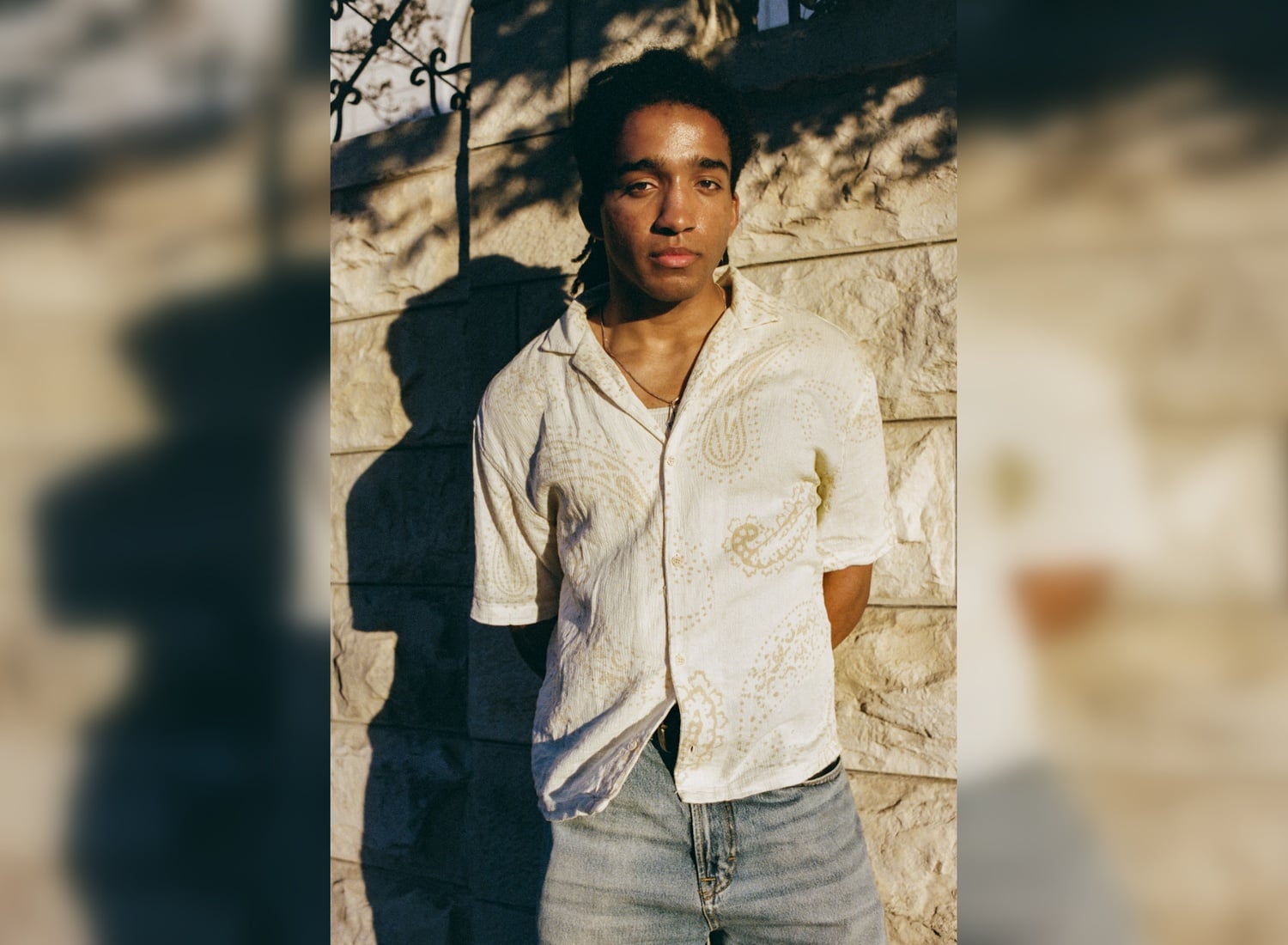
Zakiriya H. Gladney ’27 is a junior at Harvard College concentrating in Social Studies and Statistics who also produces and creates visual art in the form of photography. This past year, Gladney was awarded the 2025 Artist Development Fellowship from the Harvard University Office for the Arts, previously winning the YoungArts award as one of 20 U.S. Presidential Scholars in 2023 in the arts.
Gladney — who is one of the Crimson Editorial Chairs — earned the 2025 Fellowship among 10 other students at the college. Each of these students received awards in different categories, with separations based on visual arts, music, multi-disciplinary work, and literature. Gladney — who won in the Visual Arts category — labels himself as a photographer, noting the time that he has spent with the medium of photography.
“I just began with taking pictures on my phone as like a middle schooler,” said Gladney in an interview with the Crimson. “And I got more serious about it in high school.”
Gladney’s work often reflects a documentary focus, capturing pieces as they stand in separate points of time. This pursuit started with urban landscapes within his hometown of Tucson, Arizona, before expanding to other spaces occupying the night — like gas stations and convenience stores.
Some of Gladney’s previous work — such as his photo collections from Tunisia and Crust — further focuses on and asks questions about his place within the world.
“I sort of reflected on, ‘What is that figure of this Black man in the nighttime urban environment?,’ and using my own body as a canvas,” Gladney said. “And that project earned me the YoungArts award.”
Gladney’s decision to apply for the ADF fellowship was largely influenced by its accessibility to a student not studying art itself. As a Social Studies and Statistics concentrator, Gladney would have difficulty pursuing a more traditional arts education on campus as his course work didn’t focus on the technical aspect of photography.
“It sounded like the most straightforward way to get involved and to get a large amount of time in my undergraduate years dedicated, especially because I don’t study art directly,” said Gladney.
Over the past summer break, Gladney was able to put together a real focused project. He used his ADF fellowship grant to travel to better understand the way urban spaces, visiting Jordan and Tunisia, have been affected by modernity.
“I felt like getting funding for the summer was sort of the best way to really dive in,” said Gladney.
The ADF fellowship gave Gladney new opportunities to foster his own creativity. It provided him with the opportunity to learn more about specific photography techniques, such as the photogravure process, which he learned in Jordan under Palestinian printmaker Tariq Dajani.
Other opportunities, like at MIT and student exhibitions at the OFA, have given him the time and flexibility to create prints of his own work.
“Over the past couple of months, I take the time to go to actually a studio at MIT and print out some of my work,” said Gladney. “Some of it has been presented at the OFA’s like student exhibitions.”
Besides an artist, Gladney is also a very prominent activist, with stances being taken out into the scene on campus or within his articles for The Crimson. However, Gladney notes that he personally interacts with art not inherently for any reason.
“Art making is a fundamentally human activity, that we all creatively express ourselves in different ways,” said Gladney. “For me, I do art mainly because of that.”
Despite this contrast, an artist can notice that their images or other works of art still have political messages embedded in them. In Gladney’s experience, art is more likely to be more political than originally intended. For Gladney, the nature of politics within his art is consequence of a life that is, irreducibly, political.
“I am Black, Palestinian and Iraqi, and there’s not much way for me to make work and then not find that at the other side of things, that my work hasn’t taken on some kind of political character,” said Gladney.
As of now, Gladney has been working on projects that are based in technoscientific art to better understand the questions surrounding the computer itself.
“What is the meaning of computers and computation?” said Gladney. “In what ways can we take up some of these things as techniques to produce work?”
Gladney views art as a medium for reflecting the technological world itself.
“I think that, in general, art has to take up the task in this moment to sort of better think through technology rather than sort of maybe reject it,” said Gladney.
In this vein, Gladney has a lot of ideas for the future, which include ideas that center topics of surveillance, AI, science, and computation.
“I’m interested in doing more work that uses computational and scientific methods, but using it to investigate questions of like, ‘What moment of political power are we in?,’ and trying to understand things like contemporary authoritarian politics and surveillance and tracking and breaches of data privacy,” said Gladney. “To both understand and then also to speak out against the practices.”
Overall, Gladney’s art is largely driven by a process to perform what he describes as his own research process.
“I’m interested in art as a way of thinking through and creating knowledge,” said Gladney.
—Staff writer Neeraja S. Kumar can be reached at [email protected]. Follow her on X @neerajasrikumar.
Want to keep up with breaking news? Subscribe to our email newsletter
Have a tip for The Crimson? Share it confidentially