Let This HUA Election Be the Last
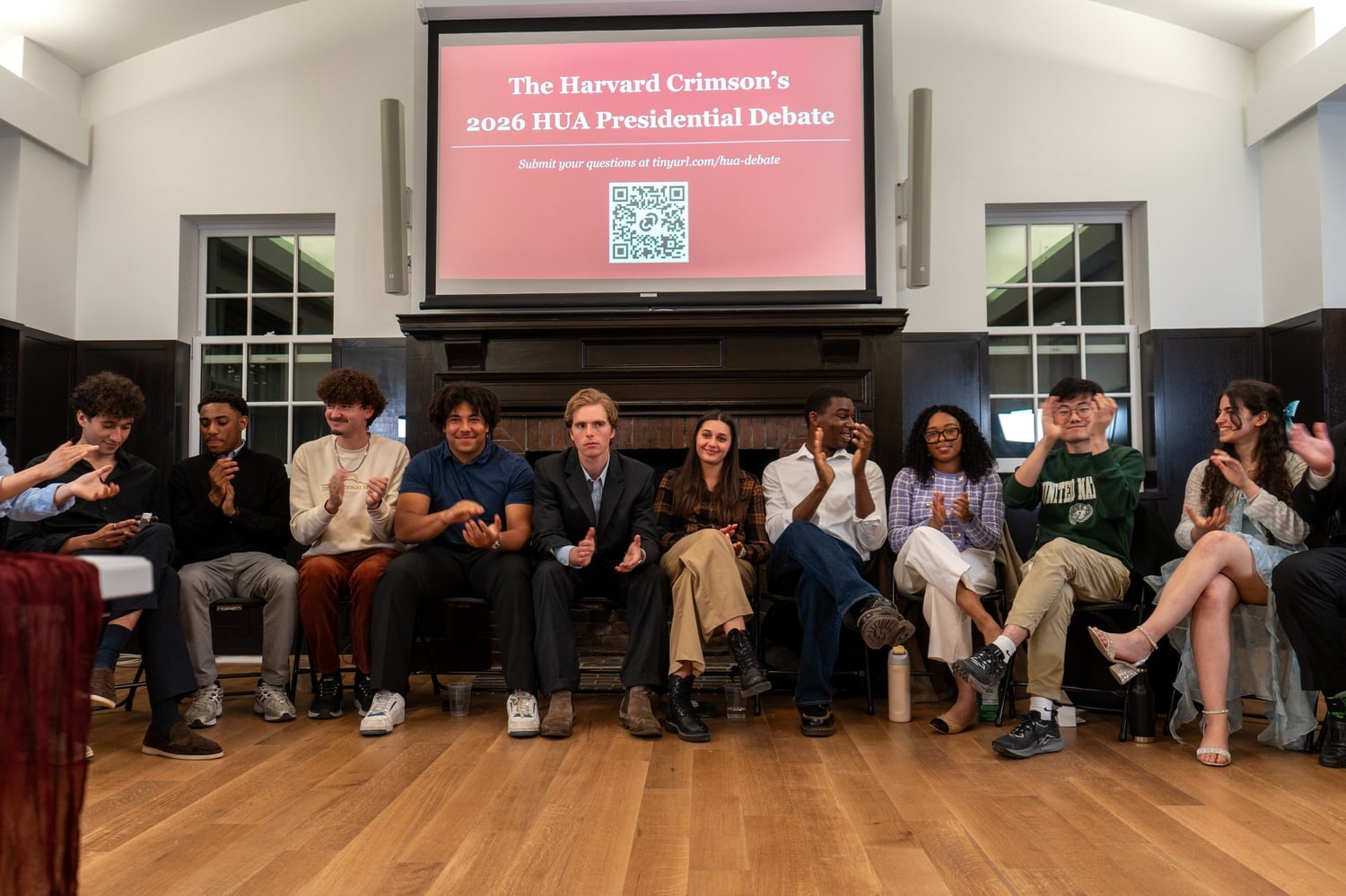
It’s everyone’s favorite time of year: the Harvard Undergraduate Association’s elections.
For one week a year, we are treated to another round of postering, flyering, and campaigning by candidates, all groveling for our vote and promising that this time, things will be different. As a former candidate myself, I can’t pretend I’m above all of this.
But after two years in the HUA — and now, one year out — I will finally say that this year’s co-presidential election should be the last. Instead of a school-wide popularity contest, our student government should revert to its former system of an internally deliberated parliamentary election.
This year’s slate of candidates has made the failures behind the current election system particularly glaring. Many tickets boast platforms with vague promises designed to appeal to a broad populace and candidates inexperienced with the HUA who overpromise and would certainly underdeliver.
But the problem is not the candidates themselves. Rather, it’s the popular election that attracts and rewards certain behaviors.
The most obvious issue with the current form of HUA elections is that no one likes them. Students don’t appreciate being bombarded with flyers in their dining halls or receiving spam text messages from candidates. It’s obvious that students don’t care much about the election, given that even in a good year, the vast majority of them don’t vote.
Besides its general unpopularity, the problem with the popular election is that it transmogrifies the selection process into a spectacle. Candidates have to spend hours — and waste hundreds of reams of paper — putting up posters. What matters is not what policies someone proposes or their track record; it’s more important who makes the best music video or gets the football team’s apparent endorsement.
If you want to see how students really feel, just check Sidechat, where candidates are relentlessly subjected to ad hominem attacks.
The school-wide elections for the co-presidents also misalign incentives for candidates. Every year, right before the election, it appears incumbent HUA officers rush to spend thousands of dollars on events and services — essentially, bribery.
This insufficient election process has seen variable results. Some HUA co-presidents have had great success. I may be biased, but I found Ashley C. Adirika ’26 and Jonathan Haileselassie ’26 to be superb, pragmatic leaders.
Other HUA co-presidents have been less inspiring. Just two years ago, the student body came to regret its decision, recalling one co-president and proposing to remove the other.
Given the flaws in the election process and its irregular results, it makes sense to transition away from plebiscitarian popular elections. While this might initially sound outrageous, it’s merely a return to form that would set the HUA on even footing with its peer student organizations.
I know of no other Harvard student organizations that elect their president with a school-wide election. Some don’t elect their leadership at all, with their chief instead being chosen by outgoing leadership. Just like any other organization, the HUA has its own membership, events, and leadership team, and running the Association is its own specialized job.
This idea is far from original. Using a “ship of state” analogy, Plato says that a captain — or in this case, president — should be chosen, not by majoritarianism, but by a careful selection based on expertise.
Admittedly, student government has a different nature than any other organization. It alone is responsible for allocating funding to other student clubs and interfacing with the administration. If the HUA is going to claim the mandate of the students, I agree it must be democratic.
But a democratic election process doesn’t mean enforcing a direct democracy.
A parliamentary democracy wouldn’t be anything new for Harvard’s student government. When the HUA’s predecessor, the Undergraduate Council, was founded, its chair was elected only by its membership, not the entire student body. In 1989, the student body wisely voted against an amendment switching the internal vote to a school-wide election. Perhaps we should follow in those footsteps.
The difficulty with implementing internal elections is that the HUA lacks a large elected membership to vote on said elections, with only nine officers besides the co-presidents. So, the HUA should adopt a legislative body, elected at the House and dorm level, similar to the model set forth by the UC.
The HUA’s nine other officers would also be selected by the legislature. Members of student government would effectively have to move up through the ranks before becoming president — a new cursus honorum.
We need not borrow everything from the UC. The body gets a bad rap, and rightfully so. But the controversies it faced leading up to its abolition only happened after its presidential election was switched to a popular vote.
Besides, the UC was able to achieve some major accomplishments, like reforms to the academic calendar and making Lamont Library open 24 hours a day. For all its faults, the UC had a robust institutional memory and a large number of engaged members. The HUA lacks both of these.
Reforming the HUA into an efficient, influential model of student government must start at the top. May this election be the last our campus has to suffer.
Matthew R. Tobin ’27, a Crimson Editorial editor, is a double concentrator in Social Studies and Economics in Winthrop House. He was the academic officer of the Harvard Undergraduate Association from 2024 to 2025.
Want to keep up with breaking news? Subscribe to our email newsletter
Have a tip for The Crimson? Share it confidentially