Former City Councilor Paul Toner Accepts Deal to Avoid Trial in Brothel Case
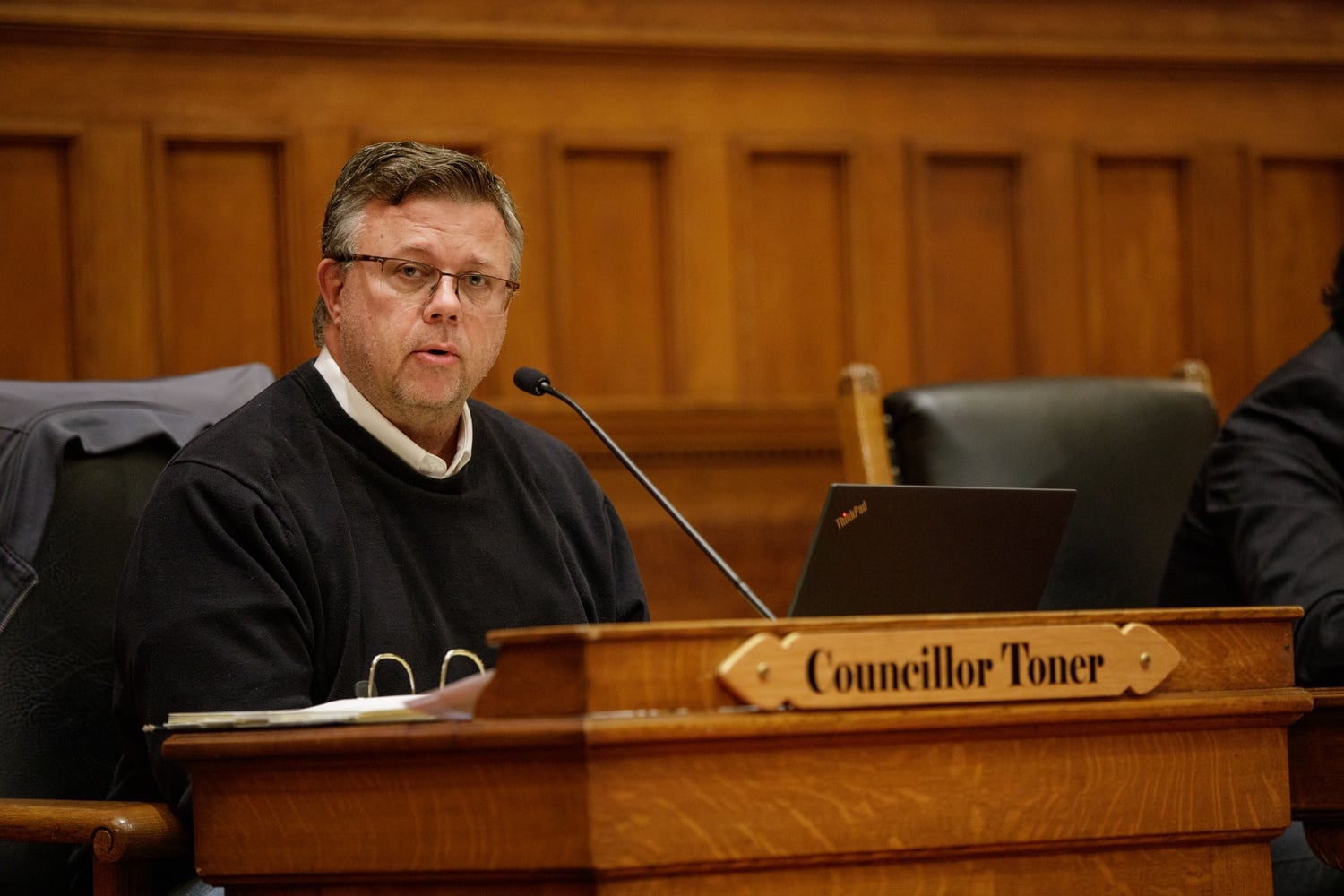
Former Cambridge City Councilor Paul F. Toner will avoid a criminal conviction for patronizing a high-end brothel in North Cambridge after accepting a probation agreement with prosecutors on Tuesday.
Toner — the last of 34 men originally charged with buying sex to agree to probation — will avoid trial after the case has stalled for more than a year. Under the terms of his agreement, Toner admitted to no wrongdoing but must serve nine months of probation, complete 24 hours of community service, and pay $2,000 to a nonprofit dedicated to preventing human trafficking.
Toner will also be banned from contacting sex workers while on probation, and is required to complete a one-day training module on the impact of prostitution that includes personal testimonies from survivors of sexual exploitation.
The brothel, which Toner was accused of patronizing at least 13 times, was part of a ring that operated in Cambridge and the Washington, D.C. suburbs since at least June 2020. Federal authorities shut down the brothels in November 2023 and charged two men and a woman with operating it.
At the time, the U.S. Attorney’s Office alleged that the brothel operators had been in contact with more than 2,800 clients — including politicians, doctors, and professors. But federal authorities did not prosecute the clients, instead leaving local authorities to pursue criminal charges.
The Cambridge Police Department sought criminal charges against the 34 men identified as customers, including Toner, who they alleged had exchanged more than 400 messages with the brothel operators. Toner and the other defendants were publicly identified and charged with sexual conduct for a fee, a misdemeanor that rarely carries jail time in March 2025.
Probable cause hearings — where a magistrate rules on whether there is enough evidence to bring criminal charges in the case — are often held in private. But a lawsuit from several statewide news outlets argued that the defendants’ identities in this case were of significant public interest.
The Massachusetts Supreme Judicial Court ruled in late 2024 that probable cause hearings would be public, ensuring that the names of the men accused of frequenting the brothel would be released.
Two Harvard affiliates — former Harvard Medical School professors James C. Cusack and Mitchell H. Rubenstein — were among those charged with patronizing the brothel.
In the months after prosecutors unsealed charges against them, nearly every defendant took a deal to avoid trial in exchange for a nine-month probation period.
Get The Crimson in your inbox.
Toner was the exception. Even amid widening political fallout stemming from the criminal charge against him, the two-term councilor proclaimed innocence and fought the misdemeanor charge against him in court — delaying proceedings for months.
Though Toner was first publicly named as a brothel client in March of last year, councilors were informed of his involvement in the scandal by January 2024, when a reporter for the Boston Globe emailed several that Toner would be implicated.
The charges against Toner sent shockwaves through local politics when publicized. Several of Toner’s colleagues on the City Council called for his resignation in the days after the case came to light. Within a week, then-Mayor E. Denise Simmons quietly stripped Toner of his committee chairships.
Less than three weeks after Toner was charged, a majority of the City Council — in fragmented statements issued as public backlash heightened — had called for him to resign. Two of Cambridge’s state representatives, Marjorie C. Decker and Michael L. Connolly, did the same.
Toner announced in early July that he would not seek re-election, writing in an email to supporters only that he aimed to “explore other opportunities” once his term ended in December. Still, Toner added in his announcement that he believed he “would be successful in a run for re-election.”
Toner’s absence on the ballot last November left room for a challenger to join the City Council, and two ended up winning spots: Timothy R. Flaherty, who is Toner’s attorney, and recent Harvard graduate Ayah Al-Zubi ’23.
The misdemeanor charge against Toner will be dismissed at the end of his probation if he fully complies with its conditions — though a violation of the terms of his agreement could push Toner’s case back towards trial.
In a Tuesday evening interview, Flaherty said that Toner’s case has effectively been brought to a close.
“This is the end,” Flaherty said. “Case is over.”
—Staff writer Shawn A. Boehmer contributed reporting.
—Staff writer Claire A. Michal can be reached at [email protected] and on Signal at ClaireMichal.154.
—Staff writer Risha Sinha can be reached at [email protected].
Want to keep up with breaking news? Subscribe to our email newsletter
Have a tip for The Crimson? Share it confidentially