Harvard Promised a ‘Full’ Review of Its Epstein Ties. Its Own Files Reveal What It Left Out.
More than a decade after Harvard barred officials from soliciting donations from Jeffrey Epstein, internal records show the University continued to treat him as an active donor prospect — assigning him a high-value rating, sending personalized endowment updates, and including him in fundraising outreach in the years that followed.
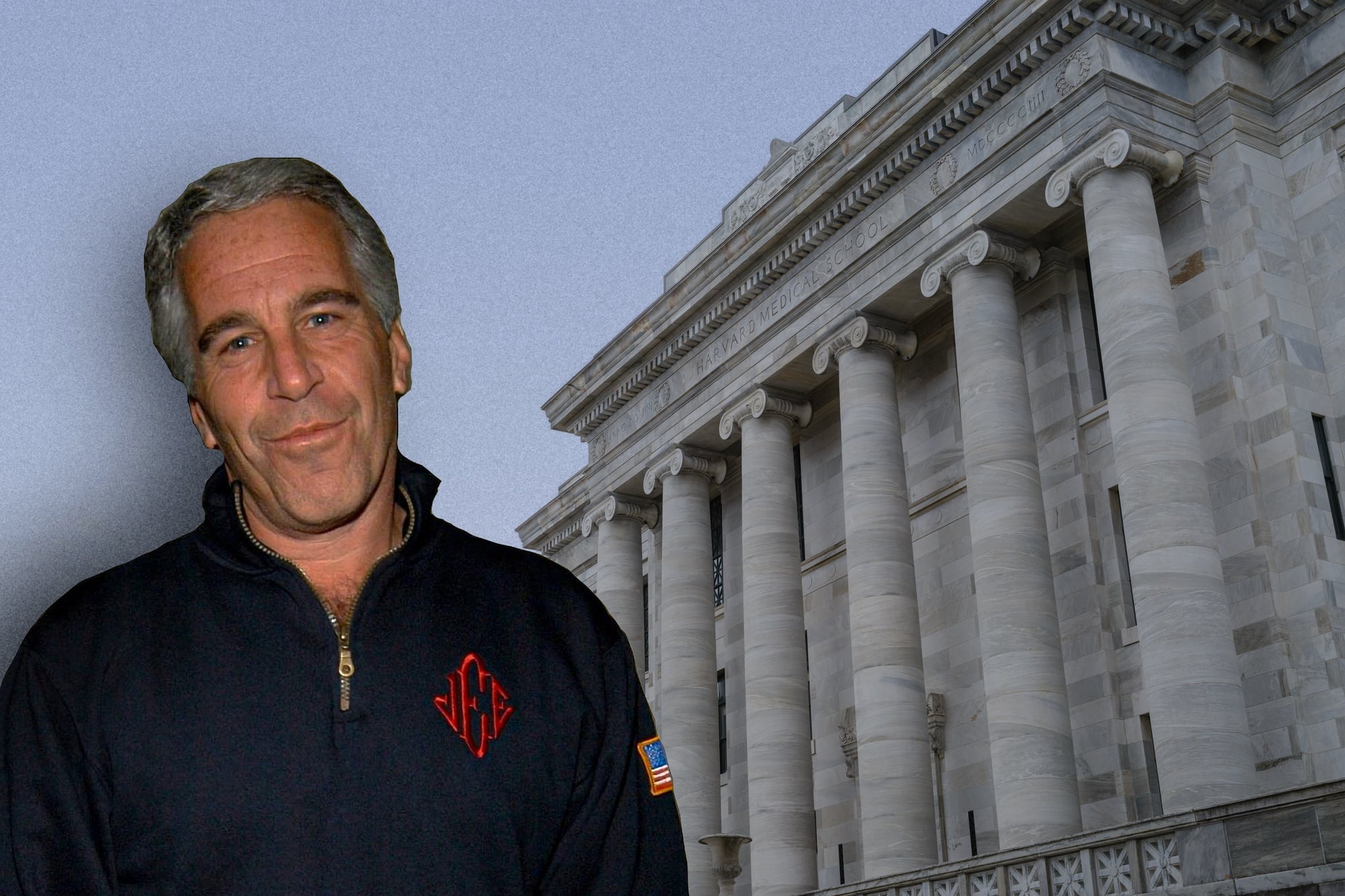
In 2008, then-Harvard President Drew G. Faust barred University officials from soliciting money from Jeffrey E. Epstein, the financier and convicted sex offender whose ties to Harvard would later trigger a sweeping internal review.
But Harvard’s internal development records show the University continued to treat Epstein as a donor prospect for years after that cutoff.
A review of Harvard’s internal development database by The Crimson and Pablo Torre Finds Out discovered that Harvard Medical School generated an $75 million “active” donor rating for Epstein in July 2012 — a metric updated to reflect a donor’s giving capacity.
The same database shows Harvard mailed Epstein letters annually from 2009 through 2018 containing “personalized” updates on endowment funds he had established at Harvard, along with general Harvard Management Company reports on the University’s endowment performance.
The records — accessible during Harvard’s 2020 review — complicate the scope of the report’s findings on Epstein. At the time, investigators said they reviewed more than 250,000 pages of documents, including internal development records. The report acknowledged that Harvard accepted more than $9 million from Epstein and that he continued to receive some donor communications after 2008.
But it did not mention the 2012 HMS donor rating or the annual endowment updates. Nor did it explicitly discuss 47 individual contact reports in Harvard’s development database that documented interactions between Epstein and Harvard from 1992 to 2018.
A Harvard spokesperson declined to comment on the records — including the HMS rating — or explain why they were not discussed in the 2020 report.
In a statement, the spokesperson pointed to the 2020 report’s stated scope, which, though billed as a “full review,” focused largely on Epstein’s donations to Harvard rather than the full range of his relationships with University affiliates.
The spokesperson said Harvard’s ongoing review would include more than 3 million documents recently released by the Department of Justice, but declined to provide a timeline or say what actions the University may take.
“We are not going to speculate on what actions or communications, if any, may be warranted or appropriate in the future in connection with any portion of this review,” they wrote.
Get The Crimson in your inbox.
‘Stewardship and Cultivation’
The 2020 report found that Faust’s 2008 ban was never formally recorded — and Harvard’s internal records show how that ambiguity played out: Epstein remained in the University’s donor relations rotation for years after the cutoff.
Beginning in December 2009, Harvard mailed Epstein annual endowment packages with updates on funds he had established at the University and their performances. One of those funds was the “Jeffrey E. Epstein Fund for Women’s Athletics,” a $25,000 gift for women athletes, with a preference for women’s rugby.
The package continued every year through November 2018 — a decade after Faust barred officials from soliciting Epstein’s money.
Several of the mailings included language thanking Epstein for his support. A 2009 template letter thanked him for helping “maintain Harvard’s excellence.” A 2012 letter said his gifts to the endowment were “critical” to Harvard’s future. In 2013, Epstein was told his contributions had “become ever more meaningful.” A 2014 letter said Harvard was “grateful” that he had chosen to support the University “in this lasting manner.” Harvard stopped listing the text of annual endowment messages in 2015.
The donor rating was a separate marker of Epstein’s post-ban status in Harvard’s development system. Created in July 2012 — and in no other year after the cutoff — it placed Epstein’s giving capacity between $50 million and $99.9 million. Harvard’s development records do not explain why it was generated.
The next year, Harvard included Epstein in outreach for the largest fundraising campaign in University history which sought $6.5 billion in donations. In early 2013, Epstein received save-the-date cards and formal invitations for both the University and the Faculty of Arts and Sciences launches.
The 2020 report notes that Harvard invited Epstein to the 2013 University campaign kickoff. But it does not include a separate invitation for the FAS kickoff event one month later.
Campaign outreach continued over the next year. In September 2014, Harvard sent Epstein the “University Case for Harvard,” a fundraising document describing the goals of the capital campaign. The database entry said the mailing was sent to “University donors and leaders as part of an ongoing stewardship and cultivation strategy for the Harvard Campaign.”
The records do not show that Harvard accepted any new gift from Epstein after Faust’s mandate.
Summers and Epstein
The contact reports also color in details about Summers’ relationship with Epstein during his time as Harvard president.
The 2020 report names Summers once, in a brief reference to his role in establishing the Program for Evolutionary Dynamics, which received Epstein’s largest gift to Harvard. It does not otherwise describe Summers’ interactions with Epstein, though a spokesperson for Summers confirmed that he was interviewed as part of the 2020 review.
The contact reports offer a far more detailed account of encounters between Summers and Epstein during Summers’ presidency.
On Sept. 17, 2003, Summers had lunch with Epstein. The contact report says there was “no staffing.”
On Dec. 2, 2003, Epstein attended a dinner with Summers at Elmwood, the Harvard president’s official residence in Cambridge. Faculty guests included then-Provost Steven E. Hyman, psychology professor Alfonso Caramazza, psychologist Marc D. Hauser, and psychologist Stephen M. Kosslyn, again without staff.
Hyman, who said he could not recall the dinner, wrote in a statement that he occasionally saw Epstein at donor receptions but never personally interacted with him. He said he was not interviewed for the 2020 report.
“There were good records of my calendar as provost, and I imagine the committee had access to them,” Hyman wrote.
Kosslyn, Caramazza, and Hauser did not respond to requests for comment on the December dinner and their involvement in the 2020 review.
Summers continued to meet with Epstein in private. On April 15, 2004, he flew from New York City to Boston on Epstein’s private jet, according to another contact report. And in November 2004, the two again dined at Elmwood.
The contact reports also make reference to several other events, including a cancelled January 2005 dinner, a thank you message for an October 2005 lunch, and a scheduled November 2005 meeting in Massachusetts Hall.
In the 2020 report, some Harvard faculty members acknowledged meeting Epstein at his homes, visiting him in jail or on work release, or traveling on his planes. They told investigators they undertook those activities “primarily in their personal capacities rather than as representatives of Harvard.”
But contact reports point to a different type of activity: interactions logged by Harvard’s development staff between Epstein and affiliates acting in University roles.
They do not track the full extent of affiliates’ private relationship with Epstein. For instance, known personal encounters between Summers and Epstein — including Summers’ December 2005 stopover on Epstein’s private island during his honeymoon — are absent from the records.
Summers has previously said that his association with Epstein was “a major error of judgement.” In a statement, a spokesperson for Summers wrote that “all fundraising by Larry Summers involving Epstein took place during Summers’ presidency, which ended prior to Epstein’s 2006 arrest.”
A Wider Circle
Other contact reports broaden the record of Epstein’s relationships with Harvard faculty and administrators beyond the figures emphasized in the 2020 review.
The earliest contact report dates back to October 1992, when then-Harvard President Neil L. Rudenstine met briefly with Epstein during a four-day “Harvard tour.” The same entry says Epstein also met with Henry A. Rosovsky, the longtime dean of the Faculty of Arts and Sciences and a two-time acting president, along with several, unnamed faculty members.
Over the next year, Rudenstine met with Epstein at least three more times.
In March 1993, Rudenstine had dinner with Epstein and Rosovsky where they discussed a cultivation strategy for Leslie H. Wexner, a Harvard megadonor and one of Epstein’s most public clients.
In June 1993, Rudenstine met Epstein over lunch to continue a conversation about “funding possibilities” involving Wexner and to follow up on Rosovsky’s March proposal. In October, Rudenstine met Epstein again to get feedback on an early draft of priorities for the next year’s $2 billion capital campaign.
Harvard’s 2020 report said that “some of the University’s most senior leaders” courted Epstein as a potential donor as early as 1992. But it does not name Rudenstine or Rosovsky.
The contact reports trace Rosovsky’s relationship with Epstein across nearly two decades.
In October 1993, one entry said Rosovsky reported that Epstein had recently met with then-Harvard Medical School Dean Daniel C. Tosteson and that Epstein’s interests included “the brain.” In 1999, another entry said Epstein had “great respect for Henry Rosovsky.”
Some of the contact reports overlap with ground covered in the 2020 review. The report discusses Epstein’s status as a visiting fellow, his relationship with Kosslyn, his support for mathematics professor Martin A. Nowak, and his post-conviction visits to PED.
But the contact reports add earlier detail about faculty efforts to interest Epstein in research projects outside the narrow PED chronology.
In August 2004, Epstein was solicited by members of the Mind, Brain, and Behavior advisory committee to support a new fMRI and brain imaging facility. The letter said there was “no higher M/B/B priority” than the imaging center and asked for Epstein’s “personal help and generosity.”
In an October 2005 email chain, Kosslyn wrote that he did not think Epstein was especially interested in the fMRI project but saw him “as a prospect for lots of things.”
“Jeffrey is unusually bright and has a first-class critical and analytical mind; I really enjoy talking to him,” Kosslyn wrote.
A follow-up memo from a March 2006 “brain storming session” with Kosslyn and Epstein drafted by psychologist Randy L. Buckner made reference to potential support for a “portfolio of possibilities” including research into “extreme human variation” and a program tentatively titled “The Human Edge Consortium.”
Kosslyn has previously said that he was unaware of Epstein’s sex trafficking and “would have had nothing to do with him” if he had known.
Harvard has said its new probe will account for all affiliates whose names appear in the Justice Department’s latest publicly released Epstein records.
“Jeffrey Epstein’s crimes were abhorrent and reprehensible, and the University is committed to reviewing the documents expeditiously to determine what actions may be warranted, in line with Harvard’s policies and standards of conduct,” the University spokesperson wrote.
—Staff writer Hugo C. Chiasson can be reached at [email protected] or on Signal at hcc.35. Follow him on X @HugoChiassonn.
—Staff writer Elise A. Spenner can be reached at [email protected] or on Signal at elisespenner.82. Follow her on X @EliseSpenner.
Want to keep up with breaking news? Subscribe to our email newsletter
Have a tip for The Crimson? Share it confidentially