From Cannes: ‘Gentle Monster’ is ‘The Drama’ but More Dramatic
Dir. Marie Kreutzer — 4.5 Stars
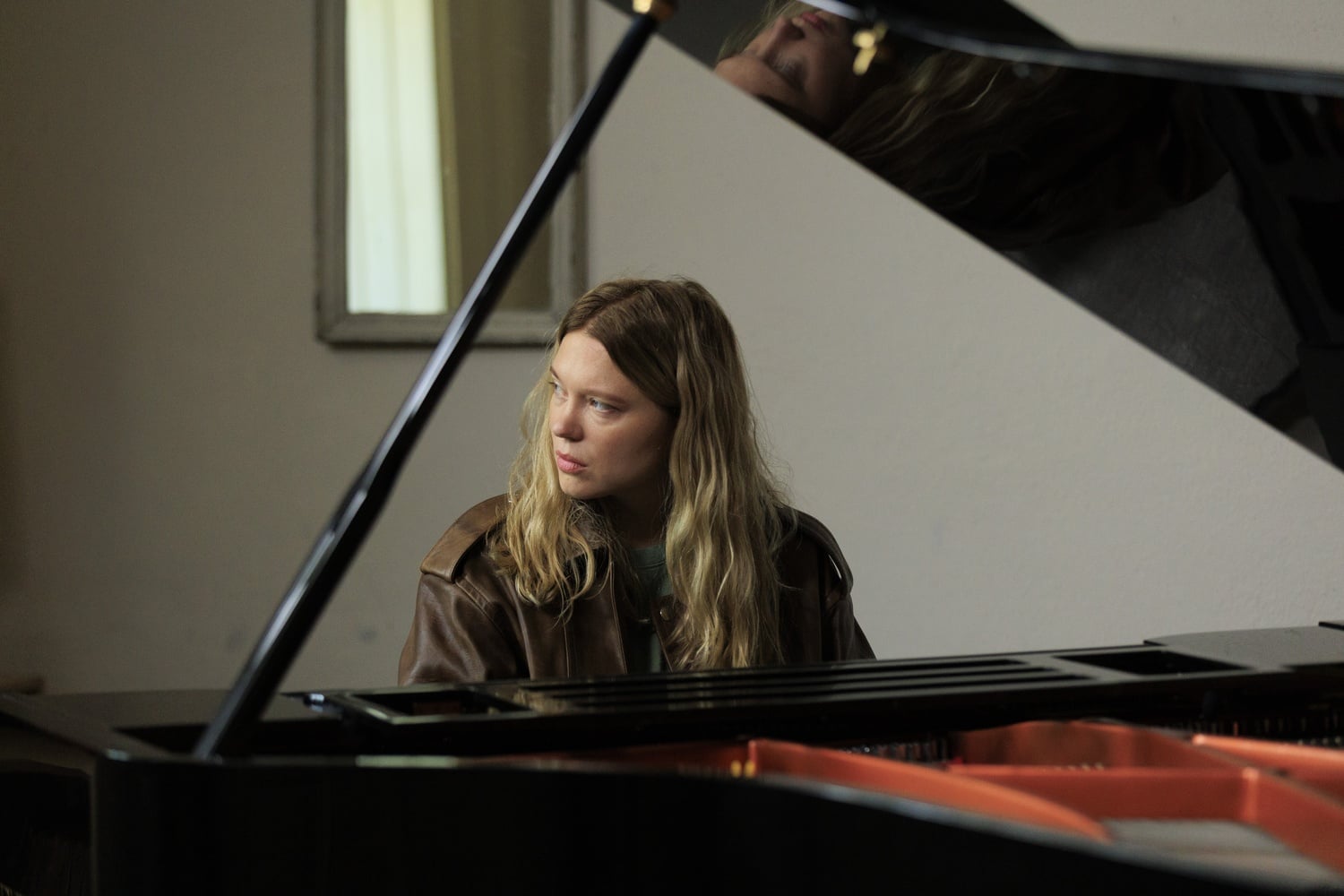
The recent release of A24’s “The Drama,” has prompted a difficult question: How far would you go for your partner in the name of love? “Gentle Monster” tackles this question by following wife and mother Lucy Weiss (Léa Seydoux) who has just received detrimental news about her husband of several years, Phillip Weiss (Laurence Rupp).
The film opens with an idyllic scene of the Weisses, a functional family of three. They live in a large country house with a massive garden and trampoline for their son to play on. Lucy and Phillip appear madly in love and each pursue seemingly lucrative and successful creative careers.
Soon, however, the serenity is cut short when police arrive at their door with a search warrant to investigate Phillip. From there, the film centers on Lucy, who grapples with her husband’s alleged crime, and Elsa Khün (Jella Haase) — Phillip’s head investigator — whose own father makes similar mistakes to Phillip.
The film’s opening is gripping and features strong exposition, efficiently putting the audience in Lucy’s shoes. Then, the film pivots to her mental journey as she balances her love for her husband with this newfound understanding of him.
Seydoux’s emotional performance is integral in guiding the audience through this journey and a true feat. Effortlessly portraying love for her husband and a deep sense of betrayal, Seydoux gives her character necessary and compelling depth.
Paired with Seydoux’s performance, smaller plot-level details strengthen the film’s message. Lucy is a renowned pianist who reinterprets well-known, emotionless love songs written and sung by men, adding bouts of intense piano. By building emotional depth into otherwise sterile songs, she protests the masculine fear of vulnerability.
Lucy’s career hints at a major concern addressed throughout the film: the dangers of masculinity and the kind of behavior admitted by a patriarchal society when a woman feels powerless, even when entirely unjustified or horrific.
The film’s message is strategically conveyed through Marie Kreutzer’s masterful direction. For instance, one scene focuses on the motion of a door being locked. Instead of opting for the typical close-up shot of the lock, the screen goes completely blank as the sound of a door locking plays in the background. By eliminating visuals in this scene, the audience is attuned solely to the singular sense present in the scene — sound — drawing more attention to the lock than a conventional close-up would.
Moreover, the film’s transitions mirror the state of its characters. Scenes fade through white screens several times, characteristic of how old film looks when pasted together. These brief whiteouts create the feeling of vignettes, matching Lucy’s disjointed mental state.
The editing of the film compounds this effect. Certain shots are uncomfortably long while others are short and sparse. The result is complete submersion into Lucy’s consciousness, and the film is hesitant to ever let the audience escape her mind. The entire film is nearly devoid of music, and veers away from letting score dictate emotion.
“Gentle Monster” closes with a shocking statistic on the subject matter of the film, which is crucial for contextualizing the story. While the film initially seems somewhat unrealistic, the final statistic reminds the audience that the tragedy that strikes the Weisses is not uncommon — rather, it is unspoken.
Just like “The Drama,” “Gentle Monster” analyzes a character forced to reckon with what it means to lose the image of the person she loves. But as opposed to taking the route of comedy, it forces the audience to face the tragedy head-on, making for an incredibly poignant and powerful film.
—Staff writer Anat Goldstein can be reached at [email protected].
Want to keep up with breaking news? Subscribe to our email newsletter
Have a tip for The Crimson? Share it confidentially