Author Profile: Karan Mahajan on South Asian Social Commentary and the Immigrant Experience
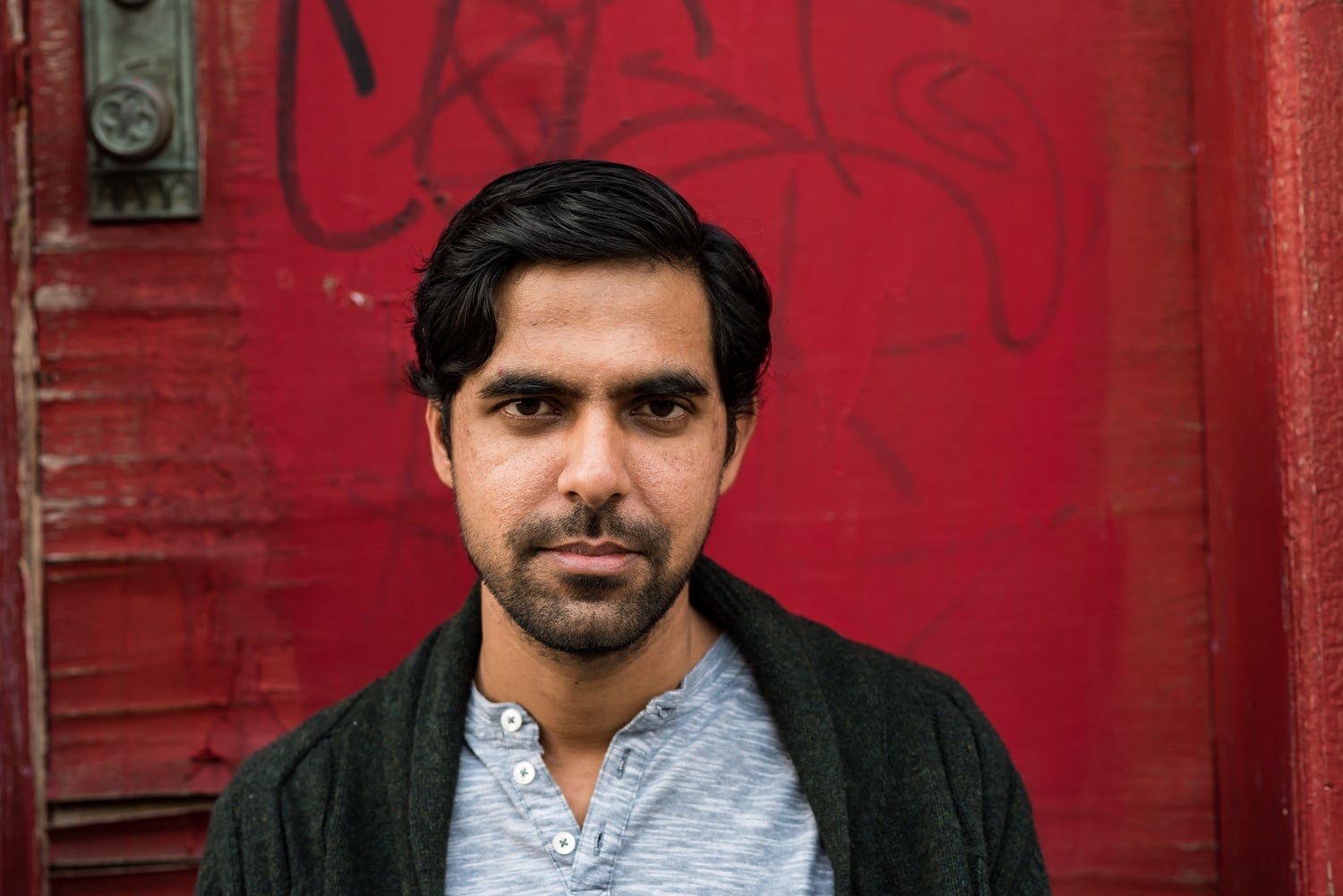
Karan Mahajan, Indian-American novelist, essayist, critic, and Literary Arts professor at Brown University, writes in ways that put together the pieces of social issues through historical and political lenses. In his third novel, “The Complex,” Mahajan explores the movement of reactionary thinking in light of sexual violence, religious nationalism, and immigration. The book — which was published on March 10 of this year — centers on Sachin Chopra and his new bride Gita as they attempt to write their own stories, outside of the lure of Delhi, India in the late 1970s and their exploitative family relatives, like Sachin’s uncle Laxman. The book traces a powerful narrative after an assault and how that experience is addressed within a South Asian family dynamic.
Mahajan’s previous works have explored the same social angle through historical realism. Published in 2016, his second novel, “The Association of Small Bombs”, chronicles the trauma of the aftermath of the 1996 bombing in the marketplace of Lajpat Nagar in Delhi.
Mahajan weaves the Delhi setting into his other books, including in his 2008 contemporary novel “Family Planning,” making the city a relevant and compelling setting.
“I mean, I think I’m drawn to Delhi pretty automatically because it’s the place that left the biggest imprint on my psyche, because I lived there between the ages of two and seventeen, and it was a place that, because I was growing up there, I didn’t fully understand, right?” Mahajan said in an interview with the Crimson.
The setting of his novels has allowed Mahajan to explore the spaces that he occupied with naivety in his youth.
“So I’m always filling in these areas of darkness that existed around me when I was growing up as a child,” Mahajan said.
For Mahajan, “The Complex” is a book of many firsts, with a lot of improvements compared to his first two drafts.
“There were many things that I felt I could have done better, or that I didn’t do because I had run out of time,” Mahajan said. “I just needed to finish the book because either it was proving to be too much of an emotional or financial burden not to.”
Mahajan’s journey as a writer began when he moved to the United States to study at Stanford University in 2001. It was there he began taking poetry workshops and studied with instructors like novelist Adam Johnson and novelist Stephen Elliott. Stanford University played a large role in his development in creative writing, allowing him to form long-lasting relationships.
“Stanford had a very strong creative writing program,” Mahajan said. “And I also met a number of other younger writers from my cohort who I became close friends with, and we started a writing group that many of us still participate in.”
A striking aspect of Mahajan’s writing is how he depicts underreported news in his essay and magazine writing. He has reported on various issues, such as the Khalistan movement in Canada following the killing of a Sikh man and the status of Indians within Madagascar.
“To me, I really do think of them as being part of the same project,” Mahajan said. “And for me, the project is to be able to look at complex events that are unfolding in the most truthful way possible.”
Mahajan begins each of his works with significant research and historical backing, and his books have taught him the proper ways to undergo research.
“Research is super important, and I think my practice as a nonfiction writer has really informed it,” Mahajan said. “I research my novels as much as I would research a piece of nonfiction.”
“The Complex” was a multi-year project that took significant time to get started.
“With ‘The Complex,’ I don’t think I fully unlocked it until two years into working on it, and the moment for me that it started to work is when I realized that the two main characters — Gita and Laxman — would be linked by a violation that occurs early on in the novel,” Mahajan said.
Despite the fact that the novel was originally finished in 2023, it took a lot of time for the book to actually get published due to edits.
“This particular novel, [my agent] sold it in 2023, and then it took a while for my editor to get back with edits,” Mahajan said. “I decided I wanted to make some changes myself. That took a while.”
When it comes to Mahajan’s approach, different methods bring his writing together. One of such techniques is what he describes as “unsympathetic characters.”
“I allow my characters to do bad things that are quote, unquote, bad or evil, partly because I feel that that’s one of the few things that fiction can represent is the different kinds of morality and the different gray areas that exist in categories such as the victim and the perpetrator, right?,” Mahajan said.
Mahajan’s writing takes an inward approach to tackling larger social issues within a South Asian framework. His books often look at the way that trauma affects independent entities like families and individuals before looking at how outside society interacts with them. “The Complex” highlights this tension through the social stigmas that apply within the family and society following sexual violence.
“The novel deals with sexual assault and the aftermath of that sexual assault, and the fact that the woman who is the victim of this crime doesn’t really have any recourse at the time in family or in society, that people kind of brush aside her concerns, right?” Mahajan said.
Mahajan regards “The Complex” as a “truth about the lives of immigrants,” one that seeks to describe the non-linear path that immigrants take to accept and assimilate new identities.
“[Immigrants] are kind of drawn to the controversies and the wounds of the place they’ve come from,” Mahajan said.
Overall, for Mahajan, “The Complex” represents a developed style from his previous writings.
“I always have written with quite a bit of clarity, but I always think one can be even clearer, that there’s a way of mixing lyricism and impressionism with clarity, which I think I’ve done better in this book,” Mahajan said.
—Staff writer Neeraja S. Kumar can be reached at [email protected]. Follow her on X @neerajasrikumar.
Want to keep up with breaking news? Subscribe to our email newsletter
Have a tip for The Crimson? Share it confidentially