As Decades-Long Land Grab Slows, Here's How Harvard's Developments Are Shaping Allston
For decades, Harvard’s expansion into Allston has transformed the neighborhood — quietly reshaping its streets, housing, and identity as the University has come to own most of its land. As the University slows its land acquisitions and pivots to complete long-running developments, residents are left weighing the promises of investment against the costs of institutional growth.
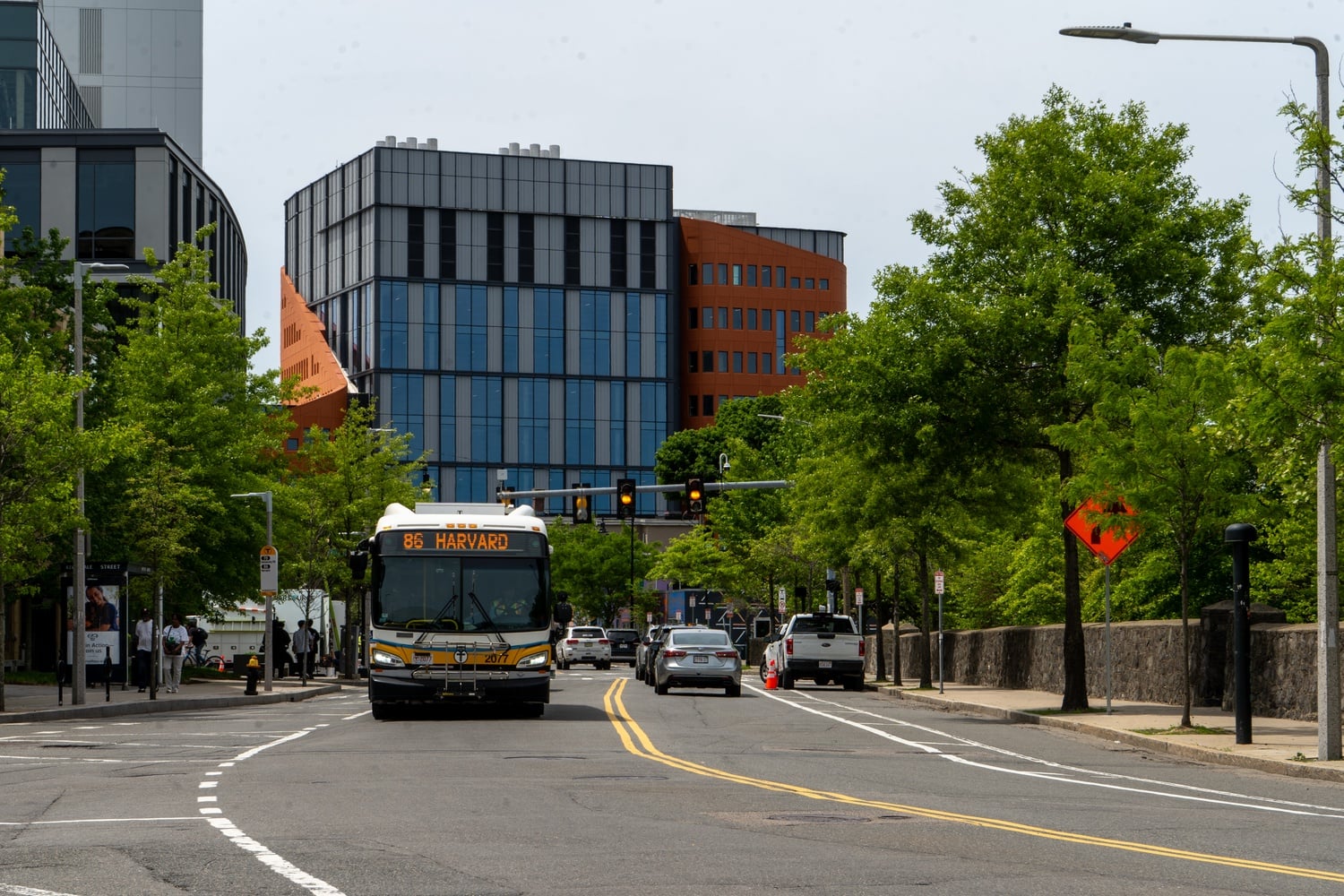
Daniel O. “Dan” Mee ’81 has spent most of his life in Allston — a neighborhood that he said has “changed completely” as institutions like Harvard have ambitiously expanded their footprints.
Allston and Brighton were a part of Cambridge for more than 160 years until the town, then known as “Little Cambridge,” seceded in 1807. By the late 1860s, the east side became known as Allston.
Between 1875 and 1925, Allston-Brighton’s population grew by more than 40,000. Harvard took its first steps into the area during this period, too, opening Harvard Stadium in 1903 and Harvard Business School in 1927.
Mee said he’s watched Allston change with the phases of his own life: his sister attended Boston College, he studied at Harvard. He spent five years in New York before moving back to pursue a master’s degree at HBS — and he’s stayed ever since.
“Institutional expansion in Allston and in Brighton has been a thorn,” Mee said in an interview with The Crimson.
He recalled the Allston of his childhood, one with “lofty ambitions of becoming this lovely neighborhood.” Today, the neighborhood is one of the largest in Boston, and has been shaped by the expansion of universities around it, such as Boston University, Boston College, and Harvard.
Mee pointed to the 1961 redevelopment of Barry’s Corner — the intersection of North Harvard Street and Western Avenue. The Boston Redevelopment Agency announced it would demolish 52 buildings to make way for future development on the site.
“I remember as a kid, my parents were driving down the area. People had these bed sheets hanging out. They wrote, ‘I won’t leave my home,’” Mee said.
Over time, the approach to redevelopment has evolved to incorporate more community input. New buildings — like Harvard’s Enterprise Research Campus — have also brought new retail and public spaces to the neighborhood.
Get The Crimson in your inbox.
“I get nostalgic,” Mee said. “But I get it — you just have to look. Allston looks a lot better today than it did 30, 40 years ago.”
Since its first major land purchase in 1989, Harvard has come to own nearly one-third of the land in Allston — from academic buildings to commercial properties and empty lots.
But in recent years, Harvard has slowed its decades-long push to acquire more property, instead funneling resources into developing projects that have been in the pipeline for years.
‘A Place Where You Start’
After an initial wave of development in the late 1980s, Harvard set its sights on Allston again in the early 2000s — making an aggressive push to become the “Silicon Valley” of the East under then-President Lawrence H. Summers.
The vision was to create a new forefront of biotechnology research to compete with other institutions expanding into Kendall Square and Boston’s Seaport district.
Summers had his sights set on Allston from the outset, naming it the ideal location for Harvard’s new campus in his first speech as the University’s president in 2001.
“If we make the right choices – if we take full advantage of a physical opportunity across the river in Allston – an opportunity to create a campus that is several times as large as this whole yard – we will have earned the gratitude of future generations,” he said.
Harvard initially saw Allston as an opportunity to “grow entrepreneurship” across the University, according to the Business School’s Chief Operating Officer Andrew O’Brien.
O’Brien, who oversees all non-academic operations across the 40-acre campus, pointed to three developments — Tata Hall, built in 2013 to house the HBS Executive Education program; the iLabs, a startup incubator formed to expand entrepreneurship opportunities; and Klarman Hall in 2018, intended to be a “world class convening facility.”
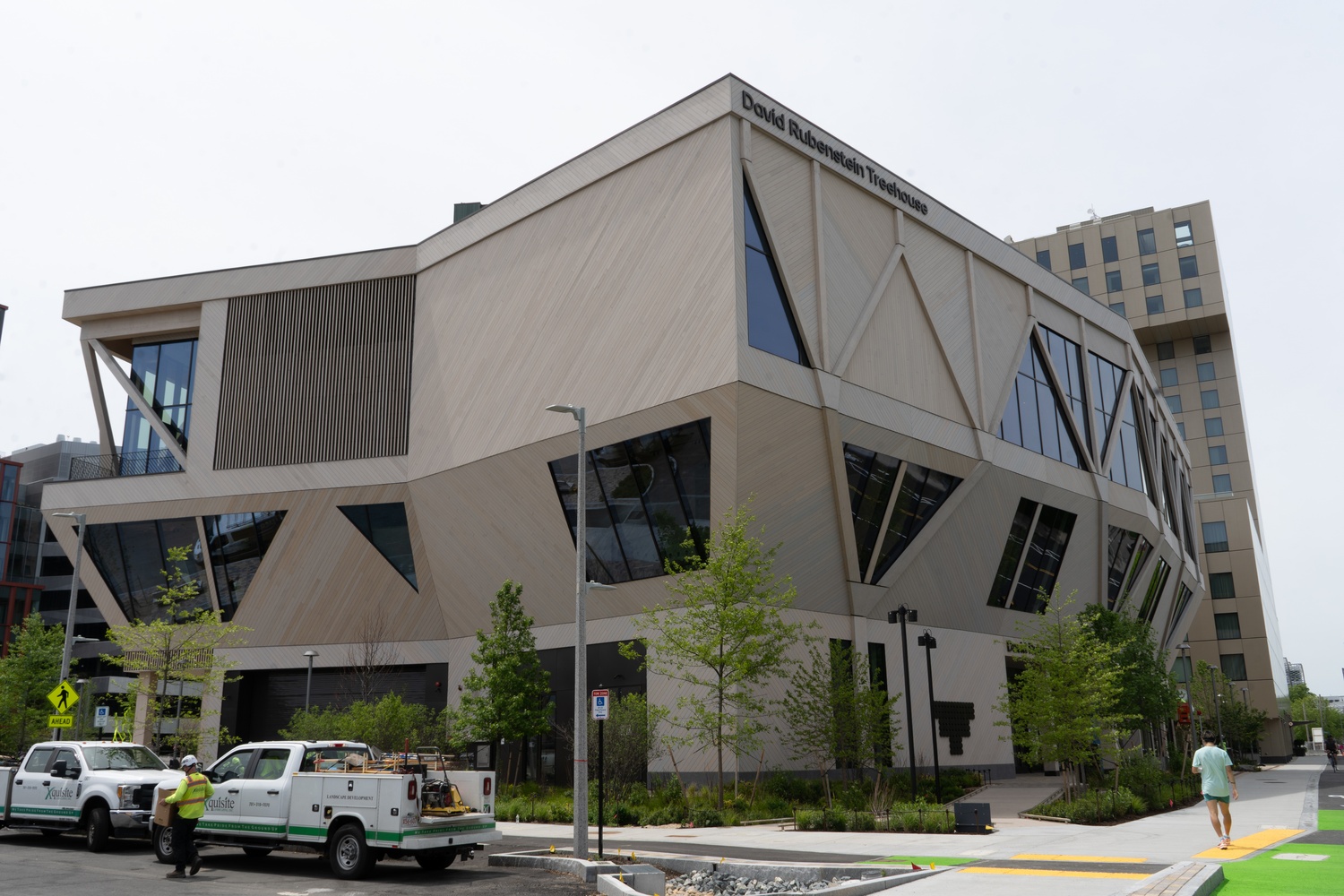
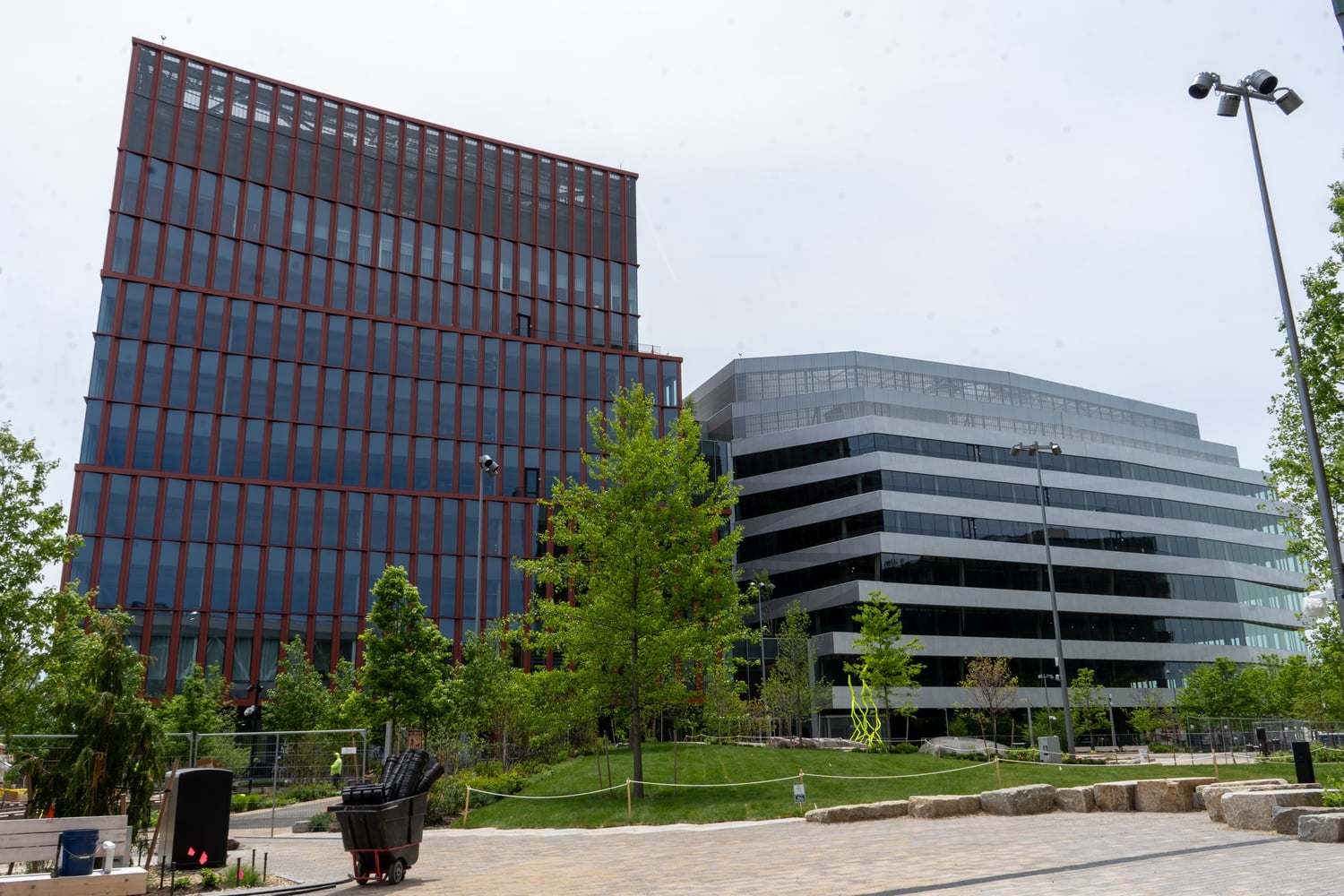
Developments on the HBS campus have come hand-in-hand with projects taking root in the Enterprise Research Campus, including the David Rubenstein Treehouse and the luxury Atlas hotel, according to O’Brien.
But in many ways, Harvard has not kept pace with Summers’ aspirations. Alex Krieger, a professor at the Graduate School of Design, said that Harvard’s development has instead been slower and a “response to actual needs,” like creating more housing.
Krieger — who has studied and served on University working groups to guide Harvard’s development in Allston for the last 25 years — pointed to a change in the University’s posture in 2007 under then-President Drew G. Faust.
“She began to pay more attention than Harvard had previously, to actually shoring up some of the commercial activity and housing and so forth along the whole sort of Western Avenue corridor, right all the way to Watertown,” Krieger said.
The Western Avenue corridor has also seen increased development in recent years. Allston Labworks, a large life-sciences and residential complex that completed construction in 2025. With it also came new retail — Molly’s Bookstore, FiDO Pizza, and Park Bagelry.
Harvard has a significant presence along Western Avenue, stretching from property closest to the Charles River — where the ERC is situated — and parcels closer to Labworks.
“There were parking lots, housing, and some small businesses up and down Western Avenue,” O’Brien said. “It was a place where you start. A lot of potential for development.”
But on much of the land Harvard owns, it has yet to make full use of this potential. Only 14 acres of the ERC campus have been developed since June 2023 as part of Phase A, leaving the remaining 22 untouched until Phase B.
Of the nearly 360 acres of Allston in Harvard’s possession, almost 100 sit undeveloped.
Buying and Selling
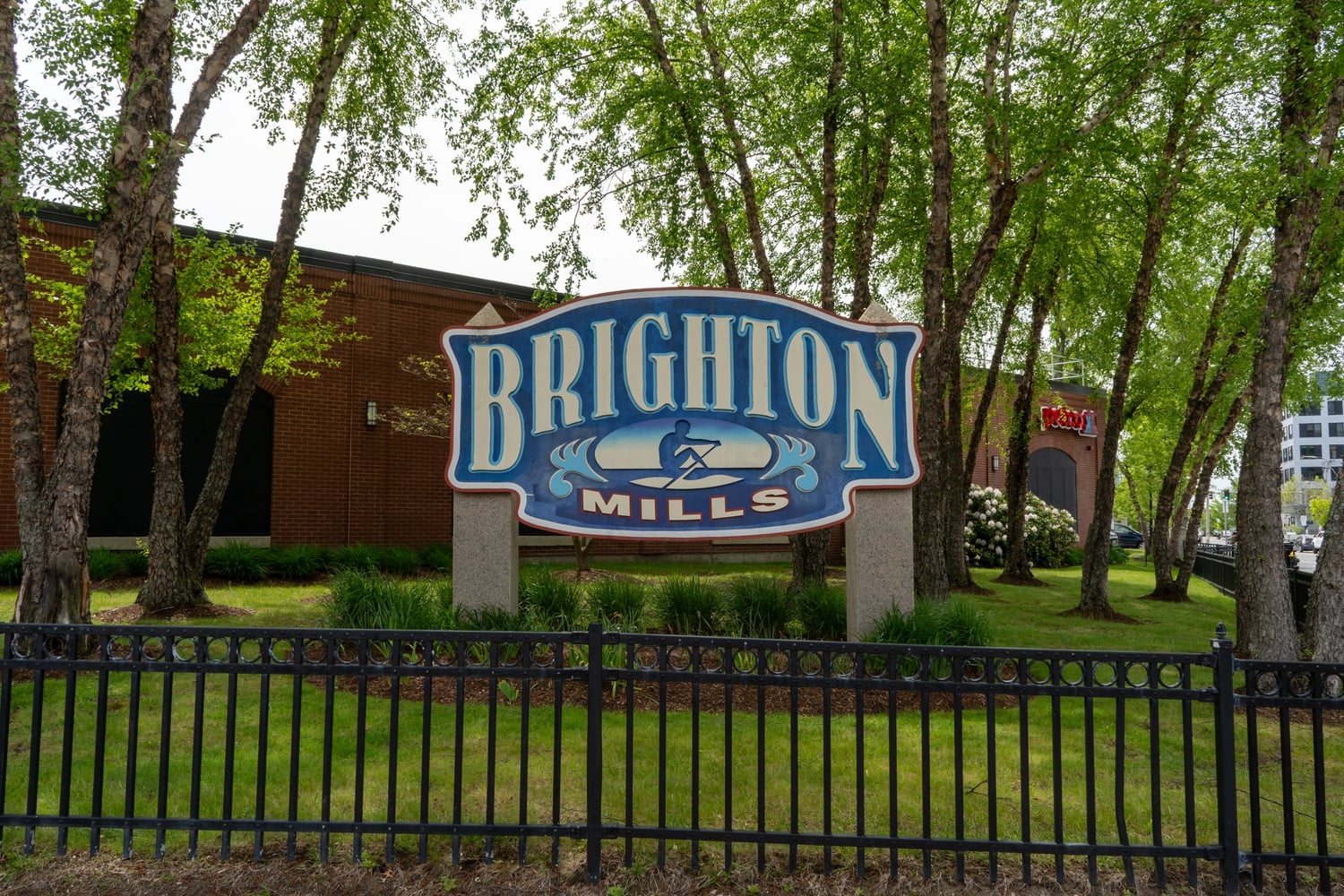
Last October marked an about-face for the University when it sold the seven-acre Brighton Mills Retail Plaza on Western Avenue — its first land sale in Massachusetts in a decade.
The parcel was first acquired in 2007, and remained untouched until it was sold to Urban Edge Properties, a New York-based shopping center developer. Harvard has also donated property and engaged in land swaps to bolster housing development in Allston.
Harvard and the Charlesview Residences apartment complex agreed to exchange parcels in 2007, letting Harvard take over the 4.5 acre site at Barry’s Corner and relocating the apartments further down Western Avenue. Harvard’s purchase of the original site provided $65 million towards the new residences.
“The development of the new Charlesview then took a couple more years of Article 80 and community input, but ultimately I think resulted in a really good development,” Jo-Ann Barbour, executive director of Charlesview, said.
In addition to selling the remainder of the Brighton Mills parcel, Harvard has been trimming its landholdings, donating land to Boston. The University donated 65 Seattle St. in 2024 and 90 Antwerp St. in 2016 to the city to be developed into affordable housing.
“With change, there’s fewer kinds of grand expectations of, you know, and aspirations and just responding to actual need,” Krieger said, “and the realization that Harvard, for its own academic and research purposes, doesn’t need all the land that it acquired.”
In a statement, University spokesperson Amy Kamosa wrote that no new acquisitions have been facilitated in approximately 20 years, but that over its history, “Harvard periodically acquired property to advance mission-driven needs.”
But on the land Harvard still holds, it has often been slow to break ground.
Kreiger pointed to the greenway — public open space that Harvard has promised to develop for two decades. The greenway would connect the Honan-Allston Library and Rena Park to the Charles River. It was initially set to open in 2025, and Harvard has promised completion of the project “practically since the beginning of planning,” according to Krieger.
The greenway is in its final stages of construction, and programming is set to begin this summer. But Krieger argued that the project falls short of the promised design. The length of the greenway is still incomplete, cutting short at an HBS parking lot before it reaches the river.
“Unless the business school does something, unless and until Harvard decides to complete its Greenway promise, that space which is supposed to be part of the Greenway will seem as if it belongs to the ERC rather than belonging to the broader neighborhood,” he said.
‘Seat at the Table’
Over its decades-long expansion into Allston, Harvard has shifted its development strategy in effort to improve the strained relationship with its neighbors.
For much of the 19th and 20th centuries, the University’s footprint was restricted largely to parcels donated to expand HBS’s campus. But in 1989, Harvard quietly began a rapid expansion of its landholdings in Allston, acquiring parcels through the Beal Company.
Through the Beal Company, Harvard rapidly accrued nearly 53 acres of land in just eight years, spending almost $90 million in the process. The University did much of its early bidding through the Boston-based developer to avoid being charged a premium for the land parcels.
It wasn’t until 1997 that Harvard’s anonymous acquisitions came to light — and the distrust it fostered across the neighborhood festered for years. Two years later, Paul Grogan was approached by a donor who “expressed concern about the city’s lack of a relationship with the University.”
“It wasn’t a bad relationship — they didn’t have a relationship, and that reflects a historic failing of many urban universities,” Grogan said.
Grogan said the donors who approached him felt the University was going to “need more effort and insight and commitment,” and wanted someone who could signal it was serious about negotiating community benefits.
“Harvard is Harvard, and it was very intimidating for community organizations to feel that they could have a seat at the table,” he said.
Grogan led Harvard’s Office of Government, Community and Public Affairs until 2001, overseeing community partnerships including 20/20/2000 — now called the local housing collaborative — a $20 million affordable housing initiative for Boston and Cambridge. The University recommitted $20 million to the initiative in 2019.
Then-Boston Mayor Thomas M. Menino established the Harvard Allston Task Force in 2006 to give residents and neighbors an opportunity to weigh in on the university’s development plans.
Today, Harvard continues to regularly engage with city officials and community members, guided by defined regulatory processes like Article 80 for the continued development of the Allston campus.
An ‘Intentional Approach’ to Allston’s Future
The changes to Allston have also influenced the make-up of its residents. The neighborhood is historically diverse — with a large immigrant population — and home to a vibrant music and art scene.
Over the years, the lack of housing supply and creeping rents pushed many families out of the neighborhood. Students from universities moving off-campus also put pressure on rental prices.
Mee — who runs little league baseball in Allston-Brighton — said that a once tight-knit neighborhood had slowly gone quiet, with families pushed out by rising rents and limited availability of housing.
Public schools have also suffered from the decline in Allston-Brighton’s youth. Boston Public Schools shuttered the Jackson Mann K-8 school in 2024 due to concerns about building safety. In June, the Mary Lyon Pilot High School will also close due to poor conditions and low enrollment.
And the neighborhood still lacks a fully functioning community center — something residents have asked city leaders to commit to rebuilding.
Harvard has been able to fill in some of these gaps, offering the community benefits outlined in its Institutional Master Plan. The Harvard Ed Portal, for example, opened to provide free after-school programming and classes to the public.
Chris Connal, who has lived in Brighton for 25 years, sends his two children to participate in programming at the Harvard Ed Portal regularly.
“For both kids, it’s definitely something that they ask to do every semester,” Connal said. “When we’re choosing activities, it’s the first one they want to make sure that we participate in.”
But as schools and youth programming in Allston-Brighton shrink, many families are concerned about the future livability of the neighborhood. As the largest sole landowner in Allston, residents have looked to the role that Harvard can play in making Allston more vibrant and affordable.
Harvard spokesperson Amy Kamosa wrote in a statement that the University is committed to sustaining a “long-term collaborative partnership” with city leaders.
“As we look ahead, Harvard is taking a phased, intentional approach to development in this area,” Kamosa wrote.
—Staff writer Kevin Zhong contributed reporting.
—Staff writer Thamini Vijeyasingam can be reached at [email protected]. Follow her on X @vijeyasingam.
Want to keep up with breaking news? Subscribe to our email newsletter
Have a tip for The Crimson? Share it confidentially