Harvard and Epstein: A Call for Repair From 156 Harvard Affiliates
To the President and Fellows of Harvard College and the Harvard Board of Overseers,
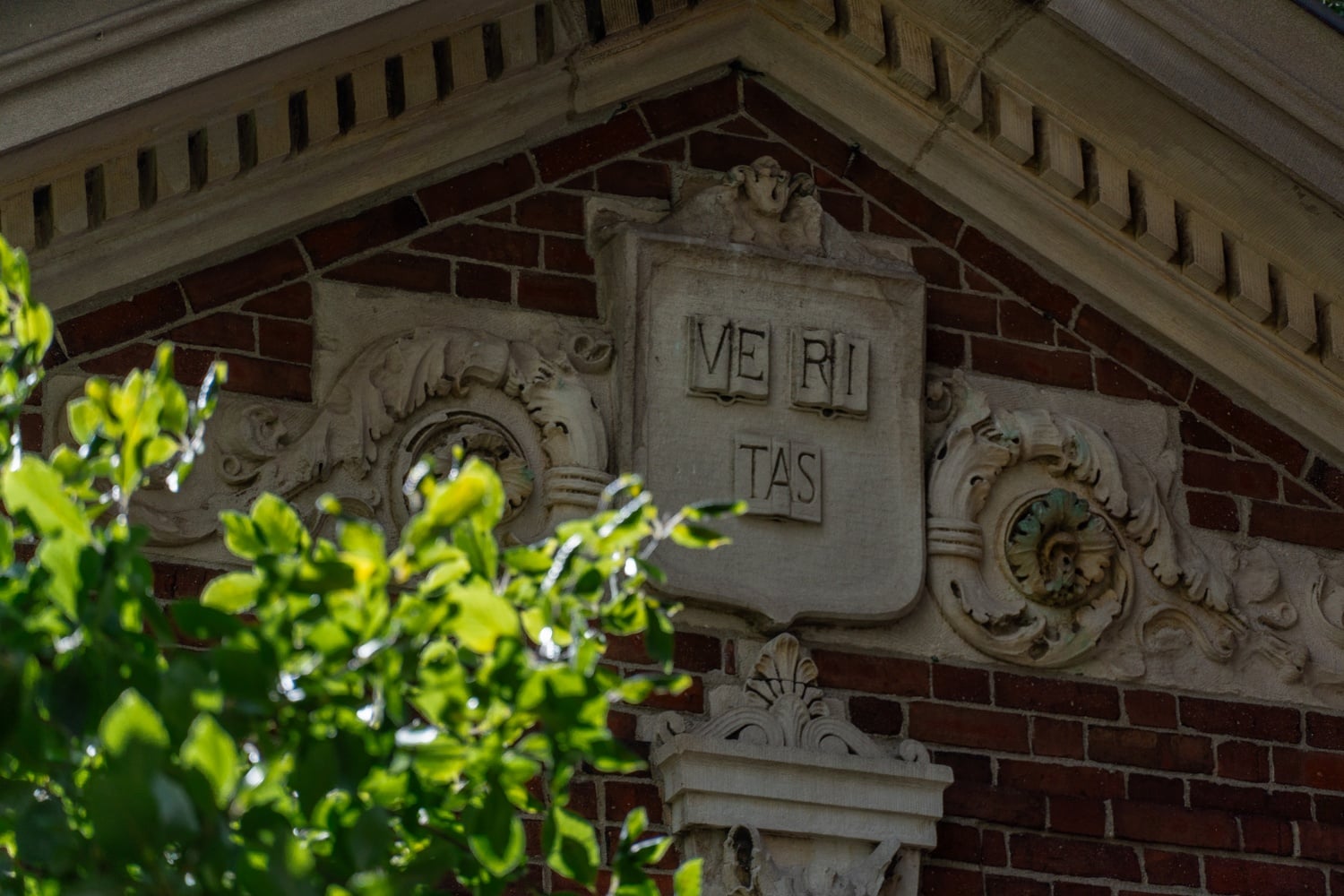
Harvard President Alan M. Garber ’76, has declared that “seeking truth is a journey without end,” and that Harvard must be guided by our motto of veritas, or truth, to “take up the difficult work of acknowledging our flaws so that we might realize the full promise of the University.”
As members of the Harvard community, we sincerely believe in the full promise of Harvard University as an institution advancing world-class research, education, and open intellectual inquiry. However, as we are called upon by our institution, that promise comes with a responsibility to uphold our values. We see institutional ties to a pedophile and convicted sex offender as a clear violation of the values of the overwhelming majority of the Harvard community.
Jeffrey E. Epstein did not operate alone. His power depended on influential people and institutions willing to overlook and normalize his sexual abuse of children and women.
The release of the Epstein files by the United States government has revealed with greater clarity the extent to which numerous Harvard leaders, faculty, alumni, and donors maintained close ties to Jeffrey Epstein both before and after his 2008 conviction. According to these public records, we believe that Harvard affiliates reportedly maintained relationships with Epstein that, to varying degrees, minimized the seriousness of, normalized, or legitimized Epstein’s sexual abuse of children and women, including after his 2006 arrest and 2008 conviction for procuring a minor for prostitution.
Institutions are made up of people. Larry H. Summers, Henry A. Rosovsky, Martin A. Nowak, David R. Gergen, Alan M. Dershowitz, Stephen M. Kosslyn, Elisa F. New, Leslie H. Wexner, Glenn R. Dubin, Eva Andersson-Dubin, Leon D. Black, Andrew L. Farkas ’82 and many others with publicly reported ties to Epstein are central protagonists in Harvard’s story. There is a wide spectrum in the nature of their relationships with Epstein, ranging from soliciting one-off donations to deep and ongoing friendships. They have all shaped Harvard by leading our University and research centers, teaching our students, funding our programs, and being the namesakes for our buildings and fellowships.
But we are also members of the Harvard community. We are Harvard faculty, alumni, students, fellows, and staff who stand with survivors of sexual violence, and we have the responsibility to shape our university’s response to these ties.
To the more than 1000 survivors of Epstein and his affiliates’ abuse, we are sorry. Instead of a powerful and wealthy predator being protected, you should have been protected. There are many within the Harvard community who believe you, who stand with you, and who are committed to accountability and repair.
As members of the Harvard community, we are deeply sorry for the active role that Harvard played in conferring social status and legitimacy on Epstein and his enablers, which Epstein leveraged as a social currency in the perpetration of sexual exploitation and abuse both before and after his 2008 conviction.
We are committed to using our positions within Harvard to advance truth-telling, accountability, repair and institutional reform in relation to Harvard’s ties to Epstein and those who enabled him.
Reporting by the Boston Globe, the New York Times, and The Crimson has clearly shown that Harvard’s 2020 “Report Concerning Jeffrey E. Epstein’s Connections to Harvard University” did not fully disclose the extent of the University’s ties to Epstein, excluding significant relationships and relevant donations despite existing public reporting. For example, former Harvard President Larry Summers had very close ties to Epstein until 2019, yet this relationship was essentially not discussed in the 2020 report.
In November 2025 Harvard initiated a “review of information concerning individuals at Harvard included in the newly released Jeffrey Epstein documents to evaluate what actions may be warranted.” This was expanded in February 2026 to cover major University donors. Like the review that produced Harvard’s 2020 report, this new investigation appears to be conducted internally. Six months on, there is limited procedural transparency on who is leading the investigation, who is part of any decision-making committee, what its terms of reference and scope are, or an indicative timeline for when findings might be expected and reported. It also remains unclear what governance safeguards have been put in place for independence in the investigation to address potential conflicts of interest.
To ensure a truthful accounting and to guard against potential conflicts of interest, Harvard must establish an independent investigation of its Epstein ties led by the independent directors of Harvard’s Joint Committee on Inspection and advised by independent, external legal counsel and independent experts in governance, sexual violence, and child protection. The investigation must also examine why Harvard’s 2020 report contained significant gaps, what happened in the lead up to its release, and any broader cultural and institutional factors that enabled Harvard’s ties to Epstein and his affiliates.
The 2026 investigation must include meaningful procedural transparency, and should allow submissions from the survivors of Epstein’s abuse, Harvard affiliates, and experts. The independent members of the JCI should appoint an independent ombudsman to oversee a process of truth-telling and repair for five years, manage additional investigations, and provide biannual public reports on progress.
To uplift our institutional motto of veritas, or truth, Harvard should publicly release records relevant to the 2020 report, including any unpublished internal and interim reports, committee minutes, and the full Harvard donor records for Epstein and for foundations he held trusteeships of, including the Wexner Foundation and Leon Black’s family foundation.
Where misconduct is identified, Harvard must impose meaningful and proportionate accountability. This includes consequences for anyone who solicited or accepted prohibited donations, took substantial steps to legitimize Epstein after his 2008 conviction, or enabled potentially misleading reporting in the 2020 report. Where findings support such action, potential measures should include, with due process protections, termination of employment, revocation of emeritus honors, bans on participation in University events, activities and governance, and a formal institutional apology to survivors if institutional failures are identified. In addition, one action Harvard should take is to rename the Leslie H. Wexner Building at the Harvard Kennedy School.
Harvard must also strengthen governance safeguards to prevent history from repeating itself. This requires stronger donor vetting procedures, naming and denaming policies, ethics oversight, whistleblower protections, and more transparent academic governance standards to guard against conflicts of interest in donor relationships and fellowship appointments.
Finally, we believe repair should be substantive.
Harvard should establish a fund supporting research, teaching, and programming across Harvard focused on preventing sexual and gendered violence, child sexual abuse, and sex trafficking. Harvard should issue a public commitment to building institutional capacity in this field, and could commit to a fundraising campaign to support this. As a first step, Harvard should do a review of its existing coursework and research programs to identify current gaps.
To the survivors and advocates who have spent decades fighting for truth, accountability and justice: thank you.
We are stronger, and safer, when we work together to end the global culture that tolerates the sexual abuse and exploitation of children and women, including the manifestations of this culture at Harvard.
With humility, care, solidarity, and a commitment to doing better.
Lauren E. Barnes, Lydia Glock, and Carina J.P. Stone are graduates of the Harvard Kennedy School.
A full list of the 156 signatories to this open letter can be found here.
Want to keep up with breaking news? Subscribe to our email newsletter
Have a tip for The Crimson? Share it confidentially