Mass. Ave. Zoning Plan Advances, Cambridge St. Proposal To Expire Amid Council Deadlock
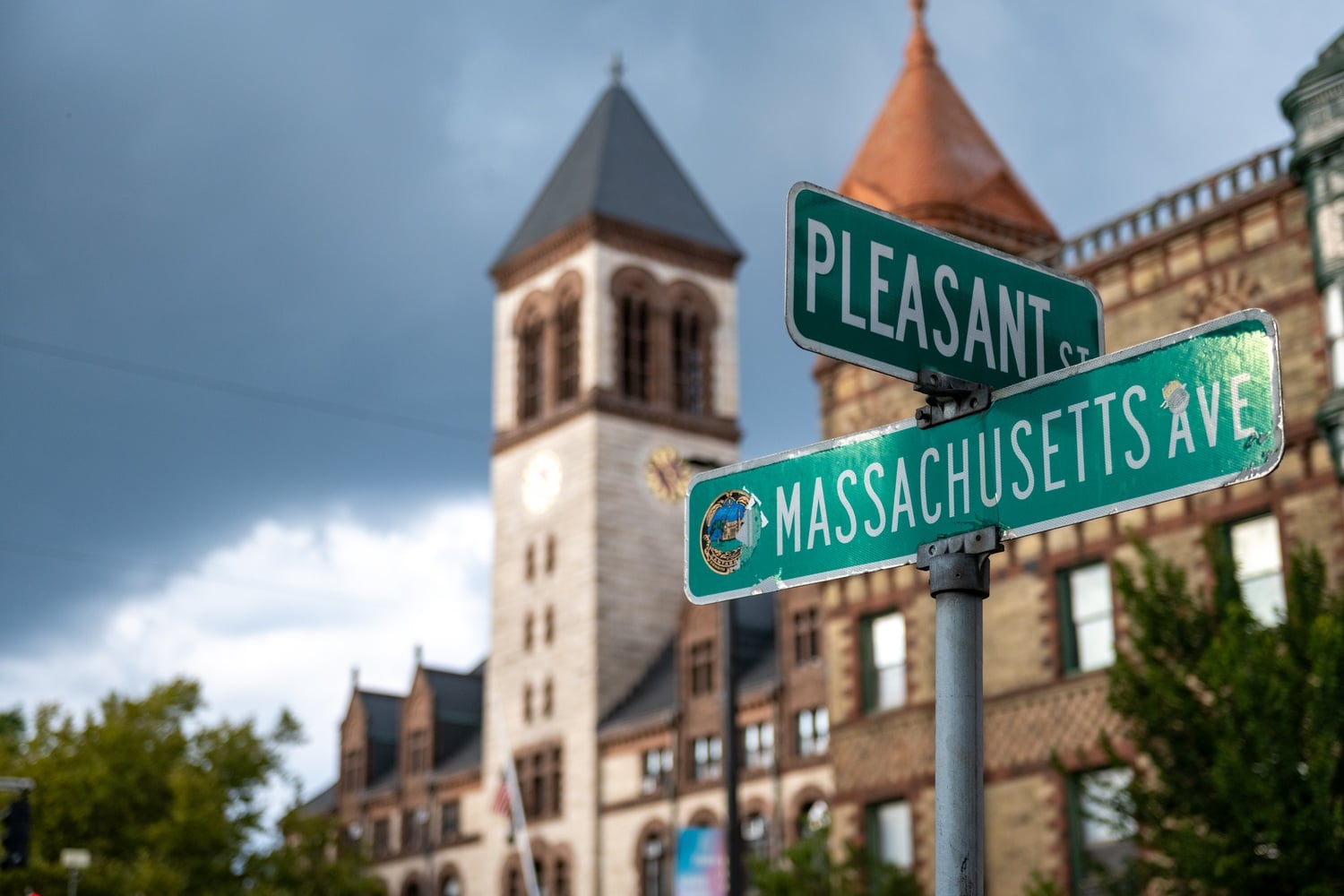
The Cambridge City Council Ordinance Committee advanced a scaled-back zoning proposal for North Massachusetts Avenue while setting much of a parallel Cambridge Street proposal on course to expire during a meeting earlier this month.
The committee’s votes reflect a broader divide that has reemerged at City Hall since June, when the council reopened debate over the multifamily housing ordinance, with councilors wrestling over the right balance between expanding commercial requirements and increasing Cambridge’s housing stock.
In discussing Mass. Avenue zoning, councilors weighed competing visions for how much ground-floor commercial space new developments should include, ultimately approving the Planning Board’s recommendation instead of a stricter alternative.
The stricter mandate, backed by just three of the eight present councilors, would have required
“active use” spaces — typically storefronts, eateries, or community centers — in buildings taller than four stories, with exemptions for some five- and six-story residential buildings without.
Voting in favor, Councilor Timothy R. Flaherty said requiring ground-floor commercial space in mid-sized projects could incentivize developers to build even taller buildings to offset the additional costs.
“Obviously, the active use is a cost of construction, and that has to be factored into the entire project,” Flaherty said.
Given ongoing debates that could roll back some residential upzoning measures, Councilor Marc C. McGovern said restricting development in commercial areas would undermine the city’s broader effort to expand housing, especially if construction in residential neighborhoods becomes more difficult.
“If we’re going to take steps that are going to make building housing in the neighborhoods more challenging, we need to be building up on the corridors,” he said.
McGovern instead supported the Planning Board’s proposal, which would maintain current zoning rules between Porter Square and Linear Park and requiring active-use space only in buildings of eight stories or more.
Get The Crimson in your inbox.
A similar plan for Cambridge Street partially failed. While councilors approved new retail rules, they deadlocked over expanding active-use requirements along the main commercial corridor, leaving the rest of the proposal to expire at its mid-September deadline.
Because much of Cambridge Street is already limited to six-story buildings, Vice Mayor Burhan Azeem said adopting stricter commercial requirements without allowing additional height would leave the corridor with some of the city’s most restrictive zoning.
“It’s a strange outcome of what we would do here,” he said. “We would have the strictest zoning in the city on Cambridge Street, in particular.”
Councilor Catherine “Cathie” Zusy said that the corridor’s established local businesses and strong neighborhood retail made it appropriate to require active uses in buildings taller than three stories.
“We should honor the expectations of the Cambridge Street neighbors and residents who thought that we’ve got very dynamic local retail,” she said. “Cambridge Street is an extraordinary road for shopping.”
Without the ability to build additional stories in exchange for including ground-floor commercial space, Assistant City Manager Melissa A. Peters warned that the threshold for requiring active uses becomes more consequential for housing development.
“As a developer, you may not build,” she said. “You may forgo those extra two floors and not do active use, and I think that’s why we’re in the predicament we are now.”
At a meeting last week, the committee also considered a separate petition from Cambridge resident Douglas P. Brown and 12 other residents that would impose additional restrictions on multifamily development.
Margaret Donnelly Moran, deputy executive director at the Cambridge Housing Authority, said three of the authority’s AHO projects would not have been able to proceed if Brown’s proposed requirements were adopted.
“As one example of the impact, the successful redevelopment of 116 Norfolk Street, which was completed in early 2025, would either not have been possible or would have seen the units reduced by 58 percent from 62 units to 26 units,” she said.
Azeem said the petition’s effects on affordable housing projects were a reason to reject it.
“We will risk a lot of projects that are in the pipeline,” he said. “I would just make a motion to forward this to the full City Council with a negative recommendation.”
Both motions ultimately failed, with Brown’s petition recommended unfavorably and the main Cambridge Street corridor remaining unchanged.
—Staff writer Risha Sinha can be reached at [email protected] and on Signal at rishas.13.
Want to keep up with breaking news? Subscribe to our email newsletter
Have a tip for The Crimson? Share it confidentially