The Walking Festival of Sound’s ‘Sanctuary for Environmental Listening’: Tuning Into Our Surroundings
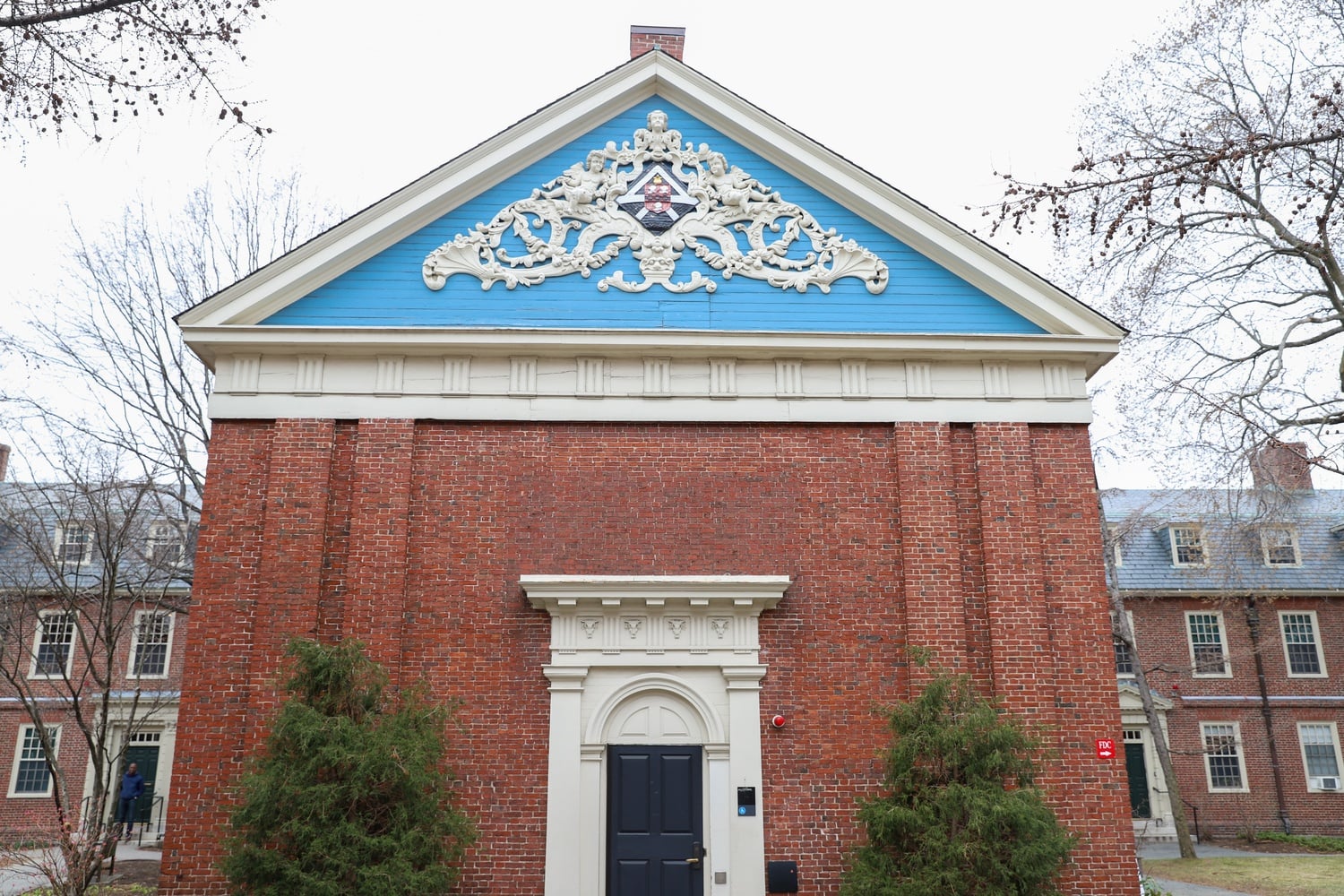
For nearly three centuries, Holden Chapel has been host to a variety of sounds. From lectures to medical school laboratory activity to the Holden Choirs’ singing, the building has grown accustomed to sonic diversity. The afternoon of April 25 was no different: The sounds of birds chirping, wind blowing through the leaves of trees, and crickets rubbing their wings together filled Holden Chapel.
The Walking Festival of Sound’s stop in Cambridge gave way to their “Sanctuary for Environmental Listening” experience, bringing together experts in environmental sound to share and discuss their work. The presenters included both guest composers and composers from the Harvard Music Department whose works consider the connections between the environment, spirituality, human nature, and nostalgia.
Co-founder of the Festival and 2026 Loeb Fellow at Harvard’s Graduate School of Design, Jacek Smolick is an interdisciplinary artist who explores how we experience sound in our lived environments. In an interview with The Crimson, audience member Paula Ortiz, and Harvard Divinity School student, shared that they hold similar interests.
“Jacek and I are in a class together, and him and I do similar work around sound and the more-than-human and our relationship with that. And so, as I’ve gotten to know Jacek more and more, I’ve just been so fascinated by how intentional and — what’s the word? — like, very fluid and meticulous around how he engages with the world and sound. He imbues his work with so much mystery and precision at the same time, and I think that’s a balance that very few people can strike with the ease that he’s able to do,” Ortiz said.
Audience members included a vast range of people, many of whom were classmates or peers of the composers and had deep knowledge on the subject matter themselves. Gokcen Erkilic, postdoctoral teaching fellow in Art+Media and Design at Northeastern University attended as a hopeful creative.
“I’m not involved in it but some of my colleagues are involved in it. So I’m not personally involved, but I’m an aspiring artist,” Erkilic said.
For Erkilic, she uses her expertise to conduct her own unique work with environmental sound.
“I don’t do music, certainly I’m not a musician. I do work with the sound of water — underwater sounds — in my own practice,” Erkilic said.
While her experimentation is not entirely environmental, she finds similarities between the event’s focus and her own.
“It is related. Environmental, but also like seas, river systems, fountains. Water is all around us so it’s really difficult to pinpoint a specific location for that,” Erkilic said.
Attendees of the Festival, such as Erkilic, brought their independent expertise and perspectives on environmental listening. The variety of interests in the space cultivated a rich discussion after the end of each presentation. Many audience members asked detailed questions to the presenters, and even recommended books and other artists to them.
Many artists connected their works with nostalgia and memories from childhood. Australian musician John Pax presented his method of capturing field soundscapes: simply recording “being” in his environment, like going for walks and finding interesting sounds, and then processing the samples — often of native species to Australia — through technologies to create his desired sound.
Another presenter, Chilean composer Maximiliano Soto Mayorga, presented on sound and silence as a way to bridge time and memories. His work with crickets, a nostalgic sound reminiscent of childhood days in the backyard, brought back memories of one’s youth — for himself and the audience.
In addition to enjoying Soto Mayorga’s presentation of cricket sounds, Erkilic found value in the intersectionality of the work that was featured.
“There was one presentation about the sounds of crickets that was really interesting. And, like, also there’s a lot of intersection between the identities of the people who are almost doing some sort of autoethnographic — let’s say, not research, but like readings on their relationship with sounds — that I find really more interesting than doing the field recording itself. Like, I’m really interested in hearing the stories, what that means to you, what you remember, [how is] that culturally relevant. All of those things are more interesting to me,” Erkilic said.
And just as the artists and audience members reflected on childhood memories evoked through environmental sounds, children themselves were also there to listen in. An organizer of the festival and a 2026 Loeb Fellow, Jen Hughes attended the event with her kids.
“[Jacek] kind of opened our eyes to seeing the world differently through sound so we’re gonna check [the event] out and hear some different soundscapes,” Hughes said.
In the “Sanctuary for Environmental Listening” experience, presenters’ soundscapes and musical craftsmanship reminded attendees of the often-forgotten significance of the everyday sounds of our surroundings — whether that be birds singing, cars whirring, or crickets chirping. As a program, The Walking Festival of Sound, which ran from April 15 to May 2, encouraged the audience to tune into the world around them, and to find meaning in the crescendos and patterns of everyday life.
Want to keep up with breaking news? Subscribe to our email newsletter
Have a tip for The Crimson? Share it confidentially