Harvard Dining Expands Waste Reduction Efforts, Earns Third Straight ‘Greenest University’ Honor
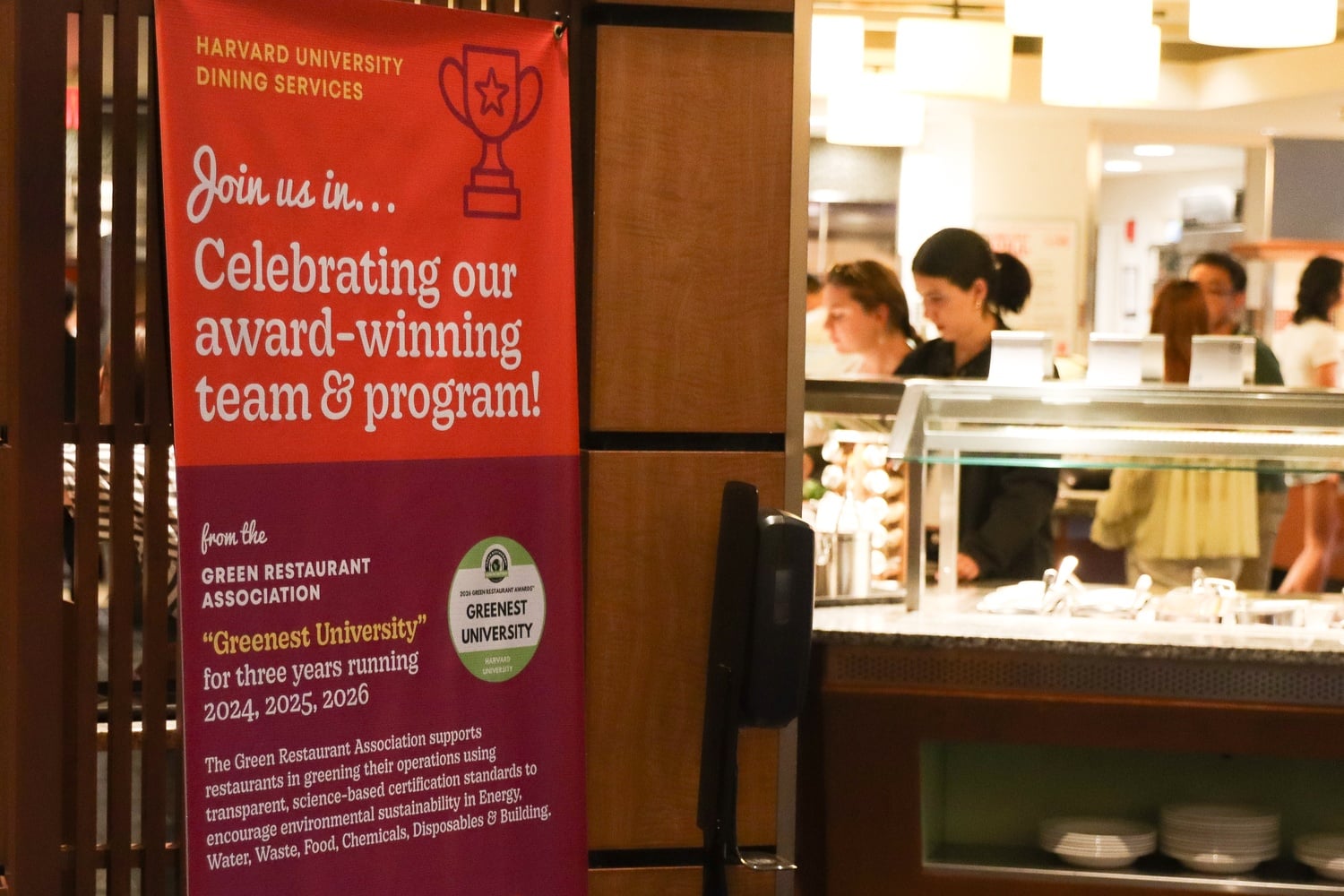
Harvard University Dining Services has expanded efforts to cut food and water waste across its dining halls, changes that helped Harvard earn a top sustainability designation for the third consecutive year.
The Green Restaurant Association named Harvard the “greenest university” in North America, recognizing HUDS for sustainability efforts across its 19 certified dining facilities.
The designation applies specifically to Harvard’s dining operations, rather than the University’s environmental footprint. The GRA, a nonprofit that evaluates restaurants based on a series of environmental criteria, gives the distinction to the school “with the most Certified Green Restaurants.”
HUDS operates 19 such facilities, including all of its undergraduate dining halls and several graduate school cafes and meal services. Each facility was reviewed by an independent auditor on areas including energy and water use, food sourcing, waste and recycling, infrastructure, and chemical safety.
HUDS has considerably more GRA-certified facilities than some peer institutions. Boston University, for example, has eight GRA-certified locations, while Princeton University has two.
HUDS Managing Director Smitha Haneef called the award “a testament to the culture of sustainability we’ve built together with our students and staff.”
“We are proud to lead the way in showing that large-scale university dining can advance healthy food and dining programs from sustainable food systems,” she added.
In a press release, HUDS highlighted several changes it made over the past year to conserve water and reduce waste. In graduate school cafes, equipment upgrades conserved an estimated 500,000 gallons of water per year, while all undergraduate dining halls now track food waste throughout the preparation process and offer reusable take-home containers.
Get The Crimson in your inbox.
HUDS has also sought to lower carbon emissions by expanding its selection of plant-based dishes and retrofitting kitchens with energy-efficient equipment.
Over the past three years, HUDS has completed more than 1,100 sustainability measures recognized by the GRA. Those changes earn dining facilities points toward green certification.
Anabela Pappas, who works in the Pforzheimer House dining hall, said weighing food waste has helped dining hall employees better gauge how much food they need to prepare.
“So that put us where, okay, I don’t need to overproduce,” she said. “We only need what we need.”
Pappas said students have also become more conscious about how much they take, while changes to dining hall menus have helped cut down on leftovers.
“The food has gotten better,” she said. “So whatever they take, they eat.”
Pappas also pointed to Harvard’s reusable take-out container program. She said an earlier version struggled because students often failed to return the containers, but that a barcode system introduced more recently has made it easier to track returns.
“Sustainability is very important to us,” she said.
—Staff writer Noah A. Ferris can be reached at [email protected]. Follow him on X @noahaferris.
Want to keep up with breaking news? Subscribe to our email newsletter
Have a tip for The Crimson? Share it confidentially