Before Taking Attendance, Make Childcare Accessible.
Thanks to the new five-day in-office mandate, College administrators will be joining in the back-to-school fun — whether they want to or not.
While options to work remotely enable staff to privately juggle caregiving and work-related responsibilities, requiring staff to be in the office will shed light on a persistently overlooked aspect of Harvard’s employee benefits: childcare. Given the inadequacies of the University’s childcare system for non-ladder faculty and administrators, the mandate risks dissuading or preventing single parents, and those living in low or middle-income households, from continuing to work in their roles.
If Harvard wants to require employees to be in-person, it must ensure childcare services are accessible and affordable.
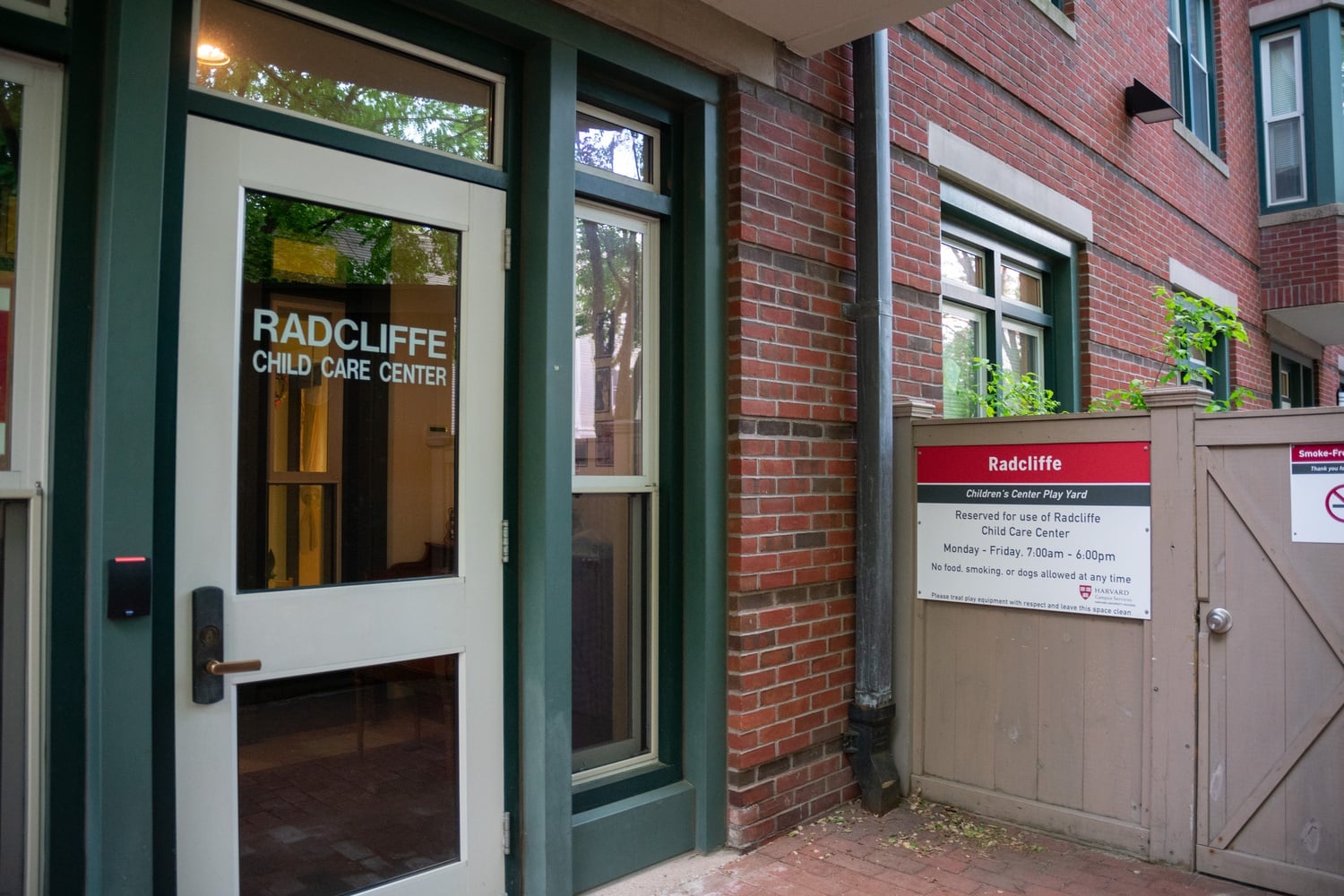
At present, the University is home to seven on-campus childcare centers managed by the nonprofit Campus Child Care, Inc. Though CCC runs the application process, the University emphasizes that affiliates enjoy priority status. Unfortunately, that privilege is only partially extended to administrators.
Admission to the CCC centers uses a tiered system. Tier 1A, which receives priority for up to half the total spots available, is only open to tenured, tenure-track, and senior non-ladder faculty. Tier 1 preference — below Tier 1A — is afforded to benefits-eligible faculty, staff, and postdoctoral fellows on Harvard payroll. The vast majority, if not all, of College administrators affected by the in-person mandate would fall into Tier 1 and thus receive lower priority than ladder-access faculty.
CCC’s website stresses that they are unable to provide care to all who want it and that there is typically a waiting list at their centers. Further, they note that Harvard affiliates are not guaranteed nor do they universally receive a spot.
Even if administrators are able to secure spots for their children, the cost could be prohibitive for single-income households. During the 2024-25 school year, CCC centers charged a full-time rate of $2,480 to $3,660 a month depending on the age of the child. A parent of a single infant would pay $43,920 to enroll their child year-round, not to mention a mandatory $100 application fee and no tuition reduction for sick days, holidays, or emergency closing.
For members of the Harvard Union of Clerical and Technical Workers, which lists 2025 salaries ranging from $38,800 to $119,074, the minimum CCC tuition for one child amounts to at least 25 percent of total salary, far outside what the U.S. Department of Health and Human Services classifies as affordable childcare.
To its credit, Harvard has programs to offset costs, including optional Flexible Spending Accounts and limited scholarship money that can be used for CCC centers and other childcare arrangements. Notably, the scholarships are not available to members of HUCTW, though the union has a need-based Childcare Fund. For non-HUCTW staff, awards are determined by household income and vary year to year. Based on the University’s estimates, the maximum annual award would be $8,000 — for a family with a Gross Household Income less than $55,000.
A maximum scholarship, before tax, would cover less than three months of full-time infant care at CCC.
Staff are, of course, also welcome to apply to the Cambridge Preschool Program as well as Massachusetts Child Care Financial Assistance programs, both of which reduce costs but are limited by age and means, respectively. A two-parent household with two children under three and a combined annual income of $150,000 would not qualify for state benefits nor Cambridge’s free childcare program. With two toddlers, a single year at a CCC facility could cost them nearly half their total income.
To be clear, I am not arguing against the mandate. I acknowledge the value of in-person work for student-facing administrators. I agree with much of the Editorial Board’s argument about the importance of in-person connection with advisors. I do not, however, accept that single parents and caregivers must be collateral in restructuring efforts.
Illustrating the broad failure to contend with the reality of childcare access, Harvard College Dean David J. Deming highlighted that for some employees, the policy won’t take effect until January. He suggested that the date was selected in part to give staff additional time to make childcare arrangements. Though my colleagues on the Editorial Board lauded this concession, three months is not a childcare policy. In championing it as such, the College has ignored the broader financial barrier staff face and abdicated its responsibility to working parents.
Fortunately, it’s not too late. In the three months before the mandate takes full effect, the College has an opportunity to level the playing field for working parents. Whether by expanding funding for on-campus childcare and stipends or making exceptions to mandates for those with caretaking responsibilities, there is still time for Harvard to act.
Caroline R. Kramer ’29, a Crimson Editorial editor, lives in Winthrop House.
Want to keep up with breaking news? Subscribe to our email newsletter
Have a tip for The Crimson? Share it confidentially