Harvard Graduate Student Union to Strike for Second Time This Year as Contract Talks Stall
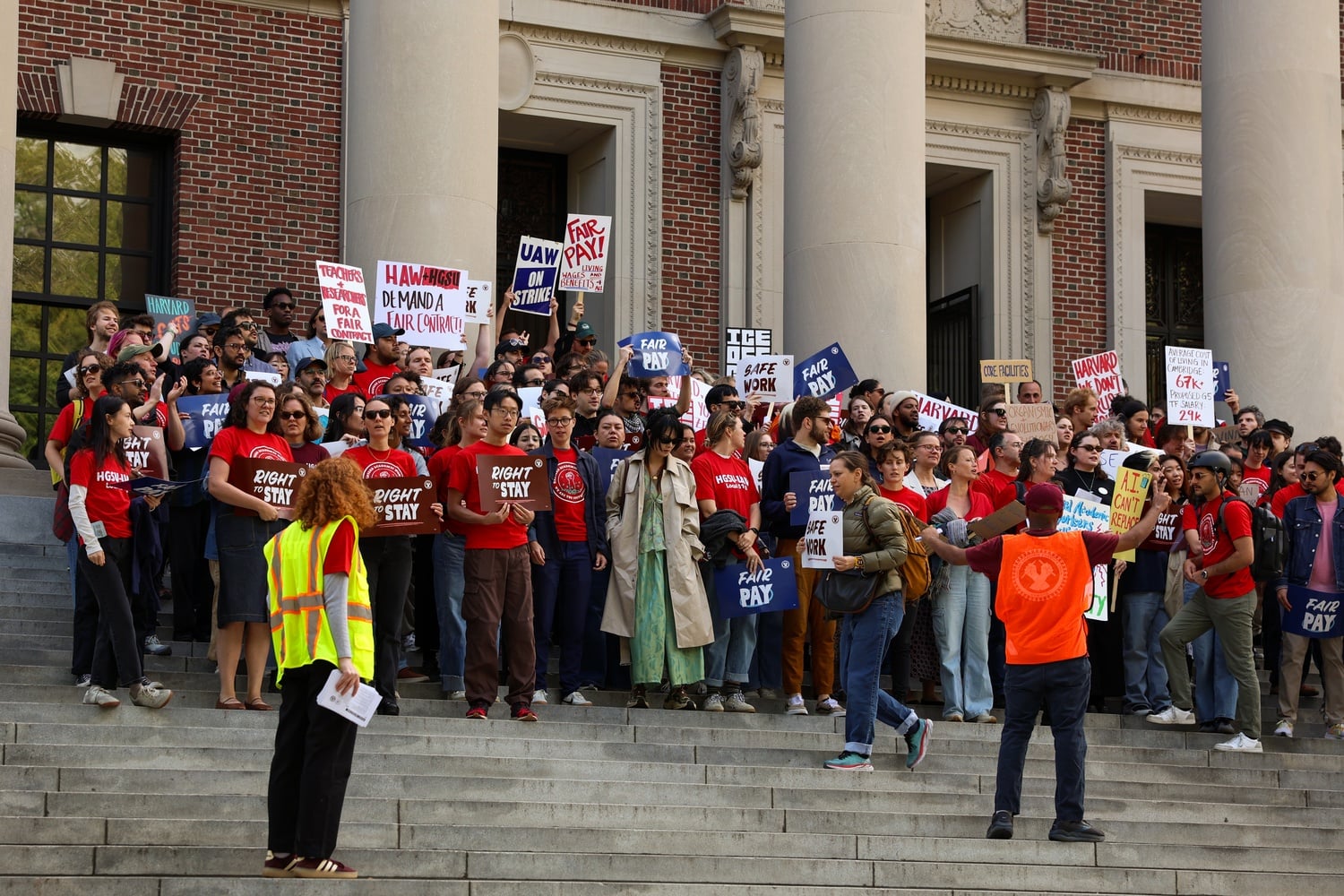
Harvard’s graduate students will walk off the job Tuesday for the second time this year after the union and the University failed to reach a contract agreement before an 11:59 pm Monday deadline, a union spokesperson confirmed.
Thousands of teaching fellows, research assistants, and other hourly student workers are expected to join the walkout, which began at midnight. The strike comes nearly five months after the Harvard Graduate Students Union-United Auto Workers ended a 40-day strike, the longest in its history, in the spring without a contract, and follows an authorization vote earlier this month in which 88 percent of the voting members backed a second walkout.
The union, which represents more than 4,000 graduate and undergraduate student workers, has said it is striking over three main demands: higher wages and benefits, protections for noncitizen workers, and an independent process for harassment and discrimination complaints.
Picketing will begin Tuesday with a noon rally at the Zimmer Hall Plaza, followed by pickets across campus and the delivery of a petition to the administration. A Harvard spokesperson did not immediately respond to a request for comment.
In an email to Harvard affiliates on Monday, Provost John F. Manning ’82 and Executive Vice President Meredith L. Weenick ’90 wrote that another strike was not justified.
“In the University’s view, another strike is unwarranted, particularly considering the agreement that exists between the two parties on key issues the union continues to cite as the reason for their potential strike action,” they wrote.
The University’s Oct. 22 package — its third comprehensive proposal since negotiations began — included a 6.1 percent raise upon ratification and three percent annual raises after that, which Harvard says amounts to a nearly 16 percent compounded increase over the life of the contract.
The union has argued that 3 percent raises fall below inflation and would amount to a pay cut.
HGSU Vice President Evan R. Lemire said the email mischaracterized the state of negotiations and the Oct. 22 package, which came at the last bargaining session before the deadline.
“The university has characterized itself to its community as making major progress in these negotiations and having a commitment to reaching a contract with us. That has not been our experience,” Lemire said.
Get The Crimson in your inbox.
Lemire said the package proposal “was substantively no different to the previous proposals that the University has given us.”
He said Harvard’s changes to its benefits proposal were similarly limited to “minor formatting changes.”
“Harvard has refused to offer meaningful proposals or schedule additional, on-the-record bargaining sessions. We are ready to bargain at any time,” HGSU President Denish Jaswal said.
“We would rather be teaching and doing research. But we need a contract we can live and work under. We are prepared to stay on strike until Harvard moves,” Jaswal said.
The second walkout could also test the union’s legal footing. In an Oct. 2 letter to faculty, Managing Director of Labor and Employee Relations Paul R. Curran wrote that a second strike in the pursuit of the same goals as the spring walkout would be considered intermittent, and not protected under the law.
In a statement, Lemire called the claim “spurious,” citing a 2019 National Labor Relations Board decision involving Walmart that defined an unprotected intermittent strike as one carried out under “a plan to strike, return to work, and strike again.”
“Any suggestion that HGSU has ever made such a plan is false,” he wrote.
The strike could be the first of several. Harvard Academic Workers-UAW, which represents non-tenure-track teachers and researchers, has set a Nov. 10 strike deadline, and Harvard’s dining workers, represented by UNITE HERE Local 26 have passed a strike authorization vote as negotiations with the University stall.
“It’s a shame that Harvard’s administration has put us in a position where we have to stop doing the things that we love, the teaching and the research and everything else, and actually strike to win the things that we deserve and that we need to be able to do our jobs,” Lemire said.
Manning and Weenick wrote that the University has posted contingency planning guidance and remains committed to bargaining.
“We believe that remaining differences can be resolved at the bargaining table,” they wrote.
—Staff writer José Luis Ortega Castro can be reached at [email protected].
Want to keep up with breaking news? Subscribe to our email newsletter
Have a tip for The Crimson? Share it confidentially