Harvard Faculty, Governing Board Members Gave Over $4 Million in Midterm Cycle, Mostly to Democrats
Political donations from Harvard affiliates heavily favored Democrats in the 2026 midterms, though giving among members of the Harvard Corporation was more divided, with roughly 26 percent going to Republicans.
Members of Harvard’s governing boards and faculty donated more than $4 million to political candidates and causes during the 2026 midterm election cycle, overwhelmingly giving to Democrats, according to a Crimson analysis of campaign finance records.
About 6 percent of donations went to Republican candidates and committees, while the vast majority of the remaining funds went to Democrats. The divide was less pronounced among members of the Harvard Corporation, the University’s highest governing body, where roughly 74 percent of donations went to Democrats and 26 percent to Republicans.
Nearly $2.4 million of the giving from Harvard affiliates came from a single donor: William H. Harris, an emeritus professor at Harvard Medical School.
The Crimson reviewed approximately 20,000 public contribution records filed with the Federal Election Commission since January 2025, examining donations from members of Harvard’s two governing boards and faculty at the Faculty of Arts and Sciences, Harvard Law School, Harvard Kennedy School, and Harvard Medical School.
The analysis followed the same methodology as that used in The Crimson’s 2024 review, which excluded donations to super PACs. Reporters scraped faculty and governing board rosters, matched names against Federal Election Commission contribution records — all publicly accessible — and cross-checked donations using employer information and name variations.
The Harvard Corporation
Seven of the Corporation’s 12 current members made contributions during the midterm cycle, giving approximately $719,000 to federal candidates and committees between January 2025 and October. Of that amount, $532,875, or 74 percent, went to Democrats and groups supporting them; $186,500, the other 26 percent, went to Republicans.
The split marks a notable shift from the 2024 election cycle, when about 95 percent of contributions from Corporation members went to Democrats and associated groups.
All of the Republican-aligned money came from Joseph Y. Bae ’94 and Michael S. Chae ’90, who sit on the senior leadership teams at KKR and Blackstone, respectively. Chae joined the board earlier this year.
Get The Crimson in your inbox.
Bae contributed $293,500, largely driven by a $250,000 donation to the Sentinel Action Fund, a super PAC that spent money trying to defeat Democratic candidates, including Sherrod Brown, Abdul El-Sayed, and Christopher C. Pappas ’02, a former Crimson News editor. Bae also gave to Democrats, including $25,000 to House Majority PAC, which supports House Democrats, and $7,000 to Daniel A. Koh ’07, a Democrat elected from Massachusetts.
Chae gave $176,500 in total, giving all of his money to Republican candidates and groups set up to support them. His recipients included the National Republican Congressional Committee and the campaigns of Senators Mike Rounds, Dan Sullivan, and Jon Husted, as well as John E. Sununu, who lost his Senate bid. Chae also contributed to fundraising vehicles tied to Republicans Ashley Hinson, Ashley Moody, and John Cornyn.
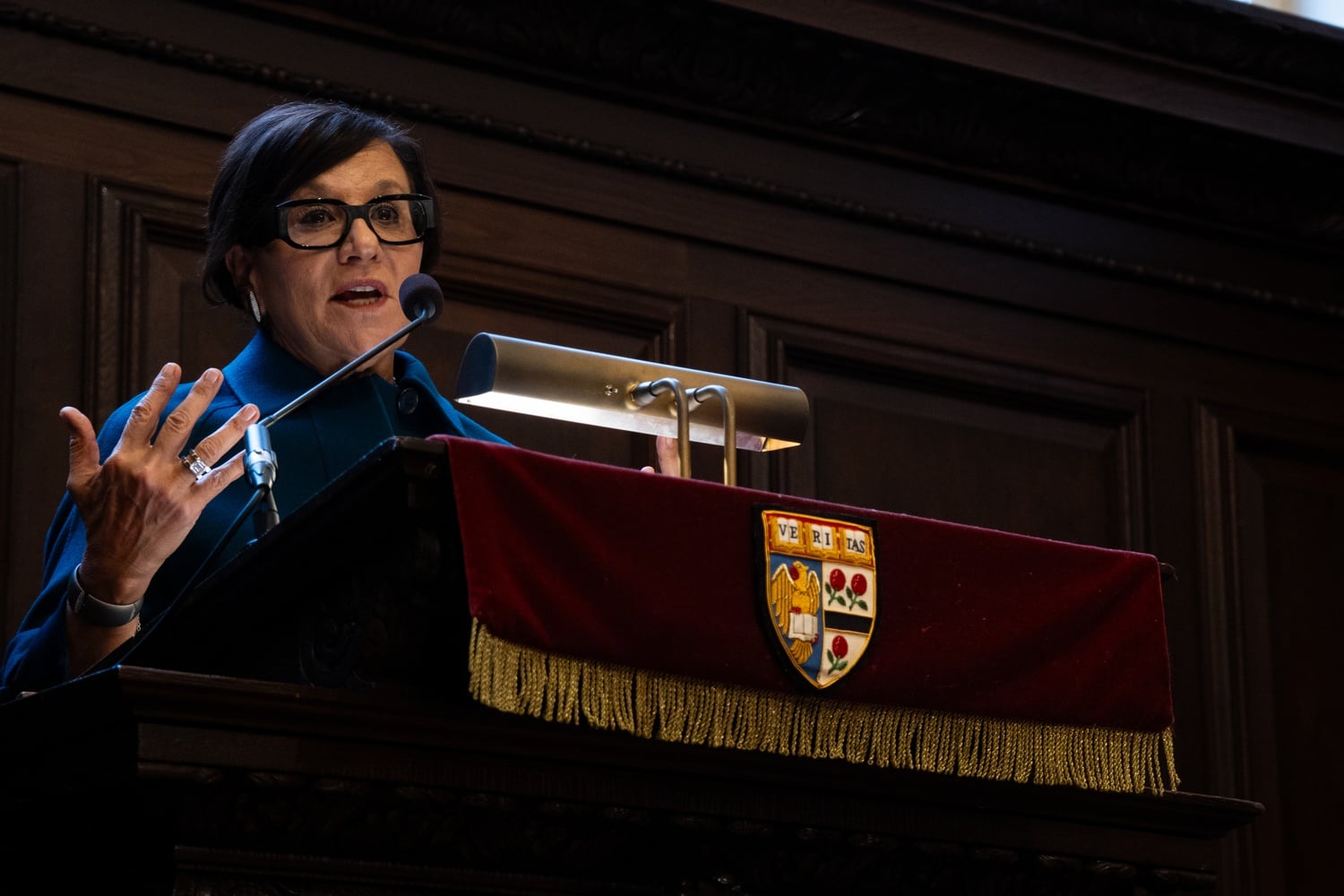
Senior Fellow Penny S. Pritzker ’81 was the Corporation’s largest contributor, surpassing Kenneth C. Frazier, who gave the most of any figure on the board in 2024. She gave $458,500 exclusively to Democrats, driven by two separate $100,000 donations to the Democratic Congressional Campaign Committee and Democratic Senatorial Campaign Committee.
Other Corporation members were more modest in their giving. Diana L. Nelson ’84 contributed $25,000 to Democrats, and Frazier gave $15,000 to the Ossoff Victory Fund, set up to back Sen. Jon Ossoff (D-Ga.). Richard P. Lifton, who joined the Corporation last year, contributed $775, and Sylvia M. Burwell ’87, the most recent addition to the governing body, gave $100.
Harvard President Alan M. Garber ’76, Timothy R. Barakett ’87, Mariano-Florentino Cuéllar ’93, Tracy P. Palandjian ’93, and Kannon K. Shanmugam ’93 made no contributions during the period.
A Harvard spokesperson did not respond to a request for comment on the Corporation members’ giving.
Harvard Board of Overseers
Seven members of the Harvard Board of Overseers, the University’s second-highest governing body with 32 members, gave just under $28,000 in total to candidates between January 2025 and November.
Democrats received $18,841.85, or roughly 68 percent of the total giving. Another $8,461 went to Fox Corporation PAC, which supports candidates from both parties. The remaining $500 went to Sen. Lisa A. Murkowski (R-Alaska), the only Republican recipient identified. (Nathaniel O. Keohane, who joined the board last year, made the $500 contribution.)
Todd Y. Park ’94, a former U.S. chief technology officer, led the board’s donors with $16,500 to three Democratic congressional campaigns. He gave $7,000 to Koh and Rep. Ro Khanna (D-Calif.), as well as $2,500 to Eric Jones.
No Overseer contributed to an independent candidate.
Harvard Law School
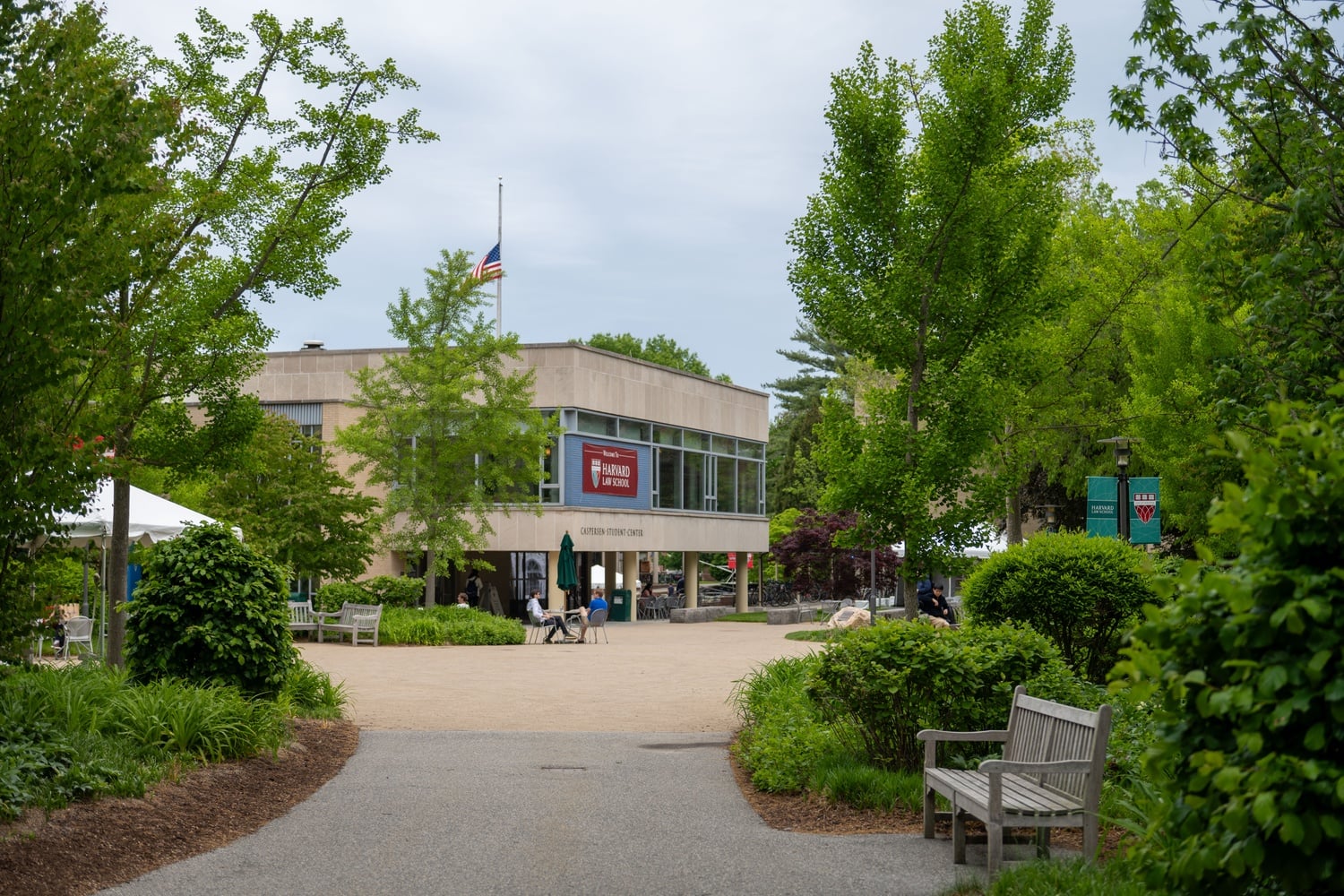
Thirty-three Harvard Law School faculty members contributed more than $307,000 since January 2025, with most of their money heading to Democrats.
HLS professor Louis E. Kaplow donated the most of any faculty member at the Law School, giving $172,300 — roughly 56 percent of total giving across the professoriate — through 48 separate contributions. Kaplow also stood as the only faculty member to contribute to Republican candidates.
He gave $105,000 to Democratic candidates, $63,800 to Republicans, and $3,500 to the American Israel Public Affairs Committee’s political action committee. His Republican contributions included $7,000 each to Sens. Sullivan, Susan M. Collins (R-Maine), and Cornyn, as well as Reps. Michael V. Lawler (R-N.Y.) and Juan Ciscomani (R-Ariz.).
Legal history professor Michael J. Klarman, former HLS Dean Martha L. Minow, and professor Susan M. Davies were among the other major donors, each contributing more than $20,000.
“I realize that some people will look at that data and assume it simply confirms the idea that Harvard Law School is ideologically biased and we don’t treat all viewpoints respectfully,” Klarman said. “I think there are actually several reasons why any law faculty in the country is likely to be considerably left-leaning, unless it’s been deliberately gerrymandered not to be so.”
Klarman pointed to the relationship between higher education and religiosity, as well as the tendency of Republicans to pursue legal careers in the private sector, as possible explanations for the gap.
Seven HLS faculty donors contributed a combined $5,100 to James D. Talarico, the incoming Democratic senator from Texas who previously attended the Harvard Graduate School of Education. Talarico attracted more individual donors than any other individual candidate among the HLS group.
Pappas, the incoming Democratic senator from New Hampshire, received the most money from HLS faculty members, drawing $8,750 from four donors.
HLS administrators also overwhelmingly gave to Democrats, including donations from two deans and five administrative deans. Vice Dean David B. Wilkins ’77 gave $8,250 to Sen. Mark R. Warner (D-Va.) and Koh, while Deputy Dean Guy-Uriel E. Charles contributed $900 to candidates including Khanna, Luke A. Bronin, and Jamie B. Raskin ’83.
HLS faculty also contributed significant money to political committees — nearly $170,000 to House candidate committees, about $83,000 to Senate candidate committees, and nearly $25,000 to joint fundraising committees.
Separately, 17 HLS lecturers gave more than $100,000 across more than 140 contributions, almost entirely to Democrats. Former Harvard Corporation Senior Fellow William F. Lee ’72, a current lecturer at the Law School, accounted for more than half of the group’s total, giving $59,800 to Senate candidates in battleground states and House races in Massachusetts.
Boston Red Sox executive David Friedman ’93 was the sole lecturer to donate to a Republican, contributing $1,000 to Jared Hudson’s Republican Senate primary campaign.
Four retired HLS faculty members also contributed approximately $12,000 during the period.
HLS spokesperson Lacey J. Rose declined to comment on the donation trends.
Harvard Kennedy School
Sixty-three Harvard Kennedy School faculty members and affiliates contributed nearly $202,000, roughly 50 percent more than the amount they did in 2024.
Nearly 97 percent of their contributions went to Democratic candidates and causes.
Jon Haber, a public policy lecturer who leads a communications firm based in Washington, D.C., gave the most of any instructor at the school, contributing $23,200. About $14,000 of that total went to Warner’s Senate campaign, with the rest spread across other Democratic candidates.
Warner and Roy Cooper’s Senate campaigns attracted some of the largest contributions to individual candidates. National Democratic Party committees and the Democratic fundraising platform ActBlue each received more than $10,000 from HKS faculty.
About $6,600 in donations from four faculty members and affiliates were directed to Republican and independent recipients. Two gave to both Democrats and Republicans, including Graham T. Allison ’62, the school’s founding dean, who contributed $500 to Mark York, a Republican Senate hopeful in Minnesota, and $7,150 to Democratic candidates and committees.
“I have a long-standing practice of giving to campaigns of former students who have the courage to get into the electoral arena — whichever party. Jack, Cait, Seth are former students,” Allison wrote, referring to Sen. Jack Reed (D-R.I.), Cait Conley, and Seth W. Moulton ’01.
Professor Arthur I. Applbaum contributed $6,000 to J Street PAC, earmarking the money for six senators. He said the donations reflected J Street’s view that “the security and freedom of both Israelis and Palestinians require a negotiated resolution to their conflict and an end to the ongoing occupation.”
Human rights professor Kathryn A. Sikkink contributed $8,720, including $6,000 to Crimson Goes Blue, a political giving organization founded by Harvard alumni. She said her contributions were a reflection of concerns she held about threats to American democracy.
“CGB also echoes my belief that US democracy itself has been under threat during the Trump administration, and votes and money for Democratic candidates would be the best way to help protect our democracy and our rights,” Sikkink wrote.
Sikkink stressed that her political activity was separate from her academic work.
“I work very hard to keep the boundaries separate between my private partisan actions as a citizen and my professional work at HKS, including teaching and service. I have participated over the years with campus organizations like Harvard Votes Challenge, to encourage students to vote, but not to tell them who to vote for,” Sikkink wrote.
HKS spokesperson Talia M. Pantaleo wrote in a statement that “HKS plays no role in the private political activity of its faculty.”
“Our faculty, like voters across the country, support political campaigns and candidates in their personal capacity,” Pantaleo added.
Harvard Medical School
Eighty-nine Harvard Medical School-based faculty members contributed more than $2.5 million between January 2025 and October.
William H. Harris, the emeritus HMS professor and a longtime Massachusetts General Hospital surgeon, accounted for approximately $2.4 million of that total. (He also contributed more than $1.3 million to super PACs, including $625,000 to Senate Majority PAC and $230,001 to American Ideals PAC.)
Excluding Harris, the remaining faculty members donated about $157,000.
Much like other schools at Harvard, approximately 81 percent of contributions from faculty donors aside from Harris went to Democrats.
Separately, 789 HMS faculty members primarily based at Harvard-affiliated hospitals donated roughly $1.08 million during the same period, including super PAC contributions. Of that group, the largest donors were Peter F. Weller ’68 of Beth Israel Deaconess Medical Center, who gave $38,251; Anahita Dua of Massachusetts General Hospital, who contributed $35,583; and Gordon J. Freeman ’70 of Dana-Farber Cancer Institute, who gave $34,054. (Several donations from hospital-based faculty members were directed to PACs focused on science, including 314 Action.)
Among Republican candidates, Collins drew the broadest support from HMS and hospital-based faculty combined, with seven donors. James S. Allan ’86, an associate professor at Massachusetts General Hospital, gave $4,475 to the Republican National Committee and the party’s House and Senate campaign committees — more than any other donor in the group gave to Republican recipients. Six faculty members contributed to candidates from both parties.
HMS spokesperson Katherine Brace did not respond to a request for comment.
Faculty of Arts and Sciences
More than 100 Faculty of Arts and Sciences faculty members contributed roughly $154,000, almost entirely to Democratic and Democratic-aligned groups.
Classics professor Gregory Nagy donated the most of anyone in the group, contributing nearly $12,000 across hundreds of donations. His donations went largely to Democratic candidates and committees, including the Democratic Congressional Campaign Committee.
“My making small donations, just as so many others have done, made it possible for me to express my humble support for a wide variety of candidates,” Nagy wrote in a statement.
Catherine A. Brekus ’85, the chair of the Committee on the Study of Religion, contributed $7,000 to Carleigh Beriont, her former graduate student and a Democratic primary candidate in New Hampshire.

Among individual candidates, Ossoff attracted the most FAS faculty members, counting 22 unique contributors who gave nearly $3,000. Talarico and Sen. Mark E. Kelly (D-Ariz.) also drew contributions from multiple faculty members.
One exception to the Democratic giving was School of Engineering and Applied Sciences Dean David C. Parkes, who contributed $520 to York, a Republican Senate hopeful in Minnesota who did not make it to the primary ballot. York is a graduate student in Parkes’s research group. Parkes declined to comment.
Several FAS administrative leaders also donated, exclusively to Democrats. Dean of Social Science David M. Cutler ’87 gave $500 to Thomas Fisher, an Illinois congressional candidate, and $100 to Tina R. Shah, a New Jersey congressional candidate.
Dean of Undergraduate Education Amanda Claybaugh made six contributions of approximately $110 each to Democratic House and Senate candidates, including Moulton and Iowa Sen.-elect Joshua Turek. Joy St. John, the College’s director and associate dean for admissions, gave more than $1,200 across 12 contributions, including $600 to committees associated with Rep. Jasmine Crockett (D-Texas).
Retired FAS faculty made substantial contributions of their own. Twenty-one professors emeriti gave approximately $136,000 across more than 1,000 contributions. Professor Emeritus Walter Gilbert ’53 accounted for more than $74,000 of that total, including $70,000 to 314 Action Fund, which puts a premium on candidates with backgrounds in science.
Stephen A. Mitchell, an emeritus professor of Scandinavian studies and folklore and mythology, was one of two Republican-aligned donors among retired faculty, giving $600 to the Republican National Committee and $300 to Lily Tang Williams, a Republican congressional candidate in New Hampshire.
Mitchell wrote in a statement that he was “hard-pressed to offer a viable explanation” for the ideological disparity.
“I suppose possibilities might include: The idea that like attracts like? That academic life is more appealing to a certain type of individual? That political or cultural prejudices among hiring committees prevailed?” Mitchell wrote. “I really do not know what would account for political disequilibrium on such a scale, but to my eyes, it is an alarming state of affairs.”
Twenty-five FAS lecturers contributed about $18,500, roughly 90 percent of it to Democratic-coded committees. The only Republican-aligned contribution in that group was $10 to WinRed.
FAS spokesperson James M. Chisholm did not respond to a request for comment.
Other Harvard Affiliates
Harvard Divinity School Dean Marla F. Frederick, who also holds an appointment in the African and African American Studies department, donated more than $1,000 through 20 contributions to candidates including Beriont, Ossoff, Crockett, Talarico, and Cooper.
Former Harvard College Dean Rakesh Khurana, a current Harvard Business School professor, contributed $250 to Koh, an HBS alumnus and former student of Khurana’s.
Former University President Lawrence H. Summers made $13,000 through four contributions between June and October 2025. He gave $7,000 to the Ohio Grassroots Victory Fund and $2,000 each to Rep. Maggie V. Goodlander (D-N.H.), Warner, and Koh.
Several former University presidents also donated exclusively to Democratic candidates and committees. Lawrence S. Bacow donated $2,000 to the Pulido Victory Fund for Bobby Pulido, an incoming U.S. representative in Texas, while Drew G. Faust gave $1,800 to several Democratic Senate candidates — including Pappas, Brown, Mary Peltola, and Troy Jackson. Derek C. Bok contributed $10,000 to Swing Left, a progressive political group.
—Staff writer Uy B. Pham can be reached at [email protected] or on Signal at ubp.88. Follow him on X @uybpham.
—Staff writer Jen L. Phan can be reached at [email protected] and Signal at jenphan.74. Follow her on X at @jenllphan.
—Staff writer Mirei S. Saneyoshi can be reached at [email protected] and Signal at mireisaneyoshi.09. Follow her on X at @mireisaneyoshi.
—Staff writer Riya S. Shah can be reached at [email protected] and on Signal at riyas.23. Follow her on X @RiyaShah233.
Want to keep up with breaking news? Subscribe to our email newsletter
Have a tip for The Crimson? Share it confidentially