‘Picturing Isabella’: An Ironic Homage to Isabella Stewart Gardner
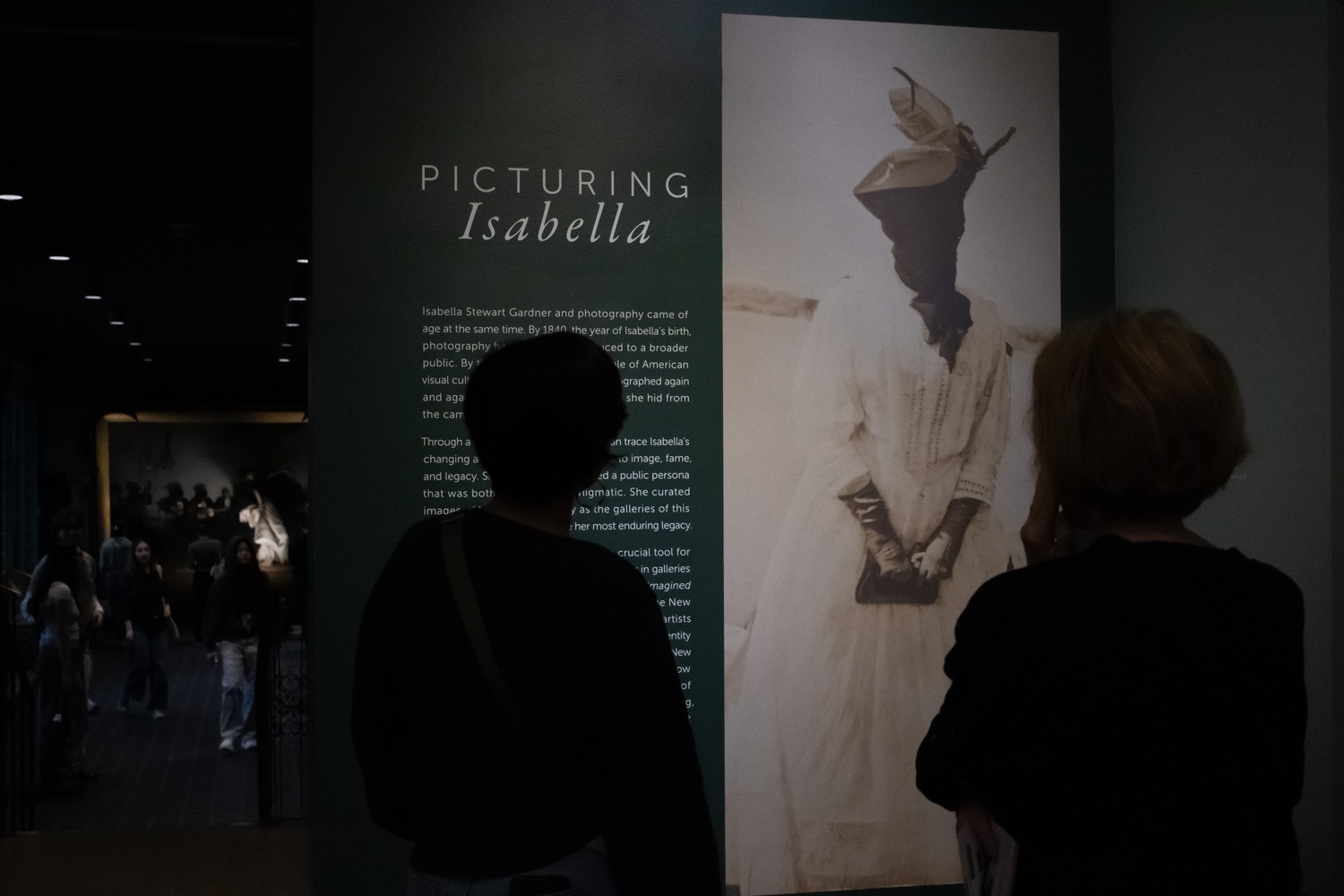
After working their way to the back corner of the Isabella Stewart Gardner Museum’s first floor galleries, visitors can view the “Picturing Isabella” gallery.
The gallery is part of the larger “Persona: Photography and the Re-Imagined Self” exhibit which can be seen in the Hostetter Gallery, located in the new wing of the museum. The photographs of Isabella Stewart Gardner are housed in the old museum wing, but the gallery space still has a very different aesthetic than the other rooms visitors may wander through.
The gallery’s purpose is to display the sparse photographs taken of the museum’s visionary creator Gardner, providing intimate glimpses into her life. These images range from family portraits and staged photographs to candid pictures from her travels and snippets of news articles written about her.
Because Gardner's life coincided with the evolution of photography, the gallery serves as a timeline for innovations in the field, as well as a progression of what she wished her public image to be.
The earliest photos of Gardner encompass her years spent as a teenager, newlywed, and young mother. Her veil, which would later become a staple of her wardrobe, is nowhere in sight. Following this set of pictures are a few candid photographs from her travels with her husband John “Jack” Gardner Jr., including one which was hand-colored. These snapshots portray the strength of her social life and connections, important for a wealthy woman in the 1800s.
A photograph of John Singer Sargent’s painting of Gardner is included in the gallery, with the original on display on the third floor. Gardner commissioned not only the painting, but the photograph as well, the latter of which she had copied and distributed to her friends. These images come before a change in her presentation to the public.
Detailed throughout the rest of the gallery, Gardner began to avoid the camera, turn her back, or wear a veil — a drastic change from her early years. The gallery ends with a picture from her funeral and a discussion of Gardner’s inability to control her image after her death. This extended to an altered image of her which appeared in the newspaper upon her death.
The curators debate Gardner’s motivation for avoiding the camera so extensively, but concede that this tendency resulted in her lasting legacy being the museum. In light of this, the exhibit would have benefited from incorporating Gardner’s eccentric aesthetic in the presentation of her photographs. Instead of the relatively bland display setup, the curators could have incorporated the design seen throughout the rest of the museum in the exhibition. Whether expressed through ornate frames (as opposed to their current thin black ones), or patterned wallpaper, there are many ways to emulate Gardner’s aura within the gallery.
Renowned for its Venetian Gothic Revival architecture, the majority of the Isabella Stewart Gardner Museum has vibrant wallpapers and intricate architecture within each room. These elements serve as a backdrop for the art and create the unique atmosphere of the museum. The “Picturing Isabella” gallery departs from this eclectic vibe, with green painted walls and typical museum feel.
Additionally, gallery descriptions and plaques beneath each work of art are notably lacking in the majority of the Isabella Stewart Gardner Museum, a key part of what makes it stand out from traditional museums. This curatorial decision was dictated by Gardner when she set up the museum. Therefore, the inclusion of such visible descriptions seems ironic when dealing directly with the persona of Gardner, although they do serve to inform visitors.
Some of these curatorial shortcomings could be attributed to limitations which come with using the special exhibit room, but the point of curation is to highlight the art no matter the environment it is placed in.
“Picturing Isabella” is a worthwhile visit for the unique light which it sheds on the curious Isabella Stewart Gardner as seen through photography; however, visitors may find it underwhelming in design. Considering that the exhibition is centered around highlighting the women responsible for such an intriguing museum, it lacks the eccentric and maximalist nature of Gardner.
The exhibit is on display in the Fenway Gallery from Feb. 19 to Jun. 21.
Want to keep up with breaking news? Subscribe to our email newsletter
Have a tip for The Crimson? Share it confidentially