After Narrow Win, Brownsberger Faces Calls for Change from Allston-Brighton
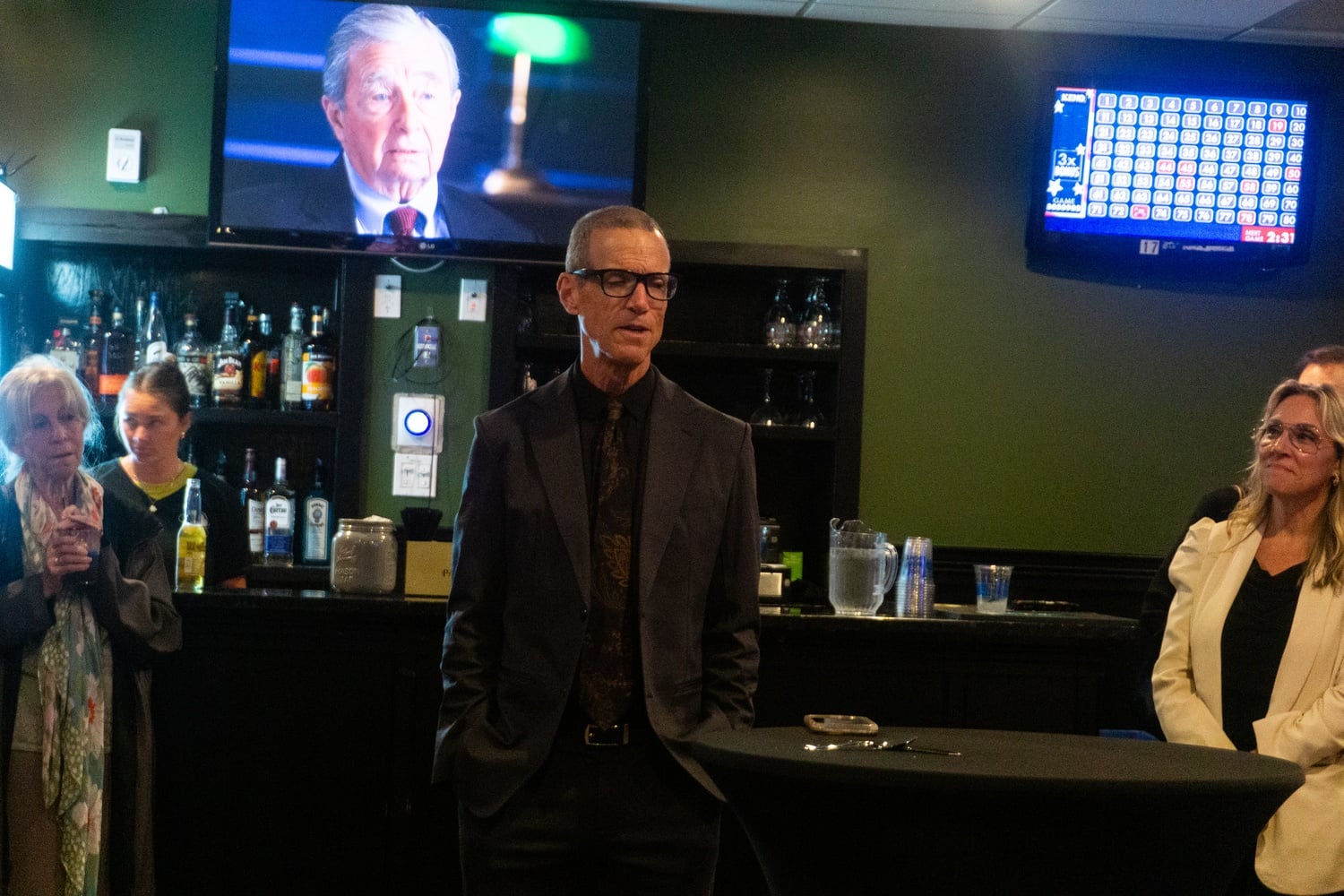
State Sen. William N. Brownsberger ’78 won the Democratic primary last week, narrowly defeating his first challenger in more than a decade — but in Allston-Brighton, where he lost by his widest margin, residents say the race has sparked debate over whether the neighborhood’s concerns are being heard.
Brownsberger has served in the Senate since 2012, and had not faced a contested election for his Senate seat since that year, when Daniel A. Lander ’14 threw his name in the race. And though Brownsberger won the Democratic primary by 35 votes, Lander carried three of the four municipalities in the district — even after the votes were recounted.
Brownsberger’s district covers part of Boston — including Allston-Brighton and Fenway — Belmont, Watertown, and parts of Cambridge. While Lander carried Boston, Watertown, and Cambridge, Brownsberger overwhelmingly won his hometown of Belmont, which ultimately pushed him 35 votes ahead.
Lander won Allston-Brighton by a 1,642-vote margin. After the primary, residents in Allston-Brighton said having a competitive election helped spur greater conversation around the issues facing the neighborhood.
Richard T. “Ricky” Meinke, a longtime resident and director for the Rat City Arts Festival in Allston, said that the neighborhood’s support for Lander was reflective of his priorities, which seemed to resonate with a renter-heavy voter base.
“The needs of Belmont are very different than the needs of the neighborhoods here in the city of Boston, and I think that was shown through the votes between both candidates,” Meinke said.
Lander and Brownsberger split on their strategy for tackling housing affordability — an issue many Allston-Brighton residents saw as a top priority. Lander had advocated for a more aggressive approach to lower the cost of housing, pushing for rent stabilization and passing the real estate transfer fee, both policies Brownsberger opposed during the campaign.
Meinke said he hoped Brownsberger’s narrow victory as a longtime incumbent would encourage him to act with more urgency.
“We need really bold solutions for the problems our neighborhood is facing, and you cannot solve that via status quo of the past or what has worked in previous years,” Meinke said.
Brownsberger wrote that it is “easy to talk about bold solutions,” but that the challenge is often in implementing them.
Get The Crimson in your inbox.
“It takes patience, diligence and hard work and that’s what I’ve demonstrated throughout my career and what I will continue to provide as a true public servant,” he wrote in a statement.
Cullen Deimer, a housing advocate with the Allston-Brighton Housing Action who voted for Brownsberger, said the results show that Brownsberger needs to better understand the needs of renters and homeowners in Allston-Brighton in his next term.
“I think it could benefit Will Brownsberger to host more policy-focused discussions with people in Allston and Brighton,” Deimer said. “I think housing was one issue that really stuck with people. They did not enjoy his housing policy and they enjoyed Dan Lander’s more.”
Scott Matalon, president of the Allston Village Main Streets, said he appreciated that both candidates talked about solutions to help small businesses stay in the area amid rising costs.
“Hearing candidates actually have this be an issue in their election is music to my ears because it means this has become important enough in their district to hit their radar,” Matalon said.
However, Matalon said that the ideas debated during the election now need to turn into legislation.
“These are good debates, but they got to be more than debates. They have to be backed by political will to actually do something,” Matalon added.
The race became increasingly contentious as Lander criticized Brownsberger, the third-highest ranking member of the state Senate, for failing to pass progressive policies — citing proposals to expand social housing, improve public transportation, and reform small business permitting processes that he said have stalled in the legislature.
Still, Brownsberger won about 39 percent of the votes cast for the two candidates in Allston-Brighton, and many residents who voted for him said they believed that he would be able to make more progress on getting legislation passed.
“What kind of clinched it for me was his record on safe streets, like bike safety and traffic cameras,” Deimer said. “I know it’s stuff that he’s been pushing through and has kind of taken the charge on that in the state house. So continuing to see efforts like that was really important to me.”
—Staff writer Thamini Vijeyasingam can be reached at [email protected]. Follow her on X @vijeyasingam.
—Staff writer Kevin Zhong can be reached at [email protected].
Want to keep up with breaking news? Subscribe to our email newsletter
Have a tip for The Crimson? Share it confidentially