Harvard School of Public Health Weighs Partnerships with CVS, United Healthcare, Tenet Amid Funding Uncertainty
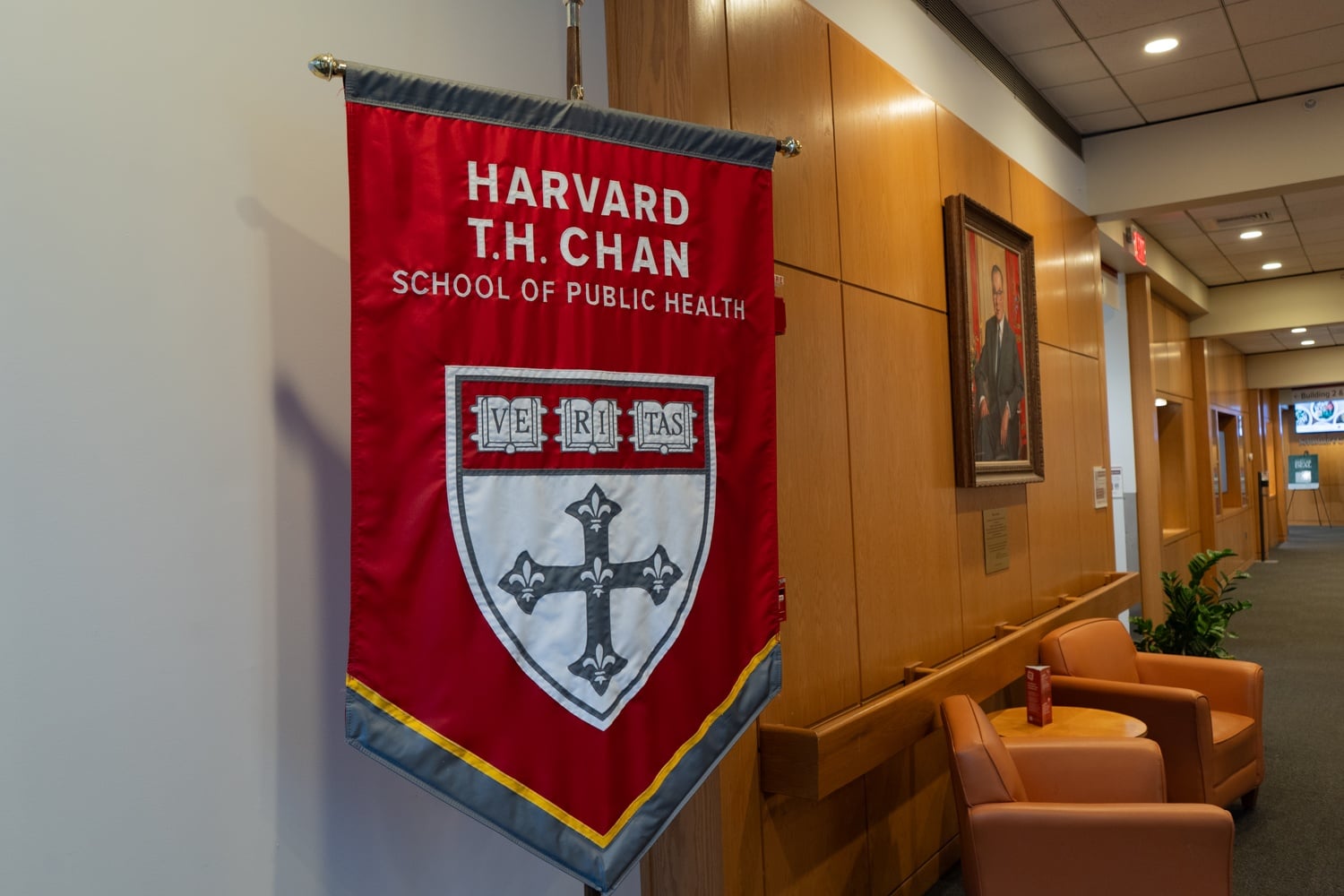
Harvard’s School of Public Health has privately weighed asking UnitedHealthcare, Tenet, and CVS Aetna to fund its research as it works to replace money lost to federal funding cuts, according to a person familiar with the matter.
The three companies emerged from the council’s brainstorming session as the most attractive candidates for a partnership given their size and budget, the person present for the discussion said. CVS Aetna was a particularly promising prospect, an HSPH affiliate told the council, because Troyen A. Brennan — an adjunct faculty member who joined HSPH in April 2022 after 14 years as chief medical officer and executive vice president at CVS Health — could help broker a relationship with the company.
Two other people confirmed the council has brainstormed corporate partnerships in recent meetings but did not specify which companies it landed on.
It is not new for Harvard schools engaged in scientific research to seek industry sponsors. Harvard Medical School diversified its research funding pipelines in 2021, pursuing partnerships with biopharmaceutical companies. HMS Dean George Q. Daley ’82 defended the move in a 2024 interview, citing stagnant National Institutes of Health grant funding relative to inflation.
In 2018, Aetna contracted with HSPH researchers to study employee well-being data — a partnership that faculty members said Aetna paid “millions of dollars” for at the time. The same year, HSPH and Harvard’s Office for Sustainability partnered with Google to analyze the health effects of toxic chemicals used in construction projects.
But the school’s funding picture shifted sharply last year after the Trump administration cut off nearly $2.7 billion in Harvard’s research grants. HSPH — which relied on private and federal sponsors for 59 percent of its operating budget in fiscal year 2025 — was hit particularly hard.
Last spring, the school cut budgets across its departments, laid off staff and researchers whose projects lost funding, and slashed Ph.D. admissions in several programs. The Biostatistics department, which lost out on a large NIH grant midway through the review process, halved its number of admitted students for the cycle.
At the time, then-HSPH spokesperson Stephanie Simon wrote in a statement that the school faced a “significant budget crisis” and that its research operations were “seriously jeopardized.”
HSPH spokesperson Todd Datz referred The Crimson to a June 2025 message from HSPH Dean Andrea A. Baccarelli where Baccarelli said that the school was “ramping up targeted outreach to potential corporate partners.” Datz wrote in a statement that the November council meeting was “an opportunity to build on that strategy.”
Datz declined to comment on the three companies under consideration by the council. Meredith B. Rosenthal, who chairs the Health Policy and Management department, did not respond to a request for comment.
Get The Crimson in your inbox.
Members of the council — a group of around 25 lawyers, doctors, and health care executives — were joined at the November meeting by Rosenthal and the department’s Director of Administration Julia B. Deland, according to the person in the room.
The council heard presentations from HSPH professors and then spent a significant portion of the meeting weighing possible corporate sponsors, according to the person. One attendee raised concerns about compromising academic integrity by tying Harvard to corporate interests. The council has not been updated on whether partnerships with any of the three companies materialized, the person added.
The council was instructed not to speak with The Crimson, according to a Wednesday afternoon email sent to members. The email, written by Rosenthal and circulated by staff assistant Deb Hollett, told council members to refer reporters to HSPH spokesperson Todd Datz to “coordinate any response.”
The funding shortfall is prompting a strategic rethink across the school.
The school launched a strategic planning process last December to reevaluate its priorities, and at a retreat this March, school officials discussed reconfiguring the school’s 16 master’s programs to better fit demand and research strengths.
Harvard’s financial landscape is less dire than it was a year ago. Federal grants returned in fits and starts after a district court judge ruled the Trump administration’s funding cuts were unconstitutional.
The government has since sought new ways to make Harvard suffer financially. This spring, the Department of Justice tried to claw back nearly $1 billion in federal funds disbursed to the University during what it alleged was a period of “deliberate indifference” to campus antisemitism.
Benjamin Sommers, an HSPH policy professor, said the dismantling of the Agency for Healthcare Research and Quality and the federal funding cuts have forced HSPH’s hand.
“With any kind of industry funding, it’s obviously really important to make sure the research is rigorous and that conflicts of interest are transparently shared and managed appropriately,” Sommers wrote. “But the alternative is to simply not conduct much of this research at all, given the federal changes, and I don’t think would be good for the country, for the health care system, or for the school.”
—Staff writer Hugo C. Chiasson can be reached at [email protected] or on Signal at hcc.35. Follow him on X @HugoChiassonn.
—Staff writer Elise A. Spenner can be reached at [email protected] or on Signal at elisespenner.82. Follow her on X @EliseSpenner.
—Staff writer Riya S. Shah can be reached at [email protected] and on Signal at riyas.23. Follow her on X @RiyaShah233.
Want to keep up with breaking news? Subscribe to our email newsletter
Have a tip for The Crimson? Share it confidentially