Harvard Astronomers to Lead NASA-Funded Research on New Roman Space Telescope
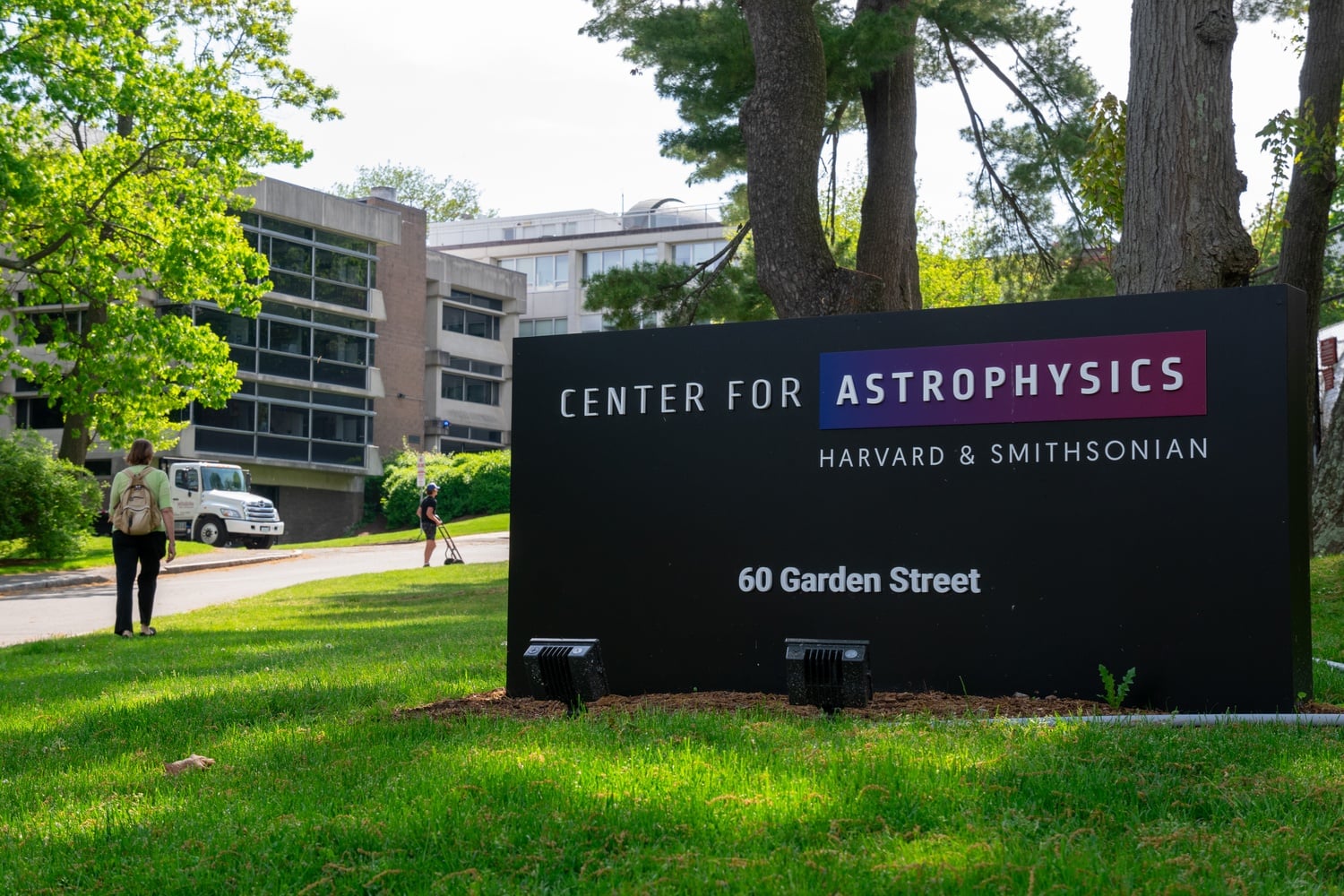
Four principal investigators at the Harvard-Smithsonian Center for Astrophysics won NASA funding to study data from the Nancy Grace Roman Space Telescope, the agency’s newest flagship observatory, which launched in August to survey wide swaths of the sky.
Several other CfA scientists will help lead or support the projects, which were among 118 selected from 374 proposals in the first cycle of Roman’s General Investigator Program, a peer-reviewed competition in which astronomers apply for NASA support to conduct research associated with the telescope.
The program, run by the Roman Science Support Center at Caltech’s Infrared Processing and Analysis Center, primarily funds analysis of Roman data, as well as related theoretical and laboratory work. Only six of the selected projects will direct the telescope to make new observations.
“There was a small bucket for new observations and a bigger bucket, which we applied to for funding to perform analysis with all the data that’s already going to be coming from Roman,” said Rodrigo C. Rosado ’19, a postdoctoral fellow at the CfA.
Cycle I covers Roman’s first year of operations, and the Roman Science Support Center plans to hold a new round of the competition each year of the telescope’s planned five-year mission.
Because Roman’s data will not have a proprietary period, the awards do not grant researchers exclusive access to it.
“All of the data from Roman will be made publicly available basically immediately,” CfA astronomer Anya E. Nugent said. “What we have received is funding to be able to do the research.”
CfA astronomer Kevin J. Napier said Roman will complete in a year and a half a survey that would take the Hubble Space Telescope — which NASA launched in 1990 — 150 years from the same position.
“When you can see more of the sky, you just find more stuff,” Napier said.
Get The Crimson in your inbox.
Córdova Rosado’s team will search Roman’s images for strong gravitational lenses, which occur when the gravity of foreground galaxies magnify and distort the light of galaxies behind them.
Paired with follow-up measurements from observatories in Hawaii and Chile, a subset of these lenses can reveal how fast the universe is expanding.
According to Córdova Rosado, that rate could help scientists understand dark energy, which is thought to make up about 70 percent of the universe’s energy density.
Nugent plans to combine Roman’s near-infrared observations with visible-light data from the Vera C. Rubin Observatory to study the galaxies where supernovae and other cosmic explosions occur.
She said she wrote the proposal with her advisor, Harvard Astronomy professor V. Ashley Villar, after the two noticed a gap in Roman’s research plans.
“Looking through the Roman documentation, it didn’t seem like they had a lot of efforts in that area, specifically to do host galaxy science,” she said.
With the grant, the pair hope to hire a student and build a publicly available web server.
Córdova Rosado said the Roman money will support his team and cover hiring, conference travel, and publication costs.
He expressed excitement at the potential discoveries that could arise from pursuing fundamental questions about the nature of the universe.
“You never know what those fundamental questions might produce,” he said.
—Staff writer Francesco Palma can be reached at [email protected].
Want to keep up with breaking news? Subscribe to our email newsletter
Have a tip for The Crimson? Share it confidentially