At Harvard Symposium, Admissions Officers Detail Push to Recruit Rural Students
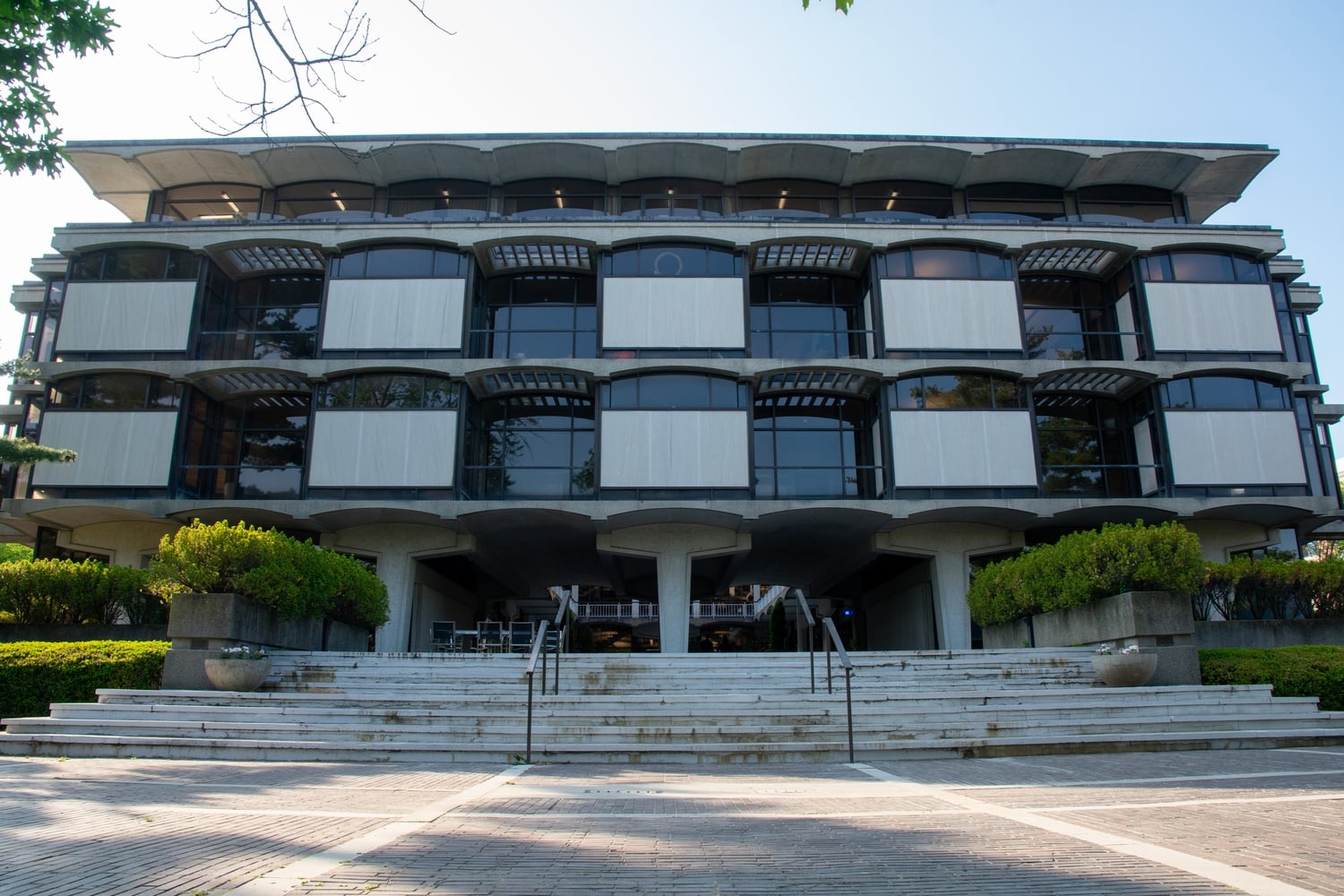
Harvard admissions officers described the College’s efforts to recruit and support rural students at a panel on Saturday, alongside leaders of two intercollegiate networks that aim to bring more small-town students to selective colleges.
The panel, part of a Harvard-hosted symposium on rural health, education, and economics, featured leaders of the Small town Outreach Recruitment and Yield consortium, which Harvard joined in 2023, and the Small Town and Rural Students College Network. Harvard is not a member of STARS.
Harvard College Director of Admissions Joy St. John, who introduced the panel, cited national data showing that although rural students graduate from high school at higher rates, those graduates are about half as likely as their urban peers to attend and graduate from a selective college.
“We’re here today to talk about what selective colleges have been doing and can do to expand higher education opportunities for rural students,” St. John said.
Ian W. McLean, an assistant director of recruitment in the Harvard College Office of Admissions and Financial Aid, called the growth of the Harvard Undergraduate Rural League, a student group founded in 2024, one of the biggest highlights of his time at Harvard.
McLean said he met HURL members at an Arkansas club gathering during his first year, and the admissions office later brought the group into its yield programming. This past year, he said, HURL volunteers led admitted students on tours of campus and Harvard Square and talked about their experience transitioning from a rural area to an Ivy League. The office also connected admitted rural students with current ones before they visited.
“We’ve been able to connect admitted students with current students that are coming from rural or small towns who are interested in speaking about those experiences prior to them even visiting campus, which has been very powerful,” he said.
McLean, who grew up in Woodway, Texas, previously led rural outreach at Columbia University and Northwestern University through STARS and helped implement Harvard’s recent partnership with Questbridge, a college-match program for high-achieving, low-income students, St. John said.
McLean, who works with student recruitment ambassadors, said the admissions office still runs its Hometown Recruitment Program, in which about 20 undergraduate ambassadors return to their hometowns during the winter and spring terms to talk to high schoolers about Harvard.
Last year, Harvard quietly replaced its Undergraduate Minority Recruitment Program, which matched minority students with ambassadors who shared their identity, with the identity-neutral Recruitment Ambassador Program, disappointing former UMRP recruiters.
Get The Crimson in your inbox.
A former ambassador said trips the office once planned and funded are now organized and paid for by recruiters themselves.
Admissions data for the Class of 2029 shows that 53 percent of admitted students come from three regions: New England, the Middle Atlantic, and the Pacific. Ten percent of admits were from the Midwest, and 2 and 3 percent were from the Central and Mountain regions, respectively.
Emily Staros, an assistant director of admissions and rural recruitment for the Cornell College of Engineering, said STORY began in 2023, when five schools came together to figure out how to recruit in person from rural areas. More than 30 institutions joined its first round of rural college fairs that fall, and that consortium has since added virtual information sessions.
“For a lot of them,” she said, “that’s the first time they’re exposed to this concept of a rural identity too. I know, as a rural student myself, I didn’t know that was a part of who I was until years into my college experience.”
Marjorie Betley, the executive director of STARS and a deputy director of admissions at the University of Chicago, said many of the admissions officers involved in the two networks come from rural and small-town backgrounds themselves.
“We get to be that person we wish that we had had,” she said.
STARS grew out of a University of Chicago program started in the 1960 to bring students from Midwestern farm communities to campus, about 80 percent of whom dropped out within two years, Betley said.
In 2018, a donor learned that only about 3 percent of UChicago students came from rural or small-town backgrounds and funded free on-campus programs for middle and high schoolers.
Once that share reached about 10 percent of the incoming class, the donor asked the university to scale the effort. STARS launched in 2023 and now has 32 member colleges.
In 2023, Assistant Dean of Culture and Community Alta Mauro, who chaired the symposium, launched an Ivy Plus collaborative for administrators in similar roles
“There was an opportunity there for Harvard to lead in that conversation and to pull resources together and say, ‘let’s figure out what the issues are, what resources and structures we have already to support these students, and then what would we need to build, sharpen, deepen, expand on,” she said in an interview.
Mauro credited the founding of HURL in 2024 with sparking more conversation about rural students. Harvard President Alan M. Garber ’76 awarded HURL leaders a grant from the President’s Building Bridges Fund to host a forum on rurality in April, and Mauro said its success built support for the symposium.
In a Friday interview, Justin J. Black ’27 said that the shortage of rural admits is part of the reason for the University’s declining credibility in middle America and that convincing rural students to apply is only the first step.
“It’s also on the admissions front doing a better job of looking at the context of rural schools, and understanding that a rural applicant is not going to have access to maybe a national laboratory three miles from them by virtue of living in Boston,” he said.
“There needs to be more of an effort on contextualizing rural applicants, and there certainly needs to be more of an effort on getting them to apply in the first place,” Black added.
—Staff writer Alexa M. Schmitt can be reached at [email protected] or Signal at alexaschmitt.15. Follow her on X @alexa_m15_s.
Want to keep up with breaking news? Subscribe to our email newsletter
Have a tip for The Crimson? Share it confidentially