Class of 1963

Fifty Years Old, And Still A Campus Art Hub
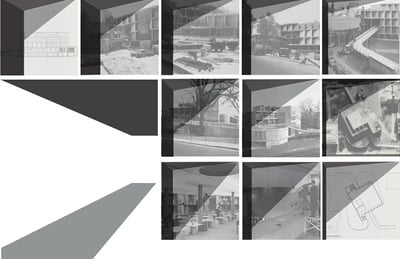
In 1963, the Carpenter Center for the Visual Arts opened to provide a home for Harvard’s student and faculty artists. The Carpenter Center, modern architecture pioneer Le Corbusier’s first and only North American structure, was and remains the official home of the Department of Visual and Environmental Studies.
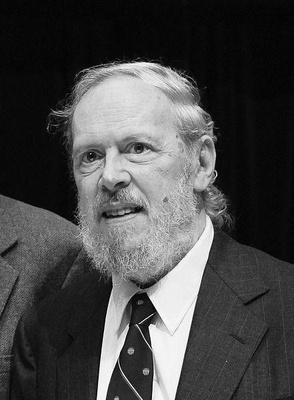
Dennis Ritchie '63, The Man Behind Your Technology
Ritchie would rewrite the world of procedural languages during his career at Bell Labs, which began as a doctoral student at Harvard in 1967 and ended with his retirement in 2007. In the Washington Post’s memorial piece of Ritchie, Paul E. Ceruzzi, a Smithsonian historian, compared Ritchie’s life to that of Apple co-founder Steve Jobs, whose death—which came seven days before Ritchie’s—was highly publicized.
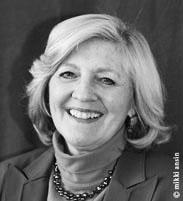
Journalist Ellen Goodman '63, Frequent Recounter of 'Cliffe
Goodman, who would graduate from Radcliffe and enter the workforce during a time of political and social change, came to write extensively about these inequalities and the position of women in society during her career in journalism. A Pulitzer Prize winning columnist, Goodman continues what she describes as maintaining about gender relations in culture in retirement.
At 'Cliffe And Graduate Schools, First Female Grads Blazed Trails
Betty Diener and many of her peers at graduate schools at the time say it was too early and their numbers too few to overcome or challenge the hegemony of the male-dominated academic community. The carefully selected and amply qualified first guard of women entering the graduate schools, however, did not view themselves at the time as feminist pioneers, instead focused on their own studies and success.
Frosh of Class of 1963, Guinea-Pigs For The First Freshmen Seminars
Incoming students in the fall of 1959—the Class of 1963—could apply to be placed in one of about 20 seminars offered that year, when the “Freshman Seminar Program” was first coined. These small-sized classes initially drew criticism from faculty and students but drove an innovative change in the focus and direction of the traditional Harvard education that has since remained a staple of the Harvard undergraduate experience.
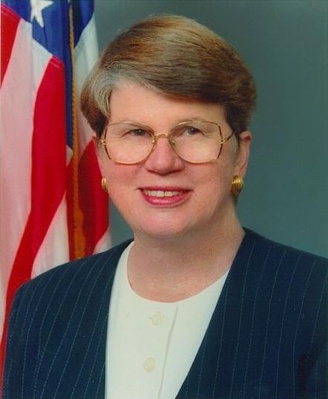
Janet Reno, J.D. '63, And Her Long Path From Cambridge to The Capitol
When Reno was a student at the Law School, there was only one women’s bathroom on the campus, found in the basement of Austin Hall. Professor W. Barton Leach ’21, who joined the Law School faculty in 1929, did not allow women to speak in class, saying their voices “were not powerful enough to be heard,” according to Charles Nesson, a former classmate of Reno’s, quoted in Anderson’s biography.
In Early 1960's, Experiments With Hallucinogenics Caused Major Uproar, Minor Shake-up
During the early 1960’s, the administration of hallucinogenic drugs to students by lecturer Timothy F. Leary and assistant professor Richard Alpert, now known as Ram Dass, garnered national media attention. While the administration of LSD to graduate students did not violate University policy or state or federal law at the time, members of the Center for Research in Personality—the department in which Leary worked—disputed Dass and Leary’s right to continue experiments with psilobycin, a drug that creates a similar hallucinogenic experience to that created by LSD.
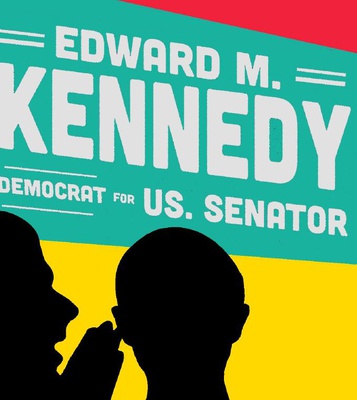
Ted Kennedy '54-'56 Went To The Senate In 1962, But Not With Harvard's Support
On the morning of Wednesday, November 7, 1962, one might have expected the Editorial Board of The Harvard Crimson to strike a celebratory tone. It did not. The night before, Edward M. “Ted” Kennedy ‘54-’56 had been elected to the U.S. Senate, and though it had supported the ascension of President John F. Kennedy ‘40, the Editorial Board was not at all happy to see youngest Kennedy brother bound for Capitol Hill.
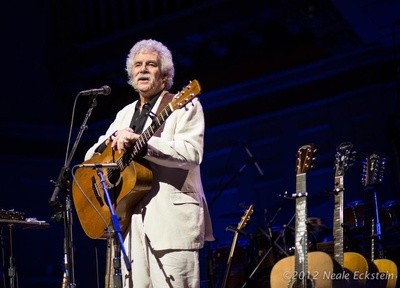
Classes In The Yard By Day, Music In The Square By Night: Tom Rush '63
It started with a ukulele. Tom Rush ’63-64 was ten when his cousin Beau taught him how to play. Rush says that his prior five years of piano lessons had been torture, but on the ukulele, he had fun. Soon, Rush graduated to the baritone ukulele, an instrument that “felt pretty manly” compared to its predecessor, and before long he was strumming a guitar.
In 1963, Early Roots Of Blossoming Civil Rights Movement
Inside and outside the gates of Harvard Yard, students responded to the emerging Civil Rights Movement. While some remember campus as an insular community that looked at the movement from afar, many black students within the school worked to create a sense of community, and individual and group efforts among both the student body and the administration emerged to support racial equality through activism at Harvard, in the local Cambridge and Boston area, and in the South.
Most Read Articles
- 2
- 3
- 4
- 5
OUR LATEST PRINT EDITION
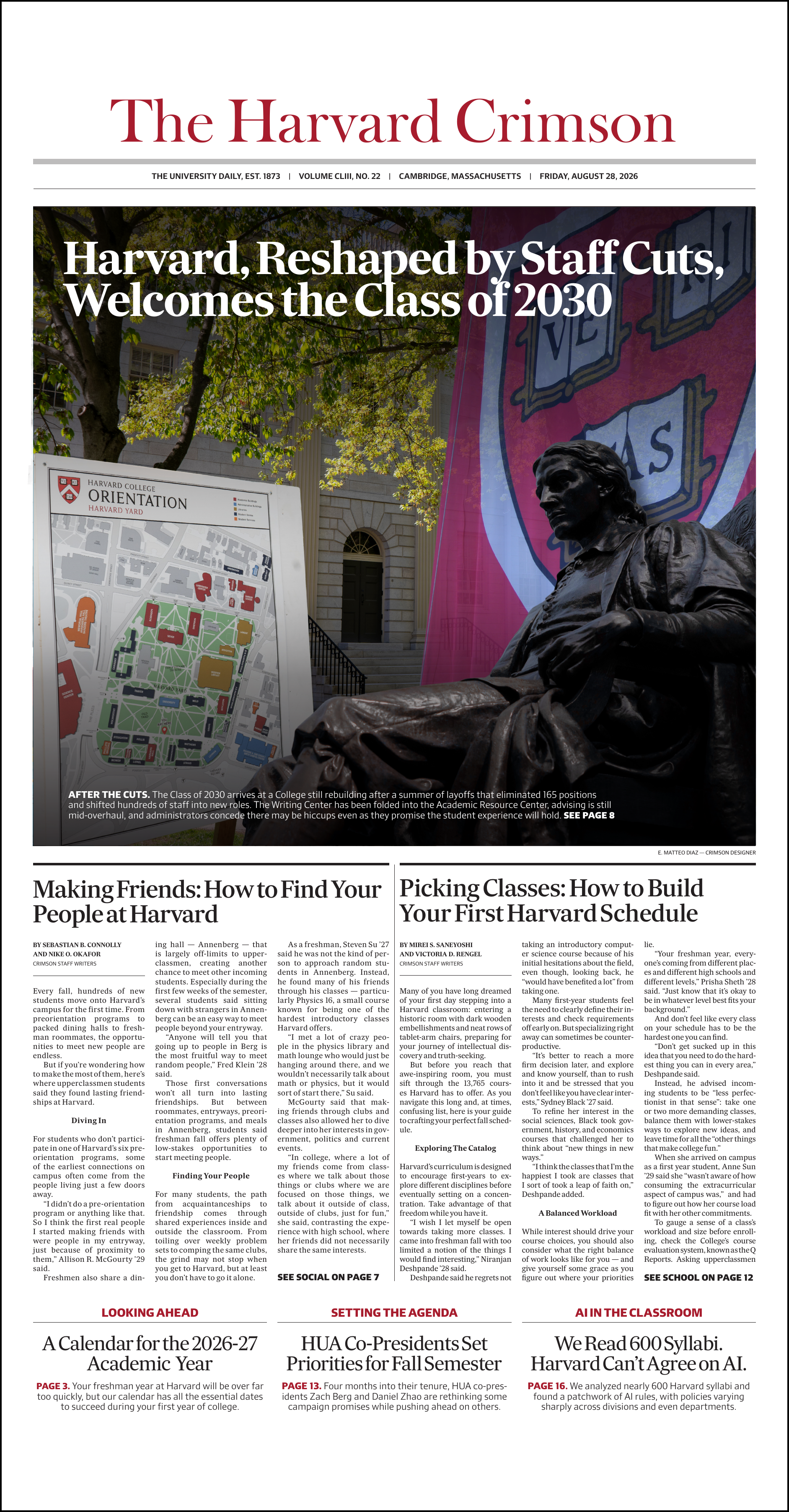
Fresh off the press every Friday, with special issues throughout the year. Want a copy? Find one near you. Want it delivered to your doorstep? Sign up.
The Harvard Crimson
Original reporting and exclusive scoops from Harvard and Cambridge — delivered straight to your inbox. Subscribe today.