HUA Bars Funding for Board Retreats, Tightens Outside Donation Rules
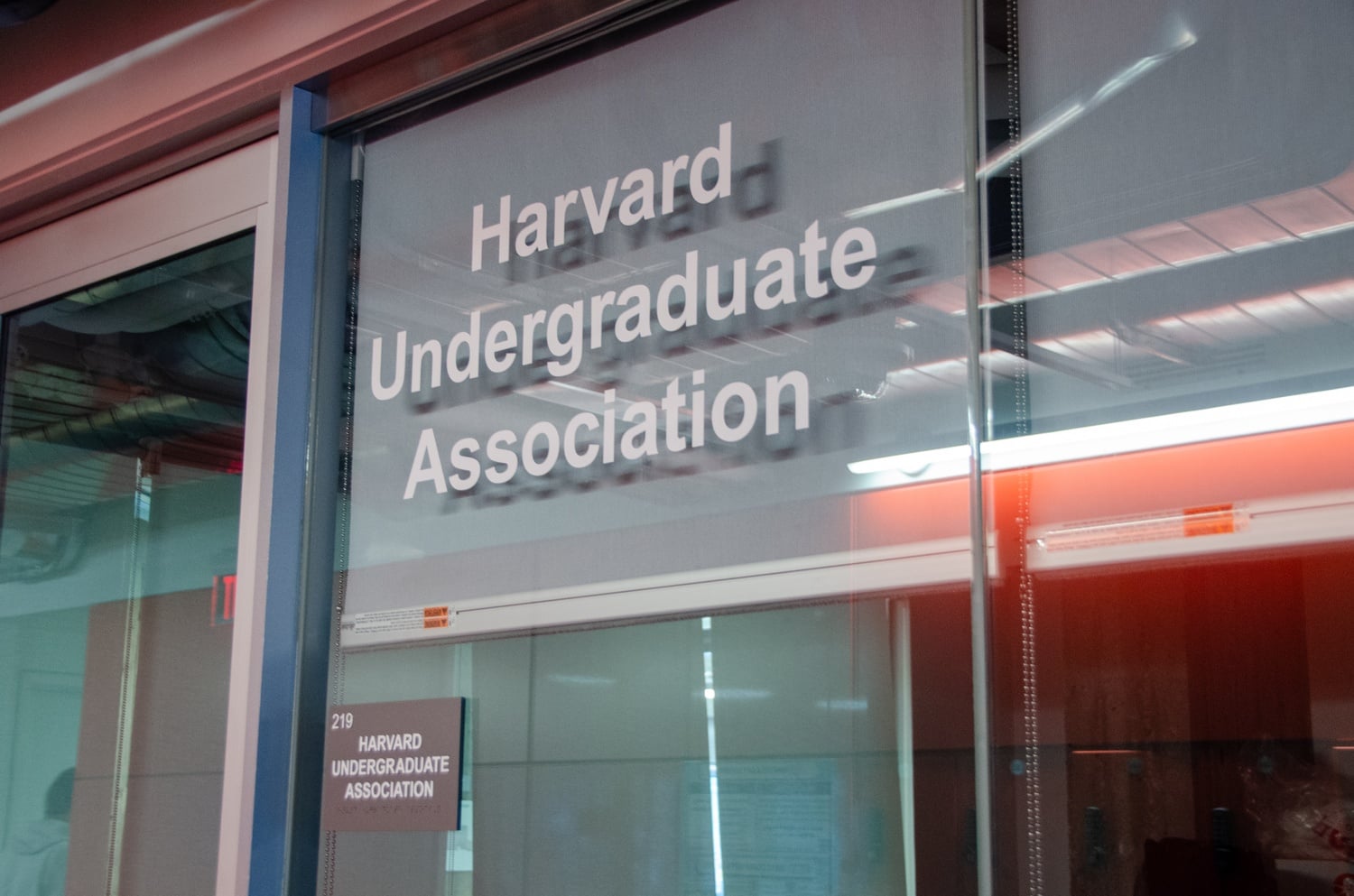
The Harvard Undergraduate Association will no longer fund club board retreats and has tightened its rules on outside donations in a bid to direct grant money toward “underfunded and resource-constrained organizations,” according to updated financial guidelines.
HUA Co-Treasurers Jake A. Marino ’29 and Polina Krumkachev ’29 said the changes, announced Wednesday, were meant to close existing loopholes in the grant process and distribute funding more equitably. The HUA Finance Team approved the guidelines — the fourth edition of the document — in an 8-0 vote on Sept. 7, the document stated.
The changes come as Harvard College nearly doubled its spending on student activities this year, after converting the Student Activities Fee from an optional $200 payment into a mandatory $450 charge. The HUA’s share of the $2.3 million pool has not been made public, and the College’s allocation hearings are scheduled to begin Sept. 18.
A new clause bars the HUA from funding board retreats, which the guidelines describe as “non-essential expenses.” The HUA funded up to $200 per club for retreats last year.
Marino and Krumkachev said the change shifts club funding toward “general membership” instead of executive boards. Under the guidelines, the Finance Team has the discretion to decide whether an expense qualifies as a board retreat “based on its purpose, structure, and intended use.”
The treasurers also rewrote how the HUA accounts for outside donations. Previously, the HUA subtracted a club’s external funding from expenses it had already deemed ineligible — such as alcohol or hotel rooms — leaving the club’s eligible request untouched. Now outside donations are deducted from eligible expenses, reducing the amount a club can receive from the HUA.
Marino and Krumkachev called the old system a loophole exploited by clubs that receive “large amounts” of external funding.
“Clubs with large amounts of external funding could, and have, intentionally applied for thousands of dollars of ineligible funding that they did not plan on using, in order for their outside funding to not subtract from the eligible funding that they plan on using,” they wrote. “We have adjusted our review process in response, in order to ensure larger clubs still receive some portion of funding.”
The pair also restricted access to the funding application, which in past years was open to anyone with the link. Marino and Krumkachev built a separate HUA Finance website that houses the application behind a login limited to Harvard accounts and doubles as a “resource” guide for clubs.
“Last year and in previous years, anyone across any corner of the world could technically apply for HUA funding,” Marino said. “Now they’re all protected by a password-protected wall on the website that requires a college.harvard.edu password or email.”
Get The Crimson in your inbox.
Several other changes appear aimed at the funding delays that have dogged the HUA for years. Applications for the fall cycle opened Saturday, six days earlier than last year, when they opened Sept. 18. But the guidelines also widened the window for funding decisions to “2-3 weeks” after the application deadline, instead of the two-week turnaround outlined in last year’s document.
The HUA will also no longer accept donations sent over Venmo — a practice discontinued last year by then-Co-Treasurers Daniel Zhao ’28 and Rachel Fields ’27. Zhao, now an HUA co-president, and Fields hoped dropping Venmo would reduce delays, but the shift to the Harvard Federal Credit Union’s internal transfer system led to continued slowdowns.
Zhao pledged during an April campaign debate to move the HUA to “modern financial infrastructure.” But the updated guidelines indicate the Finance Team will continue to distribute club funding through the HFCU.
Zhao wrote in a later statement that he and Berg wanted to “give our executive officers autonomy,” adding that he is “super confident” in Krumkachev and Marino’s handling of the HUA’s finances.
Marino and Krumkachev wrote in a later statement that they would also focus on aiding traditionally underfunded clubs, including club sports and affinity groups. The guidelines do not spell out how the Finance Team will identify those groups, but the treasurers said at Sunday’s general meeting that such clubs would be their priority.
“We’re going to be focusing on affinity groups and other underfunded clubs as the main avenue where we direct our funding to,” Marino said.
“We felt that they weren’t explicitly written in the clauses enough,” Krumachev added. “That’s where a main point of attention will be this semester and this year.”
Tobias Elbs ’27, a former HUA co-treasurer, said eliminating retreat funding had been under discussion during his own tenure but never came to fruition.
“I think it’s a good step, given that it’s still – to my understanding – still unclear on how much there will be in the budget for this year from the Student Activities Fee,” he said.
Fall grant applications for student organizations will close on September 24.
—Staff writer Alma T. Barak can be reached at [email protected] and on Signal at almabk.54. Follow her on X @almabk_.
—Staff writer Theresa F. Bartelme can be reached at [email protected] and on Signal at theresabartelme.15. Follow her on X @theresabartelme.
Want to keep up with breaking news? Subscribe to our email newsletter
Have a tip for The Crimson? Share it confidentially