Man Convicted in 2009 Kirkland House Murder Asks for Parole After 14 Years in Prison
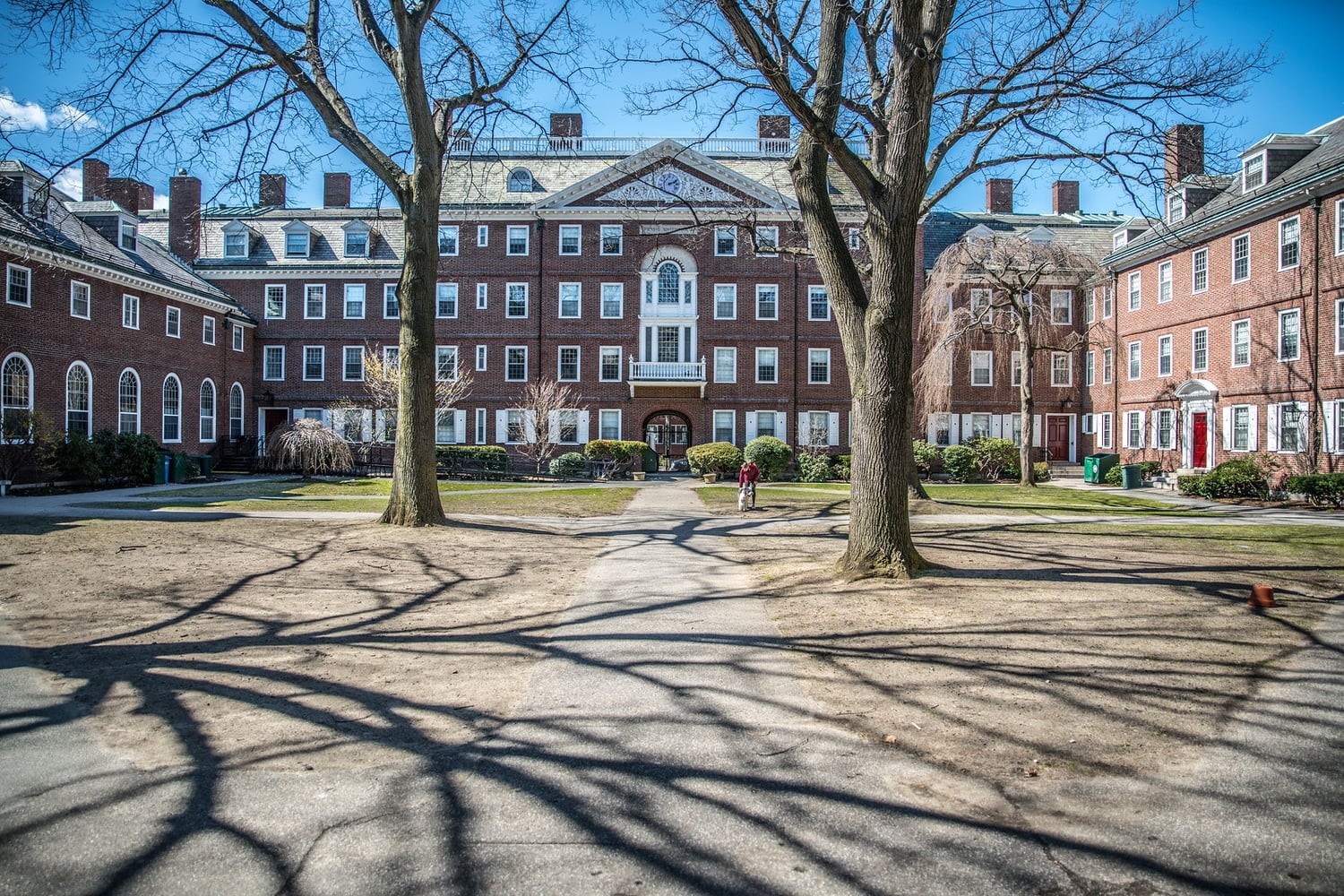
Jabrai J. Copney, who was convicted for fatally shooting Justin D. C. D. Cosby in the basement of Kirkland House in 2009, appeared publicly in court for the first time in nearly 12 years at a parole hearing Thursday.
A verdict was not reached on Thursday, but 11 friends and family of both Copney and Cosby testified at the hearing. The Massachusetts Parole Board is expected to reach a verdict in four to six months.
Copney was charged with first-degree murder in May 2009 and sentenced to life in prison without the possibility of parole in April 2011 — the mandatory sentence for a first-degree murder conviction.
Copney and two other men — none of whom were affiliated with Harvard — lured Cosby into the basement of Kirkland House, intending to rob him of marijuana at gunpoint. After Cosby attempted to flee, Copney fired three shots. One bullet hit Cosby in the abdomen, and he died the next morning.
First-degree murder charges in Massachusetts have historically carried an automatic life sentence without parole, though a landmark 2024 Supreme Judicial Court case opened the door for Copney to challenge his sentence after a state judge refused to grant his appeal in 2014.
The SJC ruled that adults who were sentenced to life in prison under the age of 21 cannot be sentenced to life without the possibility of parole, writing that doing so constituted a cruel and unusual punishment. The ruling included a provision that any adult who was sentenced to life without parole younger than 21-years-old and had served at least 15 years could be considered for parole.
Copney, along with hundreds of others, became eligible for a parole hearing as a result. But parole hearings meant to come in the wake of the ruling have been delayed for years.
Copney and six other prisoners filed a lawsuit over the delays in February 2025. The suit names Governor Maura T. Healey ’92, Secretary of the Executive Office of Public Safety and Security Terrence Reidy, Parole Board Chair Tina Hurley, and the members of the state Parole Board.
Copney became eligible for parole in 2024, according to the lawsuit, but did not appear for a hearing until Thursday. Matthew J. Koes, who represented Copney in the lawsuit, did not respond to a request for comment on the ongoing litigation.
In his first statement since his 2014 appeal, Copney — after serving 14 years in prison — said Thursday that he has taken active steps to change and reflect on his crime, adding that Cosby “did not deserve to die.” Copney said he had no intention to take Cosby’s life, but “the situation just got extremely out of control.”
Get The Crimson in your inbox.
Cosby’s friends and family placed framed photos of him on the stand before sharing their impact statements, appearing visibly emotional throughout the testimonies.
“He had a smile that would light up a room,” his mother, B. Denise Cosby, said at the hearing.
“My son is serving a lifetime sentence in his grave,” she added.
Cosby’s family and friends urged the Parole Board to sentence Copney to life without parole during his initial trial, and many — including Cosby’s sister, uncle, and prosecutors of the original case — appeared Thursday to strongly oppose his possible release on parole.
Amy M. Belger, the lawyer representing Copney in his parole hearing, did not respond to a request for comment.
The two men who assisted Copney in luring Cosby into Kirkland House — Jason F. Aquino and Blayn Jiggetts — were also both initially sentenced to first-degree murder, but later agreed to plead guilty to manslaughter in exchange for reduced sentences. Aquino was sentenced to 18 to 20 years in prison, and Jiggetts was sentenced to nine to 12 years.
Months before the Kirkland House shooting, the three had been involved in a similar incident in New York City, robbing two Yale undergraduates at gunpoint for marijuana in 2008. Copney had met the students in Cambridge in late November and arranged the drug deal shortly after, intending to rob them, according to a memorandum filed in Cosby’s case by the Middlesex District Attorney’s Office.
Those who testified at the Thursday hearing referenced the robbery repeatedly, arguing it showed that Copney had premeditated Cosby’s shooting.
Copney was tied to the College through former Harvard student Brittany J. Smith, his then-girlfriend, who hid the gun after the shooting and lied to investigators about her involvement. Smith was charged as an accessory to the murder and sentenced to three years in prison and two years of probation. She was dismissed from the College weeks before her graduation due to her connection to the crime.
Denise Cosby, his mother, sued Harvard for negligence in 2012, arguing that the University allowed Copney to live in Lowell House with Smith for months before he murdered Cosby. The case was dismissed in 2013, after Harvard’s lawyers argued the University had no obligation to protect Cosby because he was not an affiliate.
—Staff writer Megan L. Blonigen can be reached at [email protected] and on Signal at megblon.50. Follow her on X at @MeganBlonigen.
—Staff writer Shawn A. Boehmer can be reached at [email protected] and on Signal at shawnb.18. Follow him on X @ShawnBoehmer.
—Staff writer Claire A. Michal can be reached at [email protected] and on Signal at ClaireMichal.154.
Want to keep up with breaking news? Subscribe to our email newsletter
Have a tip for The Crimson? Share it confidentially