Harvard Can’t Shut Out the Homeless
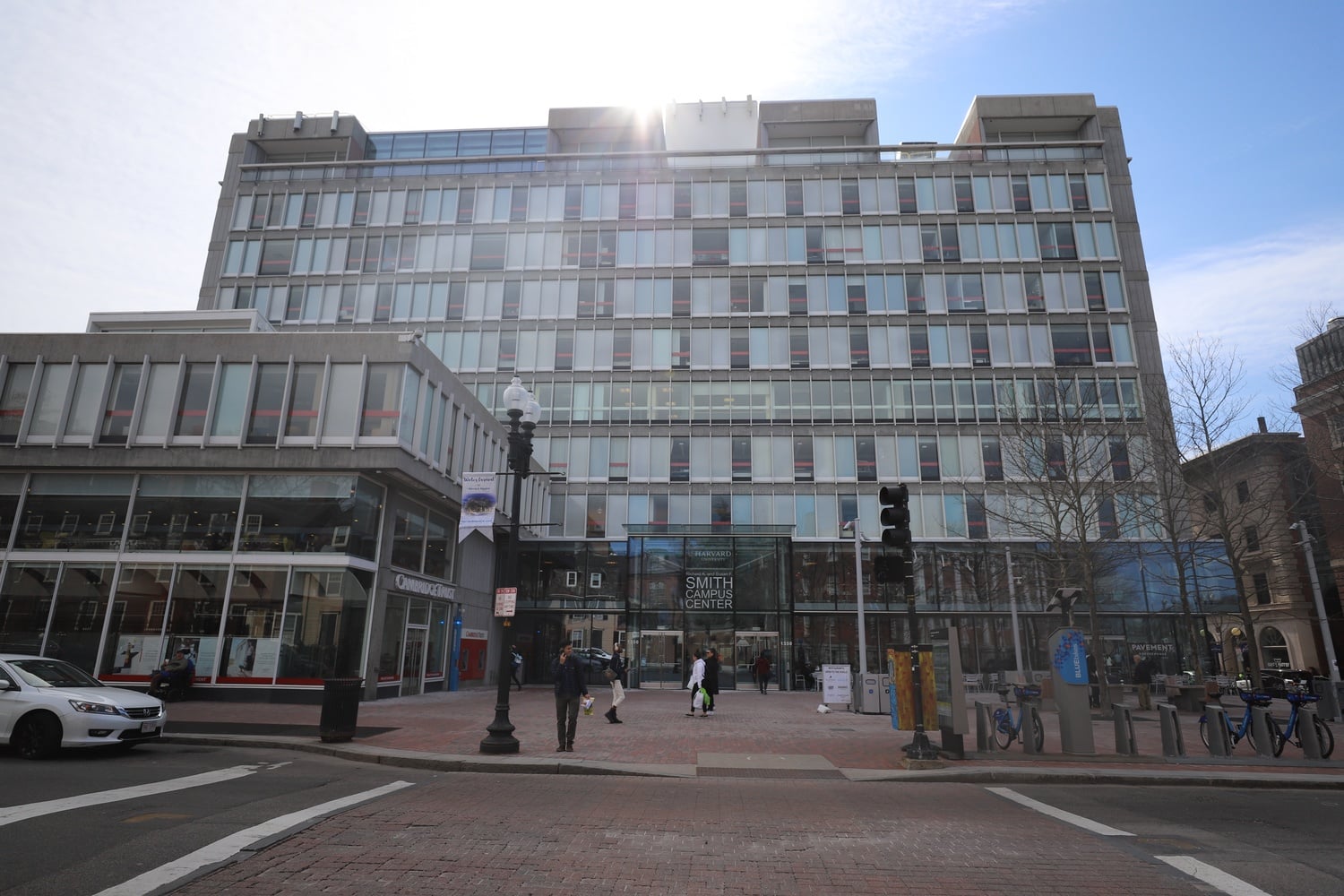
Harvard is throwing out the welcome mat at the Smith Campus Center.
Building staff at the Smith Campus Center have begun tying tables and chairs together and prohibiting access to the plaza outside the building from midnight to 7 a.m. Those most affected are our neighbors with the fewest other places to go: Cambridge’s homeless residents.
More broadly, HUPD incidents at the Smith Center have risen sharply over the past two years, with officers logging a record 107 incidents involving an “unwanted” person, alleged trespassing, or disorderly conduct at the Smith Center in 2025. Over a third of Smith Center arrests since 2019 were made in 2026. Nearly half of this year’s arrests involved a homeless person.
Homelessness in the Square, however, is a systemic problem that displacement cannot solve. To make the Square safer for students and community members alike, Harvard would need to fund lasting solutions.
Cambridge reported nearly 400 homeless individuals citywide in 2026, some of whom students encounter around Harvard Square, especially near the Smith Center. The Smith Campus Center is air-conditioned and open to the public, making it a popular spot for the homeless to congregate, cool off, and warm up.
If the University’s goal is to make the Square safer, merely pushing homeless residents beyond the plaza’s perimeter leaves the sources of conflict untouched. Likely, the crackdown will require HUPD to intervene again when those same residents settle elsewhere nearby.
Harvard doesn’t have to pick between tying up the chairs and ending homelessness, though. Instead, the University can invest its resources into organizations equipped to mitigate homelessness using sustainable responses.
It starts with scaling up. We said it six years ago, and we’ll say it again: Harvard can’t let its responsibility to homelessness fall solely on student-run initiatives like Y2Y or Harvard Square Homeless Shelter. While those organizations undoubtedly do great work for the community, Harvard Square’s homeless population needs greater institutional backing.
Harvard could support or mimic local initiatives. The First Parish Church in Harvard Square, for example, operates Fridge in the Square, a community-led food program that supports Cambridge residents in need, regardless of housing status.
Or perhaps Harvard could follow the model of the Cambridge government itself, especially if the University plans to keep lowballing its Payment in Lieu of Taxes.
Currently, Cambridge provides homelessness and eviction prevention services, and partners with local organizations to help residents access legal services, mental health support, and job search assistance. The Cambridge Multi-Service Center works directly with individuals experiencing homelessness to support them in their path to stable housing, providing services to nearly 500 households yearly.
It’s not hard to imagine Harvard providing community services such as these, benefiting both the institution and the local community in turn. And such services, unlike the Smith Campus Center’s night-time restrictions, affirm the inherent humanity of our fellow Cambridge residents.
That said, this problem is much bigger than Harvard. Homelessness is a function of housing scarcity, one of the few things Cambridge produces in abundance. The median asking rent was reported to be $2,700 for a 1-bedroom apartment, and these intense price pressures have clearly impacted residents — the latest update from the Cambridge Housing Authority indicates that the current wait list for public housing in Cambridge is over 17,500 people long.
Thankfully, the city took heed and struck down single-family zoning. We encourage City Council to stay the course and let the builders keep building.
Regardless of how Harvard or the city responds to the homelessness crisis, we hope Harvard students will approach homeless people with more compassion than we’ve seen before. We all want the Square to be a safe place where people from all walks of life can coexist, and that can only happen if we treat all of our neighbors with kindness and respect.
Just as much as the rest of us, homeless individuals are our Cambridge community members — they deserve to be acknowledged as people.
Even if the plaza remains closed, we hope that Harvard’s mind remains open.
This staff editorial solely represents the majority view of The Crimson Editorial Board. It is the product of discussions at regular Editorial Board meetings. In order to ensure the impartiality of our journalism, Crimson editors who choose to opine and vote at these meetings are not involved in the reporting of articles on similar topics.
Have a suggestion, question, or concern for The Crimson Editorial Board? Click here.
Want to keep up with breaking news? Subscribe to our email newsletter
Have a tip for The Crimson? Share it confidentially